Home Blog Page 3

Beyond the Books: ARM Foundation Takes Literacy Campaign to the Streets of Mushin

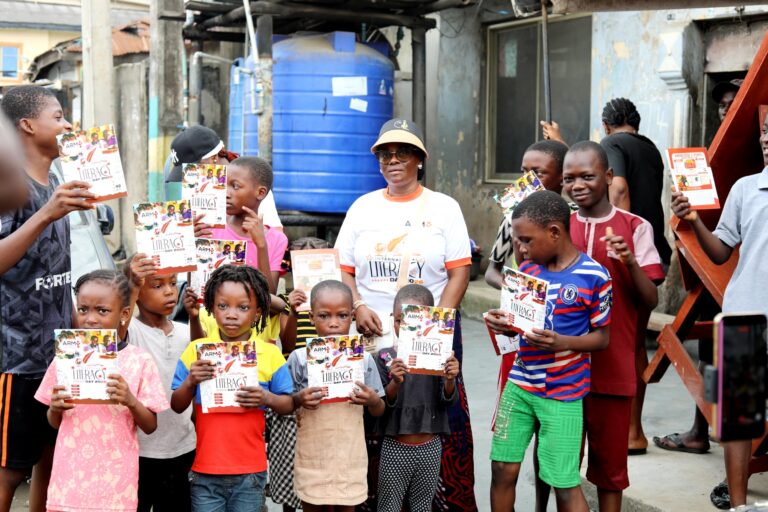
LAGOS, NIGERIA — The Ajala Rasag and Muibat Kehinde Ajala (ARM) Foundation has taken its literacy advocacy beyond the classroom and into the streets of Mushin, Lagos, as it marked the 2026 International Literacy Day with a community Literacy Walk.

The initiative, held on September 10, brought together members of the National Youth Council of Nigeria (NYCN), Lagos State Chapter, volunteers and other stakeholders in a community-focused campaign aimed at drawing attention to the importance of literacy, education and lifelong learning.

Led by the Foundation’s Founder and Chief Executive Officer, Dr. (Mrs.) Muibat Kehinde Ajala, the walk moved through communities across the Mushin axis, where participants interacted with residents and children while distributing books, writing materials and other educational resources to children encountered during the exercise.

Beyond raising awareness, the initiative was designed to bring educational support directly to children and communities where access to learning resources may be limited.

Speaking during the exercise, Dr. Ajala called on young people to recognise the responsibilities that come with leadership and to use their positions and opportunities to make positive contributions to their communities.

“From the home, we lead. Once you have a responsibility to lead, lead,” she said.

She also urged young people to take their education seriously, describing education as a critical foundation for individual development and societal progress.

According to Dr. Ajala, education is “not a scam but a necessity for every individual.”

She further reaffirmed the Foundation’s commitment to ensuring that a child’s socioeconomic background does not determine their opportunity to access quality education.

Through its education and scholarship initiatives, the ARM Foundation provides support to disadvantaged students through scholarships, educational materials, school supplies, healthcare and academic assistance.

The Foundation also stressed that advancing literacy and building an educated society cannot be achieved by one institution alone. It called for collective responsibility among government, individuals, organisations, educational institutions and communities in expanding access to learning opportunities.

The 2026 International Literacy Day theme, “Literacy for People, the Planet and Prosperity: Empowering Communities Through Lifelong Learning,” underscores the importance of continuous learning in empowering individuals, strengthening communities and creating sustainable opportunities.

For the ARM Foundation, the Literacy Walk represents part of a broader commitment to taking education advocacy into communities, supporting vulnerable children and helping create an environment where every child has the opportunity to learn, develop and realise their potential.

The Foundation reaffirmed its determination to continue supporting programmes that expand access to education and keep literacy at the heart of community development.

Literacy today, empowerment tomorrow, a better future for all.

Eniola Akintunde Turned Personal Loss Into 10 Years of Fighting Cancer in Nigeria

0

When Eniola Akintunde lost her husband, Gbolahan, to colorectal cancer in 2013, she did not yet understand the disease that had taken his life. What she did understand was how little many families knew about colorectal cancer, where to seek help or how to detect it early.

That experience eventually became the foundation for a decade of advocacy.

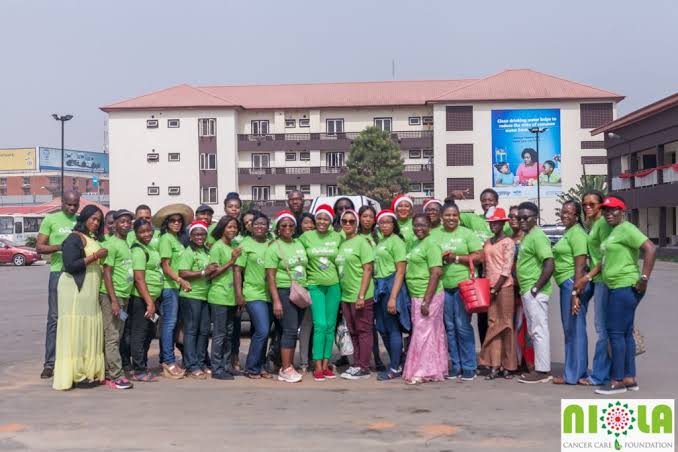
Akintunde is the Founder and Executive Director of the Niola Cancer Care Foundation, which recently marked its 10th anniversary with renewed calls for greater awareness, early detection and stronger support for people living with colorectal cancer in Nigeria.

The foundation’s journey began informally. After her husband’s death, Akintunde started visiting cancer patients in hospitals on Christmas Day in 2014. The organisation was formally registered in 2016, turning what had begun as a personal response to loss into a structured effort to support patients and educate communities.

Over the past decade, Niola Cancer Care Foundation has worked across several areas, including colorectal cancer awareness, screening, patient navigation, psychosocial support, palliative care, community advocacy and research collaboration.

The need remains significant. At the foundation’s 10th anniversary event in September 2026, health experts highlighted gaps in Nigeria’s capacity to screen for colorectal cancer. Fewer than 200 endoscopy centres are reportedly available across the country, raising concerns about whether the existing system can provide accessible screening at the scale required.

A recent screening exercise involving about 2,300 people aged 45 and above in Lagos, Ogun and Osun also found that about one in five participants had positive results requiring further investigation. The findings reinforced calls for more accessible screening pathways and stronger primary healthcare systems capable of identifying warning signs and making timely referrals.

For Akintunde, awareness has remained at the centre of the work because many Nigerians still do not recognise colorectal cancer or understand the importance of early detection. The foundation has also encountered patients who cannot afford treatment and families who do not know where to turn for support.

The organisation’s work has included free screening initiatives, patient support and community education. In previous years, the foundation reported screening more than 2,000 people through its programmes and supporting colorectal cancer patients with medical supplies and other assistance.

Its work has also extended beyond hospital settings. In 2025, the foundation collaborated with partners on a colorectal cancer awareness and sensitisation campaign in Remoland, Ogun State, bringing information about risk factors, symptoms and early detection directly into the community.

The foundation’s 10th anniversary was therefore not simply a celebration of how long it has existed. It was also an opportunity to confront the realities that made the work necessary in the first place: late diagnosis, limited screening infrastructure, treatment costs and gaps in public awareness.

Akintunde has built the organisation around the belief that losing someone to cancer should not mean that other families have to face the same journey without information or support.

A decade after her husband’s death, that personal loss has become a sustained public campaign — one focused on helping Nigerians recognise colorectal cancer earlier, access screening and navigate the difficult journey that can follow a diagnosis.

The next chapter for Niola Cancer Care Foundation is therefore not just about marking 10 years. It is about making the knowledge Akintunde wishes she had before losing her husband more accessible to the millions of Nigerians who may need it today.

Jennifer Esiaba Is Using AI and Basic Phones to Fix Nigeria’s Last-Mile Medicine Problem

0

For many Nigerians, getting the right medicine is not simply a matter of walking into the nearest pharmacy. In underserved and semi-urban communities, patients may struggle to find a reliable pharmacy, verify whether medicines are genuine or speak to a qualified professional before taking them.

Jennifer Esiaba, a licensed pharmacist and founder of Nigerian healthtech startup Mariam Grey, is building a technology platform around that gap.

Founded in 2018, Mariam Grey connects patients with verified pharmacies and licensed pharmacists, allowing them to find medicines, access professional guidance and receive healthcare services without necessarily travelling to a physical pharmacy.

But Esiaba’s approach goes beyond putting a pharmacy online. The platform combines artificial intelligence, telepharmacy, medicine delivery, laboratory services and digital doctor consultations, while also using USSD technology to reach people who do not own smartphones or have reliable internet access.

At the centre of the platform is Mummy Grey, an AI assistant that can provide initial guidance on over-the-counter medicines based on reported symptoms. It can also screen uploaded prescriptions before they are sent to a pharmacist for confirmation, while patients who require further medical attention can book consultations with doctors.

The distinction is important. Mariam Grey is not positioning AI as a replacement for healthcare professionals. Instead, the technology acts as an initial layer of triage, with pharmacists and doctors remaining involved when professional judgement is required.

Esiaba says this is particularly important because much of the digital-health ecosystem has been designed around urban, English-speaking smartphone users. Mariam Grey is deliberately trying to reach the patient who does not fit that profile.

Its USSD service allows people with basic mobile phones to access parts of the platform without an internet connection. The company also provides multilingual support and works through a network of partner pharmacies, creating a physical layer behind the digital platform.

That combination of technology and existing healthcare infrastructure is becoming central to the company’s model.

Rather than building pharmacies itself, Mariam Grey aggregates inventory from partner pharmacies and connects patients to available medicines. Customers can order medicines for home delivery, speak with pharmacists remotely, arrange laboratory sample collection and access digital consultations.

The company says it has now crossed 9,000 active paying patients across multiple Nigerian states and works with hundreds of partner pharmacies. Another recent report put its network at more than 850 partners across 13 states, illustrating the scale the platform is beginning to reach.

Esiaba is now looking to take that growth further. Mariam Grey is raising US$350,000 in pre-seed funding, with plans to use the capital to strengthen its technology infrastructure, develop the product and expand operations across Nigeria.

The immediate target is to grow to 20,000 active patients within the next 18 months, with a longer-term ambition of reaching more than 300,000 patients nationwide.

The company is also beginning to develop specialised healthcare offerings. Its first vertical expansion, Horient Health, focuses on paediatric care, with Esiaba indicating that other condition-specific or demographic-focused services could follow.

For a healthtech company operating in Nigeria, however, growth is not only a technology challenge. Trust, regulation, medicine quality and reliable delivery all become more complicated as the network expands.

Mariam Grey says it has invested in trusted pharmacy partnerships, regulatory compliance, quality assurance and technology designed to work in low-resource environments. Those elements are particularly important in a sector where an incorrect medicine or inappropriate medical advice can have serious consequences.

The company has also introduced a subscription model and Grey Card loyalty programme to encourage repeat use among its growing customer base. Its revenues currently come from patient orders alongside recurring subscription income.

What Esiaba is building therefore sits somewhere between a digital pharmacy, telehealth service and healthcare infrastructure platform.

The bigger idea is that accessing healthcare should not depend entirely on owning a smartphone, living in a major city or physically reaching the right pharmacy.

By combining AI with pharmacists, doctors, laboratories, delivery networks and even basic mobile phones, Mariam Grey is attempting to build a healthcare access model around the realities of how millions of Nigerians actually live.

And for Esiaba, the opportunity is not simply to make medicine easier to order. It is to use technology to close one of the most difficult gaps in healthcare: the distance between the patient who needs care and the system that is supposed to provide it.

MTN-SAIL Teachers Fellowship Graduates 500 Educators, Strengthening Nigeria’s Digital-Ready Classrooms

0

Five hundred public school teachers from across Nigeria have graduated from the second phase of the MTN-SAIL Teachers Fellowship, following an intensive training programme focused on modern teaching methods, digital pedagogy and technology-assisted learning.

The graduates were drawn from all 36 states and the Federal Capital Territory, marking another significant step in efforts to strengthen the capacity of Nigerian teachers to respond to the changing demands of education.

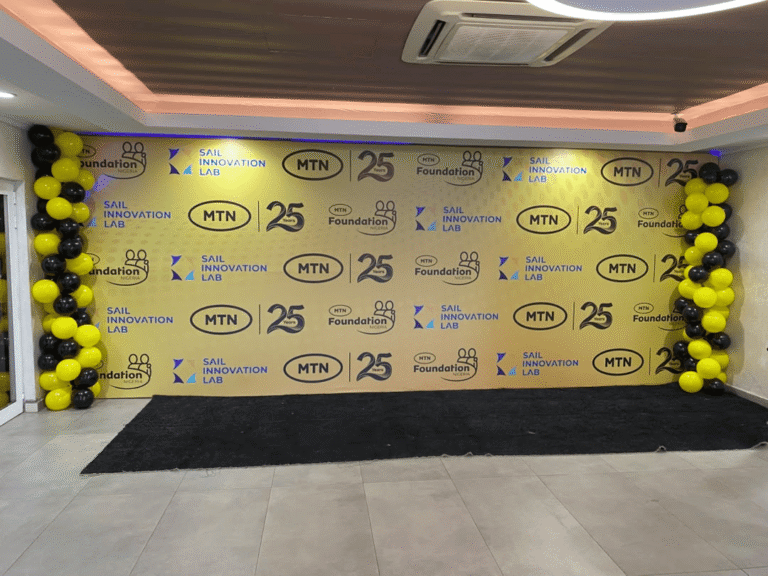
The fellowship is implemented by the SAIL Empowerment Foundation in partnership with MTN Foundation, Microsoft and Co-Creation Hub (CcHUB). Since its inception, the programme has trained thousands of Nigerian teachers, with the latest cohort placing increased emphasis on practical classroom application and emerging technologies.

The latest phase began with 5,000 public primary and secondary school teachers, from which 500 teachers were selected for an additional three months of intensive training based on their performance and participation.

A major feature of the 2026 cohort was the introduction of artificial intelligence into the training curriculum through Microsoft, giving participating educators formal exposure to AI-assisted teaching and responsible use of technology in the classroom.

Speaking at the graduation ceremony, Co-Founder of the SAIL Empowerment Foundation, Mrs Feyisola Abiru, said the programme was built around the recognition that teachers are critical to translating education policies and innovations into meaningful outcomes for children.

She urged the graduating teachers to see the fellowship as the beginning of a longer journey of professional development rather than the end of their training.

“Between every education policy and every Nigerian child stands one person: the teacher,” she said, emphasising the importance of equipping educators with the skills required to navigate a rapidly changing education environment.

Abiru also described the teachers as “multipliers”, noting that their impact extends beyond the classrooms in which they teach. By sharing their knowledge with students and fellow educators, the graduates can help spread new approaches to teaching across Nigeria’s public education system.

The deliberate focus on public school teachers reflects the programme’s aim to strengthen the part of the education system serving the majority of Nigerian children.

The graduation ceremony, held in Lagos, brought together representatives of the participating organisations, government officials, education stakeholders and graduating teachers, with participants from across the country also joining virtually.

The MTN Foundation reaffirmed its commitment to teacher development as part of its broader investment in education and human capacity development. Executive Director of MTN Foundation, Mrs Odunayo Sanya, said the Teachers Fellowship is focused on improving the quality of primary and secondary education by strengthening teachers’ professional and digital capabilities.

The Lagos State Government also commended the initiative, describing investment in teacher development as critical to building an education system capable of preparing young people for an increasingly technology-driven world.

Five outstanding teachers from the graduating cohort were recognised for their performance and application of the training in their classrooms. The teachers received laptops from the SAIL Foundation to support their continued professional development and technology-enabled teaching.

The SAIL Empowerment Foundation also announced plans to strengthen its alumni community and provide continued opportunities for graduates to connect, learn and share their experiences beyond the fellowship.

The latest graduation reinforces a growing need for sustained investment in teachers as Nigeria works to integrate technology and new approaches to learning into its education system.

For the organisers, the ultimate measure of the fellowship will not be the number of certificates awarded, but the number of classrooms transformed and students empowered by the teachers who have gone through the programme.

Women Must Move from Participants to Power Players in Nigeria’s Blue Economy, Says Dr Chizoba Anyika

0

Nigeria must deliberately position women as investors, entrepreneurs, operators, policymakers and conservation leaders if the country is to unlock the full economic potential of its blue economy, maritime and coastal tourism advocate, Dr Chizoba Anyika, has said.

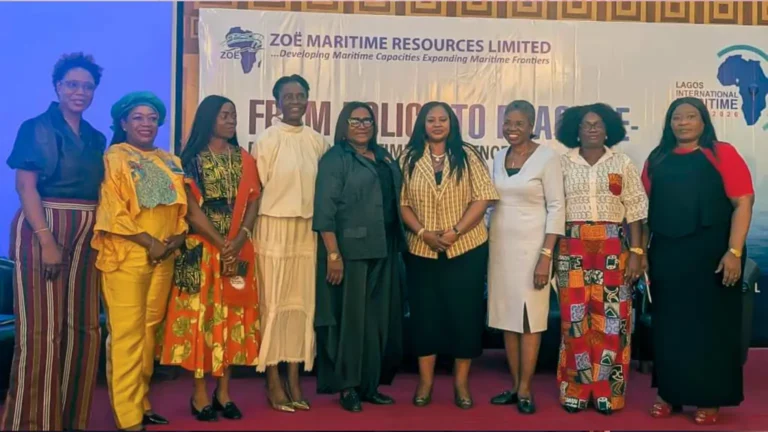
Anyika made the call while speaking at the Lagos International Maritime Week 2026 during a session themed “From Policy to Practice – Role of Women in Eco-Tourism.”

She challenged stakeholders to move beyond viewing women primarily as beneficiaries of tourism and development programmes and instead recognise them as critical economic actors capable of creating businesses, attracting investment, shaping policy and protecting Nigeria’s natural resources.

According to Anyika, Nigeria possesses significant untapped blue-economy assets, including its lagoons, beaches, mangroves, wetlands, islands, waterways, fishing communities and diverse coastal cultures.

Yet much of the economic value embedded in these resources remains unrealised.

She argued that the opportunity is not simply to build more hotels and resorts, but to develop complete tourism ecosystems that connect infrastructure, communities, enterprise, conservation and investment.

“Eco-tourism is the combination of tourism, conservation, community and economic value,” Anyika said, stressing that development must protect the natural and cultural assets that make destinations attractive while creating sustainable livelihoods for surrounding communities.

Women in coastal communities already possess many of the capabilities required to participate in this economy, including indigenous knowledge, culinary expertise, cultural knowledge, craft skills and entrepreneurial experience.

However, many continue to operate informally because they lack access to finance, infrastructure, relevant training, technology and markets.

For Anyika, the challenge is therefore not a lack of resources or talent, but the absence of an integrated ecosystem capable of converting those assets into sustainable economic opportunities.

From Policy to Impact

Anyika proposed a clear pathway for translating government policy into measurable economic outcomes:

Policy → Institutions → Investment → Infrastructure → People → Enterprise → Impact.

She explained that policies must be supported by institutions capable of facilitating investment and delivering the infrastructure required for businesses to thrive.

At the same time, people must have the skills, financing and opportunities necessary to build sustainable enterprises.

She stressed that women’s participation in eco-tourism should not be treated as a social intervention but as an economic strategy.

A properly developed coastal tourism destination, she noted, could create opportunities for women across hospitality, catering, transportation, tour operations, cultural entertainment, handicrafts, conservation, photography, digital marketing, event management and destination services.

The resulting economic activity would extend beyond individual businesses by increasing household incomes, creating employment and stimulating local economies.

Building More Than Resorts

Anyika also called for a broader understanding of what it takes to develop successful tourism destinations.

Hotels and resorts alone cannot create sustainable tourism economies.

She identified safe and accessible roads and waterways, functional jetties, reliable transportation, waste management, security, environmental protection, trained tour guides, recreational facilities, digital connectivity, clear signage and effective destination marketing as essential components of a functioning tourism ecosystem.

She pointed to destinations including the Lagos Lagoon, Tarkwa Bay and Ilashe as examples of coastal assets that could become significant engines of tourism, enterprise and employment if developed through appropriate planning, infrastructure, environmental safeguards and meaningful community participation.

Similar opportunities, she said, exist across Nigeria’s littoral states.

“Our coastal wealth should not remain beautiful scenery viewed from a distance. It should become productive economic infrastructure without destroying the ecosystems that make it valuable,” she said.

Putting Communities at the Centre

For Anyika, sustainable tourism must also ensure that the communities hosting tourism assets are active participants in the economic opportunities created.

Local boat operators, food entrepreneurs, craft producers, tour guides, cultural performers, photographers, transport providers and young entrepreneurs should be integrated into tourism value chains rather than excluded from developments taking place around them.

Such an approach, she argued, could make eco-tourism a practical tool for poverty reduction, youth employment, women’s economic empowerment and local development.

She also warned that economic development cannot be separated from environmental protection.

Pollution, uncontrolled development, poor waste management and ecosystem degradation threaten the very natural resources upon which the blue economy depends.

“If mangroves disappear, wetlands are destroyed, waterways become polluted and beaches become unsafe, the tourism economy itself is placed at risk,” she said.

A Call for Investment in Women

Anyika called on federal and state governments to deliberately integrate women into tourism and blue-economy planning.

She also urged financial institutions and development partners to create more accessible financing mechanisms for women-led tourism businesses, while encouraging training institutions to develop skills aligned with the needs of a modern eco-tourism economy.

Private investors, she said, should begin viewing coastal tourism not simply as a leisure opportunity but as a viable economic sector with the potential to generate employment, enterprise and long-term investment returns.

Central to her argument is the need for women to have greater representation in the decisions shaping Nigeria’s blue economy.

“The future woman in Nigeria’s coastal economy should not only be the person selling food beside a tourist destination. She should also be the chief executive of a tourism company, the owner of a boat fleet, the destination manager, the conservation entrepreneur, the investor and the policymaker,” Anyika said.

She described Nigeria’s coastline as more than a geographical boundary, calling it an economic frontier with the potential to support inclusive and sustainable growth.

For Nigeria to fully realise that potential, she said, stakeholders must move from acknowledging women’s capabilities to deliberately investing in them.

The objective, she concluded, should be to build a blue economy where conservation and commerce coexist, communities prosper, young people find meaningful opportunities and women occupy central positions in value creation.

“From policy to practice. From potential to productivity. From exclusion to inclusion. From blue wealth to shared prosperity,” she said.

Access Bank Opens Applications for Womenpreneur Pitch-A-Ton Season 8, Targets 120 Women Entrepreneurs Across Africa

0

Access Bank Plc has opened applications for the eighth edition of its Womenpreneur Pitch-A-Ton programme, with 120 women entrepreneurs set to receive intensive business training, mentorship, networking opportunities and financial support as part of the bank’s continued investment in women-owned businesses.

The latest edition of the programme will commence in November 2026 and is being delivered in partnership with the International Finance Corporation (IFC).

Now in its eighth season, Womenpreneur Pitch-A-Ton has evolved into one of Access Bank’s flagship initiatives for supporting women entrepreneurs across Africa, combining business education with access to finance and opportunities for market visibility.

More than 1,141 women across 10 African countries have completed the first seven editions of the programme, while participants have collectively received grants exceeding $200,000.

For Season 8, selected participants will undergo a three-week intensive curriculum structured as a mini-MBA, covering practical areas including business management, financial management, business sustainability and strategies for building enterprises capable of long-term growth.

The programme is designed to address a challenge that extends beyond access to capital.

For many women entrepreneurs, the ability to secure funding is closely connected to how well their businesses are structured, how effectively they manage finances and whether they can demonstrate the capacity to repay and grow.

Access Bank says the programme therefore focuses on strengthening the foundations of women-owned businesses before and alongside access to finance.

Head of Women Banking at Access Bank, Nene Kunle-Ogunlusi, said the programme has continued to grow because of the results recorded by previous participants.

She noted that graduates from earlier editions have gone on to achieve recognition in other business competitions, including the Nigeria MSME Awards, while one alumna secured a $100,000 prize in another entrepreneurship competition.

According to Chizobar Iheme, Group Head, Consumer Banking at Access Bank, financial inclusion must go beyond simply bringing women into the formal banking system.

The bank’s approach is to equip women with the knowledge and capabilities required to build sustainable enterprises and become better positioned for formal financing.

This includes helping entrepreneurs understand financial management, strengthen their business structures and meet the requirements associated with accessing credit.

Season 8 will also introduce additional financial support for participants.

Beyond the top grant, 19 other participants will receive financial support, expanding the number of entrepreneurs who can translate the knowledge gained through the programme into business growth.

The programme reflects Access Bank’s broader “W” Initiative, which was established to promote women’s financial inclusion, entrepreneurship and economic empowerment through a combination of financial and non-financial services.

Over the years, the initiative has expanded beyond traditional banking to include capacity development, mentoring and other interventions aimed at helping women build more sustainable businesses.

For Access Bank, supporting women entrepreneurs is not only an empowerment intervention but also an investment in economic growth.

Women-owned businesses contribute significantly to employment, household incomes, innovation and local economic activity. However, many women entrepreneurs continue to face challenges related to access to capital, business knowledge, networks and markets.

Womenpreneur Pitch-A-Ton seeks to address several of these gaps simultaneously by giving participants access to training, expert guidance, peer networks and funding opportunities.

The programme also creates a community of women entrepreneurs who can continue to collaborate and learn from one another beyond the formal training period.

Applications for Season 8 are now open, with eligible women entrepreneurs encouraged to apply for the opportunity to strengthen their businesses, expand their networks and position their enterprises for the next stage of growth.

As Access Bank prepares to welcome another cohort, the latest edition reinforces the bank’s commitment to helping women move from entrepreneurship at survival level to building structured, sustainable and investment-ready businesses.

ABOUT WOMENPRENEUR PITCH-A-TON

Womenpreneur Pitch-A-Ton is an entrepreneurship development initiative under Access Bank’s “W” Initiative. The programme combines business training, mentorship, networking and financial support to help women entrepreneurs strengthen their businesses and improve their capacity for sustainable growth. The initiative has trained more than 1,141 women across 10 African countries through its first seven seasons.

Nigerian AI Startup Builds Voice Technology Around How Africans Actually Speak

0

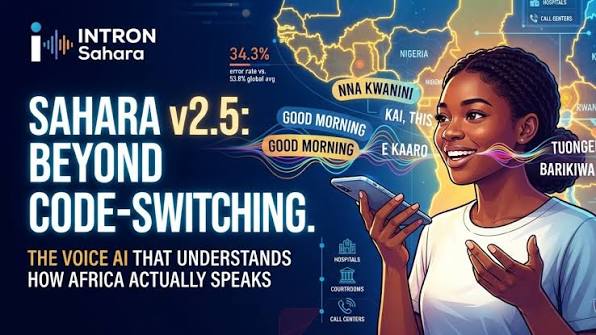
Nigerian AI startup Intron has launched a new version of its voice AI technology designed to understand something that is common in everyday African conversations but remains difficult for many artificial intelligence systems: switching between languages in the same conversation.

The company unveiled Sahara v2.5 at the 2026 Deep Learning Indaba in Lagos, introducing new capabilities for understanding African languages, accents and natural language mixing.

Sahara v2.5 supports bilingual speech recognition across 12 African language pairs, including combinations involving Hausa, Yoruba, Nigerian Pidgin, Swahili, Zulu and Luganda.

It also includes what Intron describes as the world’s first African trilingual speech-recognition model, capable of following conversations that move between Kinyarwanda, English and French without losing context.

For users, the technology is designed around a reality that is already normal across the continent.

A conversation might begin in English, move into Yoruba to explain an idea, switch to Pidgin and return to English. In another setting, a customer might move between Swahili and English while speaking to a bank or healthcare provider.

Traditional voice AI systems can struggle when this happens, often treating the language switch as an error.

Intron is building specifically for that reality.

The company says Sahara v2.5 now supports a total of 63 languages, while its text-to-speech technology supports 13 languages with code-switching capabilities.

Intron’s published benchmarks also show improvements in recognising mixed-language African speech. ITWeb Africa reported that Sahara v2.5 recorded an average word error rate of 34.3 percent across 12 tested languages, representing a 36 percent relative reduction in errors compared with the global models tested.

The technology is being positioned for practical applications beyond simply understanding speech.

Potential uses include voice banking, customer service, healthcare, education, agriculture, legal services and government services.

Intron says its technology is already being used by organisations including Penda Health, ARM, Branch, Carbon and courts across Nigeria, Kenya, South Africa and Eswatini.

The company has also built a large African speech dataset, with more than six million audio clips contributed by over 70,000 Africans across 13 countries.

For Intron CEO Tobi Olatunji, the opportunity is not simply to make voice AI understand more languages.

It is to make technology understand Africans as they naturally communicate.

That distinction could become increasingly important as voice interfaces become a bigger part of how people access digital services across the continent.

Instead of asking Africans to change the way they speak so that technology can understand them, Intron is betting on the opposite approach:

Build the technology around the way Africans already speak.

PEPNET Trains Mpape Residents on Climate, Peace and Security

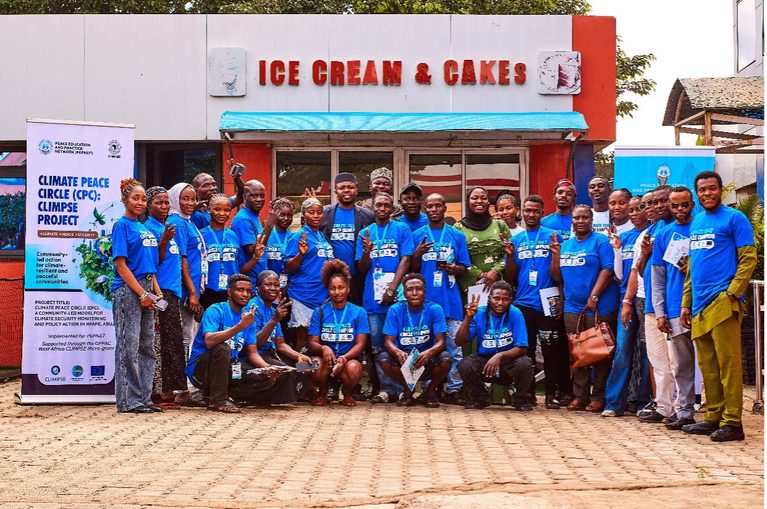
The Peace Education and Practice Network (PEPNET) has trained community members in Mpape, Abuja, on the links between climate change, human security and peacebuilding, as part of efforts to strengthen community capacity to identify and respond to emerging climate-related security risks.

The two-day Climate Peace Circle (CPC) training, held on August 21st and 22nd, 2026, brought together residents, youths, women, community leaders, government representatives, researchers, peacebuilding practitioners, media professionals and other stakeholders. The training was organised under the CPC CLIMPSE Project, with the theme, “A Community-Led Model for Climate Security Monitoring and Policy Action in Mpape, Abuja.”

The initiative seeks to place communities at the centre of efforts to understand the effects of climate change and develop practical responses to environmental and security challenges. Speaking during the programme, PEPNET’s Executive Director, Amb Moses ABOLADE urged participants to take ownership of the initiative and ensure that knowledge gained during the training reaches other members of their communities. He also encouraged participants to document their experiences and communicate the impact of the project within their communities.

The training examined the growing implications of climate change for human security, with participants discussing challenges including flooding, unsafe water supply, extreme heat, loss of livelihoods, resource scarcity, migration and displacement. Facilitators explained that while climate change does not automatically cause conflict, environmental pressures can interact with existing social and economic vulnerabilities and contribute to tensions.

For instance, the destruction of crops and livestock by flooding or desertification can result in livelihood losses, while climate-induced migration may increase competition over land and other resources. Participants were consequently encouraged to strengthen community resilience and develop effective early-warning mechanisms capable of identifying emerging risks and supporting timely responses. The training also examined the role of climate-sensitive peacebuilding in preventing environmental pressures from worsening existing tensions.

Facilitated by Dengiyefa Angalapu, the session on Climate-Sensitive Peacebuilding emphasised the need for development and peacebuilding interventions to take both environmental and conflict risks into account.

Participants were encouraged to consider how development projects could unintentionally contribute to flooding, erosion, competition over resources or tensions between community groups if climate and conflict considerations are overlooked.

Another major component of the programme was a session on Community Climate Security Monitoring, facilitated by Timothy Ogenyi. The session focused on enabling community members to identify emerging climate-related risks, document relevant information and communicate concerns to appropriate institutions. According to the training report, community-level monitoring can support the early identification of risks and promote timely responses.

The programme also provided participants with an opportunity to put their knowledge into practice.

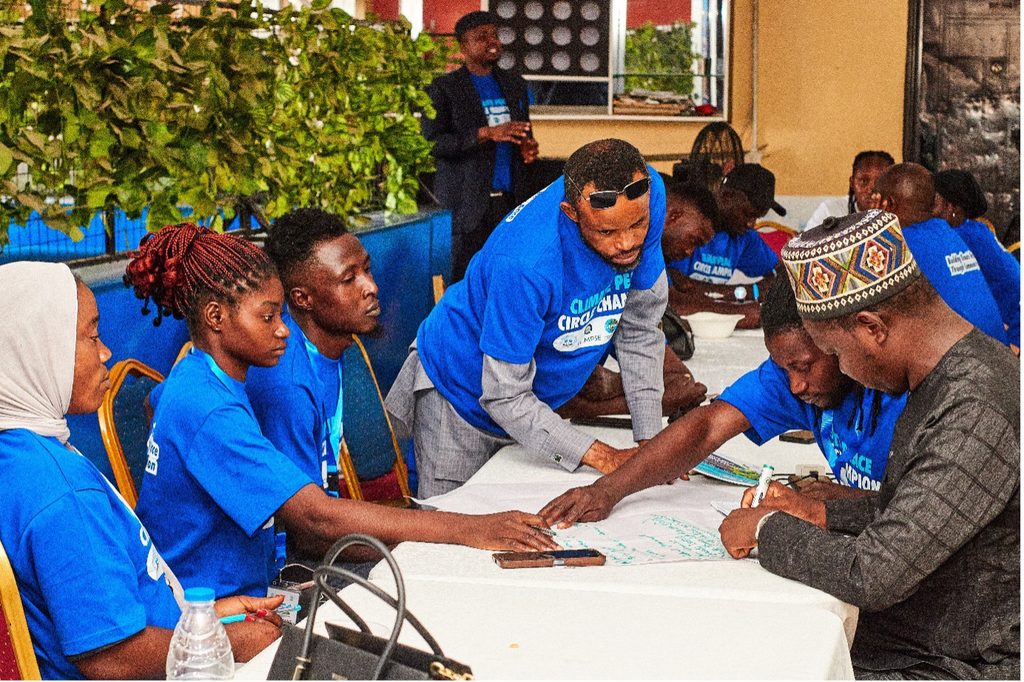
During a practical exercise, participants were divided into four groups and tasked with identifying climate-security challenges affecting their communities, proposing mitigation measures and identifying the relevant government institutions responsible for addressing the issues. Each group subsequently presented its findings to the wider group, allowing participants to compare experiences and consider locally appropriate responses. The exercise reflected one of the central objectives of the CPC CLIMPSE Project: moving beyond awareness to community-based observation, documentation and action.

The training also featured reflections from participants, an evaluation of the programme and the presentation of certificates at the closing session. Participants emerged from the programme as Climate Peace Circle Champions, who are expected to remain engaged through subsequent CPC activities and continue sharing knowledge and identifying emerging climate-security concerns within their communities.

The next phase of the project will focus on community climate-security observation, mapping and risk analysis. Information generated through these activities is expected to contribute to a Community Climate Security Policy Brief, linking community experiences with relevant policymakers and institutions. The project is also expected to strengthen collaboration between communities and government institutions.

Representatives of the Federal Ministry of Environment, National Emergency Management Agency (NEMA), Abuja Environmental Protection Board (AEPB), Nigeria Hydrological Services Agency (NIHSA), National Environmental Standards and Regulations Enforcement Agency (NESREA), Nigerian Institute of Social and Economic Research (NISER), and Institute for Peace and Conflict Resolution (IPCR) participated in the engagement. Among the representatives was Jonah D. Barde, Deputy Director, Climate Change Department, Federal Ministry of Environment, who participated in the opening engagement.

The involvement of government and research institutions provided an opportunity for community experiences to be considered alongside institutional and technical perspectives.

The organisers also highlighted the role of the media in extending the conversation beyond the training venue. PEPNET said the media remains an important platform for public education, amplifying community voices and encouraging wider conversations around climate, peace and security.

The Climate Peace Circle initiative is being implemented in Mpape by PEPNET with support through the CLIMPSE Micro Grant of GPPAC West Africa, with Building Blocks for Peace Foundation (BBFORPEACE) also supporting the initiative. The organisation said the conclusion of the two-day training marks the beginning of a longer process of community monitoring, dialogue, evidence generation and policy engagement.

The training’s key lessons included the need to recognise climate change as a human security and peacebuilding concern, strengthen early-warning and monitoring systems, involve communities in climate adaptation and mitigation, and ensure that development interventions are both climate-sensitive and conflict-sensitive. For PEPNET, the experience in Mpape demonstrates the potential of community-led approaches to climate security and provides a foundation for continued collaboration between residents, institutions and other stakeholders.

The Climate Peace Circle conversation, organisers said, continues beyond the training as communities move from knowledge to collaboration, action and resilience.

picture 3

The Woman Helping Nigerian Teachers Become Better Equipped for Today’s Classrooms

0

Nigeria’s education challenges are often discussed in terms of infrastructure, funding and access, but one of the most important parts of the education system remains the people standing in front of the classroom.

For the founder of Train D Trainer, strengthening that human component has become a central mission.

The education initiative is focused on addressing gaps in teacher development by equipping educators with practical skills, updated teaching approaches and the tools needed to respond to the changing needs of learners.

The initiative is built around a simple belief: improving education outcomes requires investing not only in students, but also in the teachers responsible for helping them learn.

The founder says the motivation behind Train d Trainer comes from observing the challenges educators face and the consequences those challenges can have on learning outcomes.

Teachers are expected to manage increasingly diverse classrooms, respond to changing technology, engage a new generation of learners and prepare students for a future that is very different from the one their own teachers prepared them for.

Yet many educators have limited opportunities for continuous professional development after entering the classroom.

Train d Trainer seeks to address that gap by creating opportunities for teachers to continue learning, improve their classroom practice and exchange knowledge with other educators.

The initiative’s approach places emphasis on practical development rather than training for certification alone.

By strengthening teachers’ knowledge, confidence and teaching methods, the programme aims to create a multiplier effect: one well-equipped teacher can influence dozens or even hundreds of learners over the course of a career.

That makes teacher development one of the most scalable ways to strengthen an education system.

The need is particularly important in Nigeria, where millions of children depend on teachers working in classrooms with varying levels of resources and support.

While investments in school infrastructure and educational technology remain important, technology and physical facilities cannot replace effective teaching.

The quality of the learning experience ultimately depends heavily on the capacity of the educator delivering it.

For Train d Trainer, that is why teacher development is being treated as a core part of the education conversation rather than an optional addition.

The initiative also reflects a wider shift in how professional development is being understood.

As Artificial Intelligence, digital learning tools and new approaches to education continue to change the classroom, teachers increasingly need opportunities to learn alongside the students they teach.

The modern teacher is not simply a transmitter of information. Teachers are increasingly expected to facilitate critical thinking, creativity, collaboration, digital literacy and problem-solving.

Preparing educators for that role requires continuous learning.

The founder’s work through Train d Trainer is therefore part of a broader effort to strengthen the people at the centre of Nigeria’s education system.

By investing in teachers, the initiative hopes to contribute to classrooms where educators feel better prepared, students are more engaged and schools are better equipped to respond to the demands of a changing world.

The bigger challenge, however, is ensuring that professional development reaches teachers consistently and at scale.

One-off workshops may create moments of inspiration, but sustained improvement requires continuous support, practical resources, peer learning and opportunities for educators to apply what they have learned.

That is where initiatives focused specifically on teacher development can play an important role.

For the founder of Train d Trainer, the objective is ultimately bigger than training individual educators.

It is about helping build a stronger culture of professional learning within the education sector — one where teachers are encouraged to keep growing because the quality of their growth directly affects the quality of learning available to children.

In a country where conversations about education often begin with what students need, Train d Trainer is placing another question at the centre of the discussion:

What do we need to give teachers so they can give children their best?

The answer may be one of the most important investments Nigeria can make in the future of its education system.

INTERNATIONAL DAY OF CHARITY: ARE WE MEASURING THE RIGHT THING?

0

By Raquel Kasham Daniel

“We reached 10,000 girls.”

I have said those words before. So have many of us working in the social impact sector. And there is nothing inherently wrong with the statement. Reach matters. It tells us whether our work got to the people we intended to serve, and in a sector where resources are often limited, being able to demonstrate scale is important. Funders want to know how far their resources went, organisations want to demonstrate their effectiveness, and practitioners need to understand whether their programmes are reaching the people they were designed for.

But over the years, I have become increasingly uncomfortable with how easily we move from talking about reach to talking about impact, as though the two are interchangeable. They are not. Reaching 10,000 girls tells me that 10,000 girls encountered an intervention. It does not, by itself, tell me what happened to those girls because of it.

Did they learn something that changed the way they think or behave? Did a barrier they were facing actually disappear? Did they become more confident? Did they stay in school? Did their choices or opportunities change? And perhaps most importantly, did any of that change last?

These questions are much harder to answer than “How many people did you reach?” Perhaps that is one reason we don’t always ask them.

The social impact sector has become very good at counting. We count people reached, people trained, communities engaged, workshops delivered, materials distributed and campaigns conducted. These numbers are useful, but they primarily tell us about our activities. They tell us what we did and how many people came into contact with it. What they do not necessarily tell us is whether the problem we set out to address became smaller.

A girl can attend a workshop without learning something that stays with her. A child can receive educational materials and still struggle in school. A community can participate in a sensitisation programme and continue facing the same problem months later. The intervention happened, the numbers went up, and the activity can be marked as completed. But the more important question remains: what actually changed?

I have seen this distinction play out in my own work with children and girls. Through Beyond the Classroom Foundation, we have implemented programmes that address some of the barriers that prevent girls from fully participating in education. One example is Project Red Robots, through which we have worked with girls around menstrual health education and access to menstrual products.

It would be easy to tell the story of that programme through numbers: the number of girls reached, the number of schools involved, the number of menstrual products distributed or the number of sessions conducted. Those numbers matter and should be documented. But they are not the entire story.

The more meaningful questions are what happened because of the intervention. Did a girl understand menstruation better than she did before? Did she become more comfortable seeking information or asking questions? Did she learn how to manage her period safely? Did access to menstrual products reduce the number of days she missed school? Did the conversation change how teachers or parents responded to menstruating girls?

The menstrual product is an output. The education session is an activity. But a girl being able to manage her period with dignity and remain engaged in school is much closer to the change we were actually trying to create.

That distinction has changed the way I think about impact. Working with children has made it difficult for me to look at a programme only through the numbers because behind every number is a child whose life continues long after our project ends. She is not a project. She is not an outcome indicator. She is a person whose future cannot be reduced to our programme’s reporting period.

If we say that we have impacted her life, then I think we should be willing to tell a little more of the story. Perhaps she is now attending school more consistently because a barrier that once kept her away has been removed. Perhaps she understands her body better and no longer feels ashamed to ask questions. Perhaps she has developed the confidence to speak up. Perhaps her parents have changed how they think about investing in her education. Perhaps something has changed within the system around her.

These changes may not always produce the most impressive numbers, but they are the reason the numbers should matter in the first place.

This is why I think we also need to be more careful about our use of the word “impact.” It has become one of the most frequently used words in the development sector. Almost everything is described as impactful. But when everything is impact, the word begins to lose its meaning.

There is a difference between conducting an activity and producing an outcome. There is a difference between reaching someone and changing something for them. And there is a difference between creating a momentary improvement and contributing to a change that can actually be sustained.

None of this means that we should stop measuring reach. We absolutely should. Reach tells us something important. If a programme designed for 10,000 girls only reaches 500, that matters. If an intervention intended for a particular community never reaches the people most affected by the problem, that matters too.

But reach should be the beginning of the conversation, not the conclusion.

After asking how many people we reached, we should be asking what changed, for whom, by how much, and for how long. We should be interested in whether the change continued after the project ended and whether the people we intended to serve actually experienced the improvement we hoped to create.

Those questions require more than a registration sheet or attendance list. They require listening, follow-up, thoughtful programme design and better measurement. Sometimes they also require the humility to discover that something we thought was working did not work as well as we imagined.

I think that humility is important. Social impact should not be about proving that everything we do is successful. It should be about becoming increasingly honest about what creates meaningful change and what does not.

This matters particularly in a world where resources for social development are limited and the needs are enormous. Every naira, dollar, volunteer hour and institutional resource committed to a social problem represents an opportunity cost. We therefore have a responsibility to ask not only whether we are doing good, but whether we are doing the kind of good that actually addresses the problem.

Perhaps this is also where charity fits into the conversation.

On International Day of Charity, we rightly celebrate generosity. We celebrate people who give their money, time, skills and resources to make life better for someone else. But generosity also deserves a harder question: What does our giving make possible?

If we give a girl a school uniform, does it simply mean that one more uniform was distributed, or does it help remove a barrier to her education? If we provide learning materials, do we stop at distribution, or do we remain interested in whether those materials improved her learning experience? If we fund a programme, do we only celebrate how many people participated, or do we remain interested in what happened to them afterwards?

The answers matter because the point of charity cannot simply be that we gave. The point should be that something became possible because we gave: a child stayed in school, a girl gained confidence, a family made a different decision, a young person gained an opportunity, or a community became better equipped to solve its own problems.

That, to me, is where the conversation about charity becomes a conversation about impact.

We do not need to abandon reach. We need to put it in perspective. We need to become better at distinguishing between the people we touched and the change that occurred because we did.

Because ultimately, the most important question is not simply, “How many people did we reach?”

It is: “Are their lives different because we showed up?”

Reach is important.

But reach is not the same thing as impact.