When Eniola Akintunde lost her husband, Gbolahan, to colorectal cancer in 2013, she did not yet understand the disease that had taken his life. What she did understand was how little many families knew about colorectal cancer, where to seek help or how to detect it early.
That experience eventually became the foundation for a decade of advocacy.
Akintunde is the Founder and Executive Director of the Niola Cancer Care Foundation, which recently marked its 10th anniversary with renewed calls for greater awareness, early detection and stronger support for people living with colorectal cancer in Nigeria.
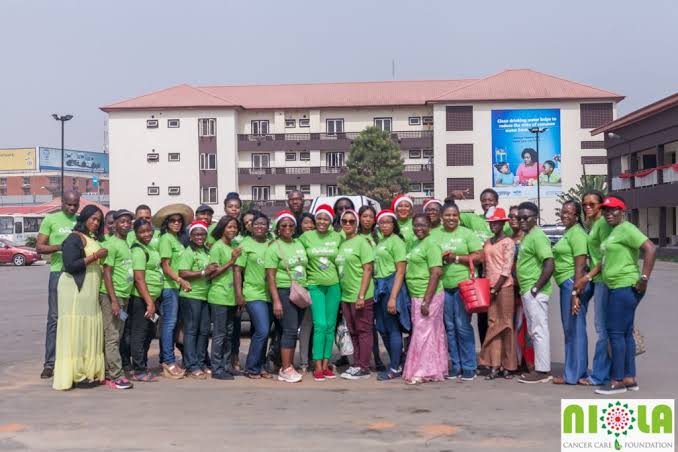
The foundation’s journey began informally. After her husband’s death, Akintunde started visiting cancer patients in hospitals on Christmas Day in 2014. The organisation was formally registered in 2016, turning what had begun as a personal response to loss into a structured effort to support patients and educate communities.
Over the past decade, Niola Cancer Care Foundation has worked across several areas, including colorectal cancer awareness, screening, patient navigation, psychosocial support, palliative care, community advocacy and research collaboration.
The need remains significant. At the foundation’s 10th anniversary event in September 2026, health experts highlighted gaps in Nigeria’s capacity to screen for colorectal cancer. Fewer than 200 endoscopy centres are reportedly available across the country, raising concerns about whether the existing system can provide accessible screening at the scale required.
A recent screening exercise involving about 2,300 people aged 45 and above in Lagos, Ogun and Osun also found that about one in five participants had positive results requiring further investigation. The findings reinforced calls for more accessible screening pathways and stronger primary healthcare systems capable of identifying warning signs and making timely referrals.
For Akintunde, awareness has remained at the centre of the work because many Nigerians still do not recognise colorectal cancer or understand the importance of early detection. The foundation has also encountered patients who cannot afford treatment and families who do not know where to turn for support.
The organisation’s work has included free screening initiatives, patient support and community education. In previous years, the foundation reported screening more than 2,000 people through its programmes and supporting colorectal cancer patients with medical supplies and other assistance.
Its work has also extended beyond hospital settings. In 2025, the foundation collaborated with partners on a colorectal cancer awareness and sensitisation campaign in Remoland, Ogun State, bringing information about risk factors, symptoms and early detection directly into the community.
The foundation’s 10th anniversary was therefore not simply a celebration of how long it has existed. It was also an opportunity to confront the realities that made the work necessary in the first place: late diagnosis, limited screening infrastructure, treatment costs and gaps in public awareness.
Akintunde has built the organisation around the belief that losing someone to cancer should not mean that other families have to face the same journey without information or support.
A decade after her husband’s death, that personal loss has become a sustained public campaign — one focused on helping Nigerians recognise colorectal cancer earlier, access screening and navigate the difficult journey that can follow a diagnosis.
The next chapter for Niola Cancer Care Foundation is therefore not just about marking 10 years. It is about making the knowledge Akintunde wishes she had before losing her husband more accessible to the millions of Nigerians who may need it today.