
Home Blog

Tobi Ransomed: Strengthening Education Systems and Shaping Conversations in the Development Space

0

Tobi Ransomed works at the intersection of education, systems strengthening and social impact. She is a Senior Technical Advisor – Education with CARE International’s Global Education & Skills team, supporting programmes across Nigeria, Niger, Somalia and Sudan. She also serves as Project Director of RE-IMAGINE, a research-driven initiative in Zinder, Niger, focused on adolescent girls’ agency and life outcomes.

Her career spans humanitarian education, foundational literacy, teacher development and accelerated learning. She has worked with organisations including Save the Children, Plan International, Creative Associates and FHI 360, contributing to programmes that have reached hundreds of thousands of learners and supported thousands of teachers.

But as I looked through Tobi’s journey, I found myself wanting to go back a little. Before the professional titles and the work of influencing education systems, who was Tobi? What first drew her to this work?

One detail caught my attention. Tobi studied Industrial Chemistry at the University of Jos, yet today she works in education and development. So, how did that happen?

Looking a little closer, I found that her interest in helping people started long before university. As a teenager, she volunteered with a family friend’s NGO supporting people living with HIV/AIDS. At the time, she did not know anything about international development as a career. She simply wanted to help.

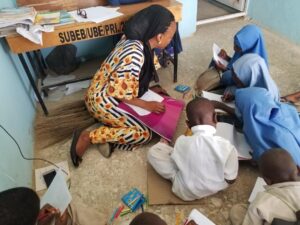
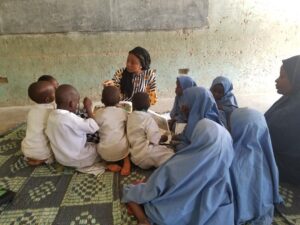
Teaching was one of the first ways she explored that interest. During her final year at university, Tobi taught at a missionary school in Jos. She had imagined teaching or setting up a school in a remote community, and the classroom gave her an opportunity to work directly with children. She continued teaching after university, working with young children in Abuja and Lagos.

Her degree was in chemistry, but her early work was taking her in another direction. She eventually moved from teaching into education programmes, and her work took her to Northeast Nigeria.

At Save the Children  and Plan International, Tobi worked on education programmes in Borno and Yobe, where conflict and displacement had disrupted children’s schooling. Her responsibilities included project management and coordinating education-in-emergencies responses. She also helped establish the Education in Emergencies Working Group with UNICEF.

At Creative Associates, she worked as a Teacher Education Specialist on the USAID-funded Northern Education Initiative Plus programme, supporting teacher professional development in Bauchi and Sokoto. Her work was increasingly moving beyond the classroom to the systems and structures that support teachers.
She later took on a broader leadership role with FHI 360’s Partnership for Learning for All in Nigeria programme, known as PLANE. Funded by the UK Foreign, Commonwealth and Development Office, PLANE was a £95 million programme supporting foundational and accelerated learning.

As Output 1 Lead, Tobi oversaw teams and subcontractors responsible for work representing 60 per cent of the programme portfolio. The interventions she directed reached more than 400,000 learners and supported the training of over 10,000 teachers and school leaders.

Her responsibilities also extended into national education policy. She led engagement with the Teachers Registration Council of Nigeria (TRCN), securing accreditation for teacher professional development programmes and contributing to national teacher standards. She oversaw the development and rollout of curriculum-aligned teaching materials in Hausa and English, introduced technology-enabled approaches to classroom observation and coaching, and contributed to efforts to strengthen professional standards for teachers and school leaders.

Tobi later returned to Plan International in a broader leadership role as Basic Education Thematic Lead and Consortium Team Lead – Education Advisor. She provided strategic and technical direction for the basic education portfolio and worked with partners on an EU-funded education programme across Kano, Sokoto and Jigawa.

One of her major areas of responsibility was supporting efforts to institutionalise the Accelerated Basic Education Programme (ABEP), which provides an alternative route for children and adolescents who have missed out on schooling to reconnect with education. She also helped pilot professional standards for school leaders across Kaduna, Kano and Jigawa.

Tobi has written about the challenge of out-of-school children, arguing that identifying how many children are outside the school system is not enough; there must be meaningful pathways back into education. This question connects with much of her work: helping children access learning while supporting the programmes, teachers and institutions that make that learning possible.

Today, at CARE International, she continues to work across education programmes in several countries. As Project Director of RE-IMAGINE, she works on a research-driven initiative focused on adolescent girls’ agency and life outcomes in Niger. The initiative brings together programme implementation, research partners and evidence generation to inform programme design and learning.

The focus on adolescent girls adds another dimension to her work. Their opportunities are shaped by more than what happens in the classroom, and understanding their experiences is part of designing programmes that respond to their lives.

There is another part of Tobi’s work that I found interesting, and it sits outside the formal roles on her CV: The Development Conversations Global (TDC), the pan-African platform she founded to bring development practitioners together through webinars, podcasts and community dialogue.

What prompted her to create a space for these conversations?

Tobi has spoken about discussions she had with fellow practitioners over time. They talked about the impact of their work, career uncertainty, professional challenges, wellbeing and what it means to keep working in development. These conversations were not just about projects and results; they were also about the people doing the work and the experiences they were having along the way.

Those discussions inspired Tobi to create TDC, a space where practitioners could share their experiences and learn from one another. Through its webinars, podcasts and community conversations, the platform gives people working across the development sector an opportunity to discuss issues that may not always feature in formal programme reports or professional profiles.

I find this side of her work interesting because it offers a different view of Tobi’s contribution to the sector. While much of her professional career has involved coordinating teams, engaging institutions and supporting education programmes, TDC creates room for practitioners to talk about their own experiences: what they are learning, what they find difficult and how they navigate their careers.

She also mentors young women and emerging professionals through initiatives including Her Next Step, the Fierce Women Mentorship Programme and TUBE mentorship.

Looking at Tobi’s journey, I keep coming back to where she started. As a teenager, she volunteered with an NGO supporting people living with HIV/AIDS. Later, she taught in the classroom, working directly with children. At that point, she could not have known that her career would take her into humanitarian response, teacher development, education policy and research across different countries.

Tobi studied Industrial Chemistry, but that is not what brought her into education and development. It was her heart for service, and her desire to help people, that first set her on this path. Over time, that desire found different expressions, from teaching children to strengthening the systems that support their learning and creating spaces for development practitioners to share their experiences.

And perhaps that is what makes her journey interesting to me. The degree tells us what she studied, but her journey tells us something more about what drew her to the work she does today.
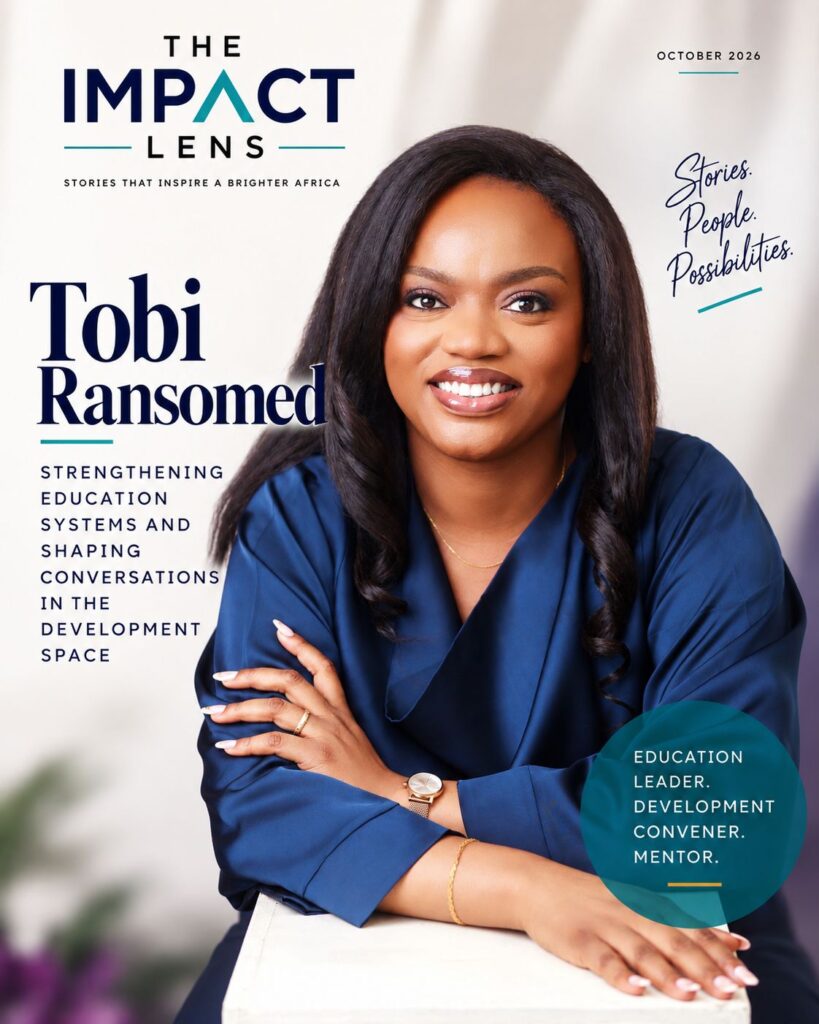

Tobi Ransomed

Abiding Ladies Fellowship Calls on Women to “ARISE” at 2026 Conference in Abuja

At a time when conversations around women’s leadership, representation and empowerment continue to shape communities and institutions, Abiding Ladies Fellowship, a women’s ministry, is calling on women to rise beyond limitations and take their place in the spaces where their voices, gifts and contributions are needed.

The ministry will host its 2026 Abiding Ladies Fellowship Conference on Saturday, October 31, at Merit House, Maitama, Abuja, under the theme “ARISE.” The gathering, convened by Apostle Jennifer Mike-Alicha, is built around a message of purpose, courage and the responsibility of women to become active participants in shaping their families, communities and society.

For many women, the journey towards fulfilling their potential is not always straightforward. Social expectations, limited opportunities, financial constraints, self-doubt and the pressure of balancing multiple responsibilities can make it difficult for women to pursue their ambitions or fully express their abilities. Others have the capacity to contribute more to their communities, professions and institutions but have yet to recognise the extent of what they can accomplish.

Against this backdrop, ARISE is a call for women to look beyond the limitations that have defined their experiences, recognise their capacity for greater impact and take deliberate steps towards fulfilling their potential. It is an invitation to move from the margins into positions of participation, leadership, innovation and influence.

According to the convener, Apostle Jennifer Mike-Alicha, the theme reflects a call for women to arise and take their place in the different spheres and spaces where they have been called to make a difference. The message is not simply about occupying positions, but about recognising one’s purpose, developing one’s gifts and using them meaningfully to influence people, institutions and communities.

Across different sectors, women have continued to demonstrate what becomes possible when they have the opportunity and confidence to step forward. From business and technology to education, governance, ministry and community development, women are building organisations, shaping conversations, solving problems and creating opportunities for others. Their contributions affirm that women have an important role to play in addressing society’s challenges and shaping its future.

Yet, progress in some areas does not mean the work is complete. There are still women whose aspirations remain unrealised, whose voices are missing from important conversations and whose abilities are constrained by circumstances or expectations. The call to ARISE recognises both the progress women have made and the opportunities that remain for more women to step into their potential.

Through conversations, teaching and fellowship, the conference will create an opportunity for women to reflect on their journeys, strengthen their faith, reconsider the limits they may have accepted and embrace the possibilities before them. It also seeks to reinforce the importance of women supporting and encouraging one another as they pursue their individual callings and collective aspirations.

The 2026 conference will feature Pastor Adefunke Sharon Kasali, Apostle Jenny Alicha, who will also host the event, Apostle Oluchi Elkuris, Dr. Kadiya B. Rita, Dooshima Adedzwa and Diwang Sharon Jiriai. The speakers and panelists will contribute perspectives to the gathering, bringing together women with different experiences and insights.

Ultimately, ARISE is a reminder that women do not have to remain confined by circumstances, expectations or the fear of what is possible. It is a call to recognise that there is more to contribute, more to build and more to accomplish, whether in the home, the workplace, the church, public life or the wider community.

The 2026 Abiding Ladies Fellowship Conference will hold at Merit House, Maitama, Abuja, on Saturday, October 31, beginning at 10:00 a.m. Women are invited to attend and be part of the gathering.

whatsapp image 2026 10 14 at 5.05.49 pm

Battle Cancer Returns to London with Fitness Challenge Supporting Cancer Charities

0

Fitness enthusiasts will come together at London’s Olympia on 17 October 2026 for Battle Cancer, a team-based fitness event that combines physical challenges with fundraising for cancer charities.

The event invites teams of four to complete a 90-minute challenge designed to test endurance, strength and teamwork while encouraging participants to support causes affected by cancer.

Hosted in Olympia’s Grand Hall, Battle Cancer will feature nine stations organised across three zones: Endurance, Burn and Power. Teams will work through five-minute activity rounds, followed by four-minute rest periods before progressing to the next station.

Participants can register in one of two divisions. The Challenge division offers an adaptable format designed to accommodate different fitness levels, while the Compete division is intended for teams seeking a more demanding test of performance.

Beyond the physical competition, fundraising is a central part of the event’s approach. Participants can donate to partner charities during registration or raise funds for a cancer charity of their choice. Battle Cancer encourages teams to use the event to turn their collective effort into support for people affected by cancer.

The event also welcomes spectators, with free entry for friends, family and supporters who want to cheer on participating teams.

Battle Cancer operates as a global fitness fundraising series, bringing communities together through physical challenges that encourage participation, teamwork and charitable giving. Its London event is part of a wider programme of events held in cities around the world.

By combining exercise with fundraising, the initiative offers participants a practical way to support cancer-related causes while building connections through sport and shared purpose.

Battle Cancer London will take place on Saturday, 17 October 2026, at Olympia London. Tickets start at £80.

More information is available on the Olympia event page and the official Battle Cancer London website.

AI LIVE London Summit Adds Global Technology Leaders to 2026 Speaker Line-Up

0

As businesses move beyond experimenting with artificial intelligence to integrating it into everyday operations, industry leaders will gather in London this October to examine how organisations can scale AI responsibly, strengthen cybersecurity and turn emerging technologies into measurable business value.

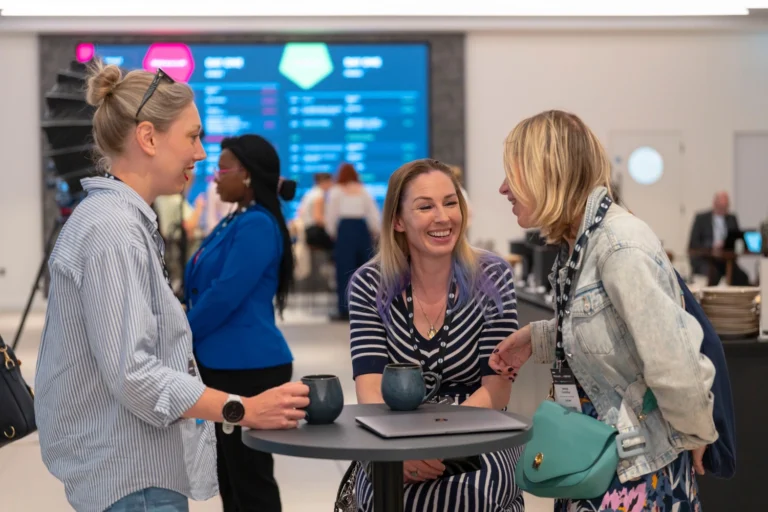
AI LIVE: The London Summit has announced additional speakers for its inaugural event, scheduled for 20–21 October 2026 at Olympia London. Organised by BizClik Media and AI Magazine, the two-day conference and exhibition is expected to bring together more than 2,000 executives, technology specialists and innovators under the theme Technology + Human Purpose.

The newly announced speakers include Jane Smith, Field Chief Data & AI Strategy Officer for Europe, the Middle East and Africa at ThoughtSpot; Florence Mottay, Group Chief Information Security Officer at Zalando; Elisa Sai, Vice President of Analytics & AI at Capgemini Invent; Markus Kede, Senior Vice President and Chief AI Officer at Lundbeck; and Cayleigh O’Dwyer, AI Transformation & Culture Leader at Lloyds Banking Group.

Their contributions will address different aspects of enterprise AI adoption, from large-scale implementation and cybersecurity to organisational change and the use of artificial intelligence in scientific research.

Smith will participate in a discussion on the future of enterprise AI, examining how businesses can move from isolated projects to organisation-wide deployment while maintaining governance and demonstrating measurable returns. Mottay will explore the security implications of increasingly intelligent and automated systems, including AI-powered attacks and data vulnerabilities.

Sai will bring a perspective on translating AI capabilities into practical business outcomes, while Kede will discuss the technology’s potential in biopharmaceutical research. His session will consider how AI, supercomputing and advances in neuroscience could help accelerate drug discovery and support the development of treatments.

O’Dwyer will focus on the people and organisational capabilities required to make AI transformation successful, including leadership, workplace culture, change management and the development of skills needed to support adoption at scale.

The expanded programme reflects a broader shift in the business conversation around AI. As more organisations invest in the technology, attention is increasingly turning to how it can be implemented effectively, governed responsibly and integrated into existing teams and processes.

AI LIVE will feature more than 50 speakers across ten content themes, alongside four executive workshops and an Immersive AI Experience featuring live demonstrations and interactive showcases. Topics will include generative AI, automation, digital identity, governance and enterprise transformation.

By bringing together decision-makers and specialists from different industries, the summit aims to provide a forum for sharing practical experience and exploring the opportunities and risks associated with AI deployment.

AI LIVE: The London Summit will take place on 20–21 October 2026 at Olympia London. Further information about the programme and tickets is available through AI Magazine.

Source: AI Magazine — AI LIVE: The London Summit Adds New Speakers to 2026 Line-Up and BizClik Media’s September speaker announcement.

AI LIVE London Summit Adds Global Technology Leaders to 2026 Speaker Line-Up

As businesses move beyond experimenting with artificial intelligence to integrating it into everyday operations, industry leaders will gather in London this October to examine how organisations can scale AI responsibly, strengthen cybersecurity and turn emerging technologies into measurable business value.

AI LIVE: The London Summit has announced additional speakers for its inaugural event, scheduled for 20–21 October 2026 at Olympia London. Organised by BizClik Media and AI Magazine, the two-day conference and exhibition is expected to bring together more than 2,000 executives, technology specialists and innovators under the theme Technology + Human Purpose.

The newly announced speakers include Jane Smith, Field Chief Data & AI Strategy Officer for Europe, the Middle East and Africa at ThoughtSpot; Florence Mottay, Group Chief Information Security Officer at Zalando; Elisa Sai, Vice President of Analytics & AI at Capgemini Invent; Markus Kede, Senior Vice President and Chief AI Officer at Lundbeck; and Cayleigh O’Dwyer, AI Transformation & Culture Leader at Lloyds Banking Group.

Their contributions will address different aspects of enterprise AI adoption, from large-scale implementation and cybersecurity to organisational change and the use of artificial intelligence in scientific research.

Smith will participate in a discussion on the future of enterprise AI, examining how businesses can move from isolated projects to organisation-wide deployment while maintaining governance and demonstrating measurable returns. Mottay will explore the security implications of increasingly intelligent and automated systems, including AI-powered attacks and data vulnerabilities.

Sai will bring a perspective on translating AI capabilities into practical business outcomes, while Kede will discuss the technology’s potential in biopharmaceutical research. His session will consider how AI, supercomputing and advances in neuroscience could help accelerate drug discovery and support the development of treatments.

O’Dwyer will focus on the people and organisational capabilities required to make AI transformation successful, including leadership, workplace culture, change management and the development of skills needed to support adoption at scale.

The expanded programme reflects a broader shift in the business conversation around AI. As more organisations invest in the technology, attention is increasingly turning to how it can be implemented effectively, governed responsibly and integrated into existing teams and processes.

AI LIVE will feature more than 50 speakers across ten content themes, alongside four executive workshops and an Immersive AI Experience featuring live demonstrations and interactive showcases. Topics will include generative AI, automation, digital identity, governance and enterprise transformation.

By bringing together decision-makers and specialists from different industries, the summit aims to provide a forum for sharing practical experience and exploring the opportunities and risks associated with AI deployment.

AI LIVE: The London Summit will take place on 20–21 October 2026 at Olympia London. Further information about the programme and tickets is available through AI Magazine..

Source: AI Magazine — AI LIVE: The London Summit Adds New Speakers to 2026 Line-Up and BizClik Media’s September speaker announcement.

Church Commits Additional $65 Million to Expand Health and Nutrition Support for Women and Children Across 12 Countries

0

Millions of women and children in underserved communities across Africa and Asia are receiving essential nutrition support, maternal healthcare and practical assistance to improve family livelihoods through a global humanitarian partnership that has secured a further $65 million in funding.

The Church of Jesus Christ of Latter-day Saints announced the new commitment in August 2026, extending its Caring for Women and Children Initiative for a third year. The additional funding brings the church’s total commitment to the programme to $184.2 million.

Over the initiative’s first two years, participating humanitarian organisations reported reaching more than 52 million women and children across 12 countries, including Nigeria, Ghana, Kenya, Sierra Leone, Zambia, the Democratic Republic of Congo, Mali, Senegal, Bangladesh, Cambodia, Nepal and the Philippines.

The programme focuses on practical interventions that can improve health outcomes and strengthen families, including access to essential vitamins, maternal and newborn care, child nutrition, hygiene education and support for household food production.

The reported results include more than five million children and pregnant women screened for malnutrition and given nutrition guidance, 375,000 expectant mothers receiving prenatal care, and 85,000 health workers trained in maternal and newborn care, breastfeeding, child nutrition and vitamin administration.

The initiative has also supported families to improve their own food security. More than 231,000 families received seeds and training to grow home gardens with more nutritious foods, while 2.6 million women participated in mother-to-mother groups to share nutrition knowledge and practical advice.

These interventions are designed to address interconnected challenges facing vulnerable households. Better nutrition can improve children’s development, while access to prenatal care and trained health workers can help identify pregnancy complications and support safer childbirth. Home gardening and livelihood assistance can also help families improve their diets and strengthen their sources of income.

In Zambia, the consortium’s work was associated with a 50 per cent reduction in maternal deaths at a regional hospital, according to Save the Children’s International Programs Division. The initiative has also supported newborn resuscitation, with 357 newborns reported to have received the intervention at birth.

The programme brings together seven humanitarian organisations: CARE, Catholic Relief Services, Helen Keller International, The Hunger Project, iDE, Save the Children and Vitamin Angels. Each contributes different expertise, from nutrition and healthcare to agriculture, livelihoods and community development.

Rather than operating independently, the organisations work through a shared framework intended to strengthen coordination, pool knowledge and make better use of available resources. The approach recognises that the challenges facing women and children rarely exist in isolation and often require several forms of support to produce lasting change.

For example, a family may need nutritional guidance alongside access to nutritious food, while a pregnant woman may require both prenatal care and a properly equipped health facility. Coordinating these services can help address gaps that individual programmes might struggle to resolve alone.

The initiative’s impact can also be seen at the household level. In northern Ghana, one participant, Ramatu, received nutrition training and learned to produce nutrient-rich flour for sale. According to iDE chief executive Reed Peterson, she developed the business into a continuing source of income and gained confidence in speaking publicly about her work. Her experience illustrates how health and livelihood programmes can create benefits that extend beyond their immediate intervention.

The latest funding commitment will allow the partnership to continue its work while humanitarian organisations face growing demands on limited resources. Its long-term value will depend on sustaining these services, strengthening local capacity and ensuring that the reported gains translate into lasting improvements for families.

The initiative offers an example of how collaboration between donors and specialist humanitarian organisations can bring different resources and expertise together around shared development goals. For women and children in the communities being served, the ultimate measure of success is whether that collaboration leads to healthier pregnancies, better-nourished children, stronger livelihoods and improved opportunities for future generations.

Source: Deseret News — Relief Society adds $65 million donation to international aid consortium

FEGI Global to Host Girl-Led Advocacy Event to End Child Marriage and Advance Girls’ Rights

0

What happens when girls are given the microphone to lead a conversation about child marriage, their rights and the future they want for themselves?

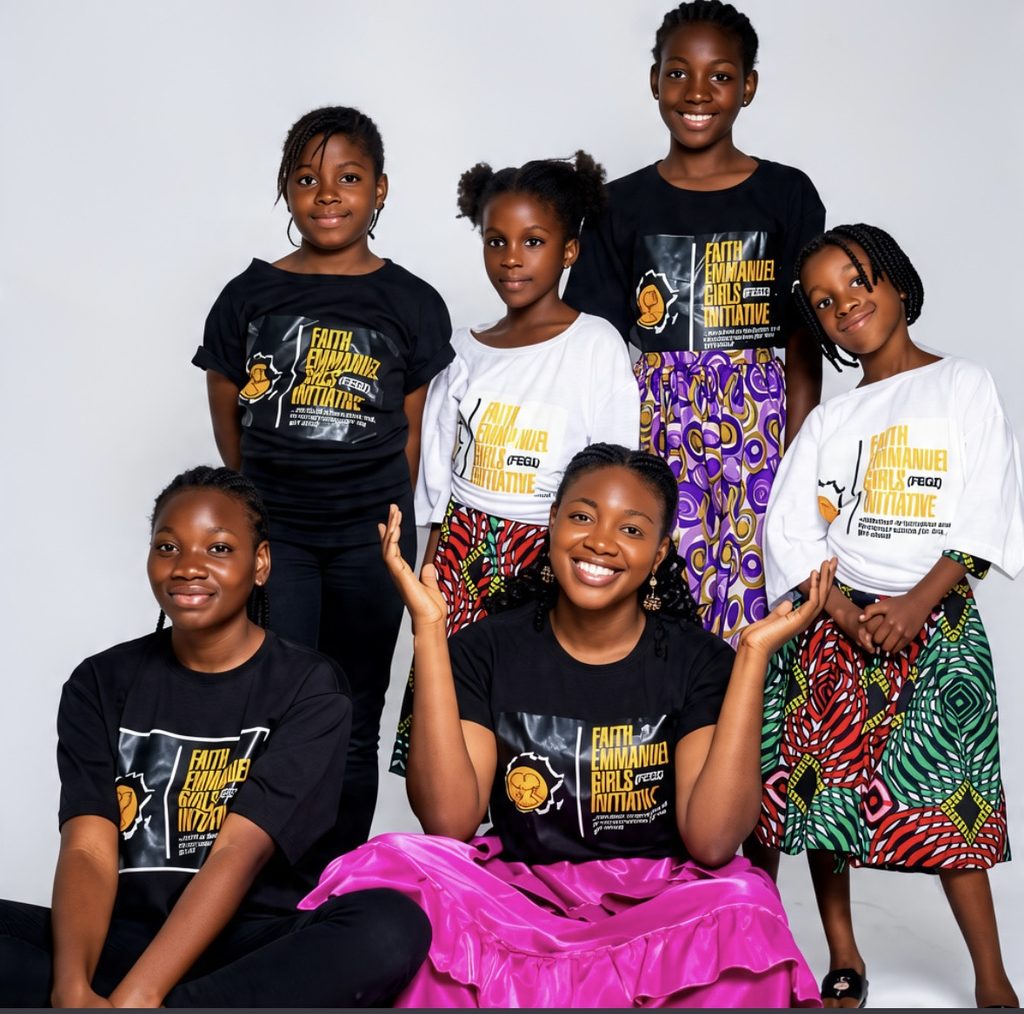
That is the approach Faith Emmanuel Girls Initiative (FEGI Global) is taking this International Day of the Girl Child, as it brings 100 girls aged 13 to 15 together in Jiwa, Abuja for a girl-led advocacy event focused on ending child marriage and investing in girls’ rights.

The event, themed “End Child Marriage and Invest in Girls’ Rights,” will take place on Friday, October 9, 2026, at Government Day Secondary School (GDSS), Jiwa, Abuja, with six selected students leading a live talk-show-style conversation with their peers.

Rather than positioning girls simply as recipients of information, the event will give them the platform to speak about the dangers of early marriage, understand their legal and human rights, examine the cost of lost opportunities and discuss what meaningful investment in girls should look like.

“This is not about pity,” said Faith Emmanuel, Founder of FEGI Global. “This is about power. These girls are not waiting to be saved, they are ready to speak, and lead. Our job is to create the platform.”

The participating girls will also receive FEGI Global Girls Kits as part of the outreach.

Child marriage remains a significant barrier to girls’ education and opportunities in Nigeria. According to UNICEF, one in three Nigerian girls is married before the age of 18, with prevalence considerably higher in some parts of the country.

For FEGI Global, addressing the issue requires more than telling girls about the dangers of early marriage. It also means giving them the knowledge and confidence to understand their rights, recognise the choices available to them and participate in conversations about their futures.

Founded in 2021 by Faith Emmanuel, Faith Emmanuel Girls Initiative is focused on breaking down barriers that limit the progress of girls in Nigeria and equipping them with the knowledge, resources and support to transcend societal limitations.

The organisation’s work spans education, mentorship, health and advocacy. Its programmes include the Annual Girl Child Conference, Mindset Orientation Training for girl-child advocates, the Back-to-School Rural Community Project, which supports children in rural communities with school fees, and Big Sister, which creates an intimate space for girls to ask questions and seek guidance.

FEGI Global also commemorates the International Day of the Girl Child as part of its commitment to creating platforms where girls can learn, speak up and participate meaningfully in conversations about their rights and futures.

Through the October 9 event, the organisation is putting that commitment into practice by giving girls the microphone and allowing them to lead a conversation that directly concerns their lives.

The event will hold at Government Day Secondary School, Jiwa, Abuja, from 10:00 a.m. to 12:00 p.m. on Friday, October 9, 2026.

img 0697

YHLDI to Mark International Day of the Girl Child With Girls’ Empowerment Event in Ondo

0

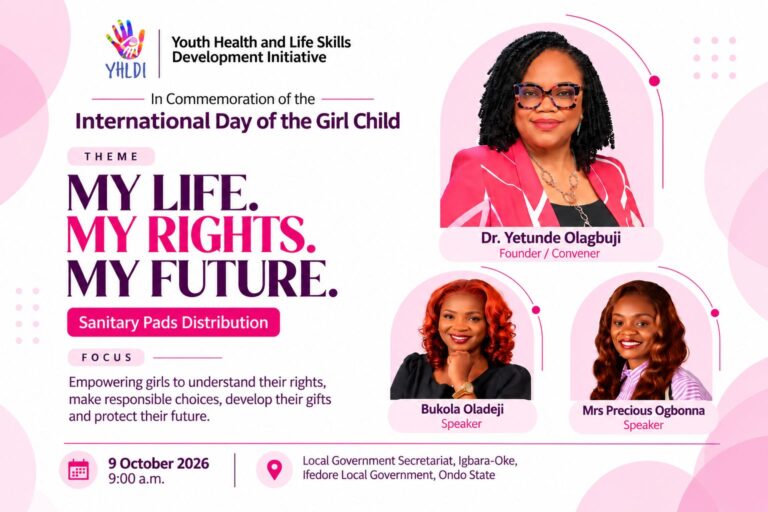
The Youth Health and Life Skills Development Initiative (YHLDI) will commemorate the 2026 International Day of the Girl Child with a girls’ empowerment event focused on helping adolescent girls understand their rights, make responsible choices and take greater ownership of their futures.

The event, themed “My Life. My Rights. My Future.”, is scheduled to hold on Friday, October 9, 2026, at the Local Government Secretariat in Igbara-Oke, Ifedore Local Government Area of Ondo State.

The programme will feature conversations and activities designed to equip girls with practical knowledge around their health, rights, personal development and future aspirations. Sanitary pads will also be distributed to girls as part of the initiative’s focus on supporting menstrual health and dignity.

The event is being convened by Dr. Yetunde Olagbuji, founder of the Youth Health and Life Skills Development Initiative, an organisation established in 2017 to equip adolescents and young people with the knowledge, life skills and opportunities needed to thrive and make purposeful contributions to society.


Over the years, YHLDI has worked with adolescents through school-based programmes, workshops, mentorship, media engagements and youth-focused advocacy. The organisation has also supported initiatives addressing adolescent health, resilience, sexuality education and leadership development.

Among its initiatives is the Becoming Mentorship Programme, which Dr. Olagbuji convenes to nurture leadership and personal development among young people. She has also authored books focused on adolescent growth and development.

YHLDI has also explored innovative approaches to adolescent health education. In partnership with InStrat Global Health Solutions, the organisation developed and piloted a video mobile training application for teachers delivering Family Life and Health Education in secondary schools. The pilot was conducted in five private schools in Akure and recorded significant improvements in teachers’ knowledge following the training.

Dr. Olagbuji brings both public health expertise and years of youth development experience to the initiative. In addition to founding YHLDI, she serves in a senior planning and research role within Ondo State’s primary healthcare system and lectures at the University of Medical Sciences, Ondo.

The International Day of the Girl Child event will also feature speakers Bukola Oladeji and Mrs. Precious Ogbonna, who will engage participants around issues relevant to girls’ development, choices, rights and aspirations.

The organisers say the focus is not only on celebrating girls, but on creating space for them to understand themselves, recognise their rights, develop their gifts and make decisions that can positively shape their future.

The 2026 International Day of the Girl Child carries a global focus on girls’ rights and opportunities. Through its “My Life. My Rights. My Future.” theme, YHLDI is bringing that conversation directly to girls in Igbara-Oke, combining advocacy with practical support through health education and sanitary pad distribution.

For YHLDI, the initiative reflects its broader commitment to ensuring that adolescents are not left to navigate critical stages of their development without the information, support and opportunities they need to thrive.

Beyond Enrolment: MAYEIN Calls for Action on the Barriers Keeping Oyo Girls in School

Getting more girls into classrooms is only part of the education challenge. Keeping them there, ensuring they learn, and giving them a meaningful voice in decisions about their future requires tackling the barriers that often begin far beyond the school gate.

That is the message from the Mentoring Assistance for Youth and Entrepreneurs Initiative (MAYEIN), which is calling on the Oyo State Government to intensify efforts against poverty, insecurity, child marriage, period poverty and inadequate water, sanitation and hygiene facilities that continue to affect girls’ access to education.

Speaking on the outcomes of MAYEIN’s Girls in Education Dialogues project, Executive Director Ewa Oluwa Orowale said education interventions must move beyond simply increasing enrolment figures.

For girls in underserved communities, the journey to school can itself be a challenge. Long distances, transportation costs and household poverty can keep students away, while expenses for uniforms, books, shoes and other learning materials add another burden to struggling families.

Some girls are also pushed into hawking and other economic activities to support their families. Others leave school because of child marriage, teenage pregnancy or gender-based violence.

Period poverty presents another obstacle. A lack of sanitary materials, clean toilets and reliable water supplies can cause girls to miss school repeatedly, creating academic gaps that become increasingly difficult to overcome.

MAYEIN is therefore urging authorities to look beyond constructing school facilities and ensure that toilets are maintained, water is available and facilities are accessible to children living with disabilities.

The organisation is also calling for stronger safeguarding systems in schools, including confidential reporting channels, trained safeguarding officers and clear procedures for responding to bullying, sexual harassment, gender-based violence and other forms of abuse.

According to Orowale, safeguarding should become part of everyday school culture rather than remain confined to policy documents. Teachers and other personnel working with children should receive appropriate training, while recruitment processes should include relevant background checks.

MAYEIN’s Girls in Education Dialogues began in 2022 with 100 girls across 10 schools in Oyo State and reached 300 girls and 50 boys between 2022 and 2025. With support from the AU-EU Youth Action Lab, the initiative has also engaged education stakeholders and produced a documentary featuring schoolgirls discussing their experiences.

The organisation has further trained teachers and guidance counsellors in social and emotional learning, improved teaching approaches and psychosocial support.

Its work has also produced signs of change. Orowale noted that girls’ participation in sports increased across the participating schools, with nine of the 10 schools having girls involved in sports in 2025.

MAYEIN now wants the conversation to move from advocacy to implementation and accountability.

Orowale said education success should not be measured only by enrolment or how much money is spent, but by whether children are learning, remaining in school, completing their education and studying in safe and supportive environments.

She also called for second-chance education and flexible learning pathways for girls who have dropped out because of poverty, early marriage, teenage pregnancy or displacement.

Digital inclusion is another area requiring attention. MAYEIN argues that young people in underserved communities need access to computers, electricity and reliable internet before being expected to acquire advanced digital skills.

Through its Oyo Literacy Programme, the organisation provides basic digital literacy training while introducing students and young people to artificial intelligence. It is also advocating for offline digital learning resources that can serve communities with limited connectivity.

Looking ahead, MAYEIN plans to expand its SMART Libraries programme, which provides small, mobile and internet-enabled learning spaces in underserved communities. The organisation currently operates four library and community centres in Ibadan and is targeting at least 10 additional SMART Libraries across Nigeria in 2027.

For Orowale, the bigger objective is participation. Girls should not simply be counted as beneficiaries of education programmes; they should have a voice in shaping the policies, environments and opportunities that affect their lives.

The challenge, therefore, is no longer simply getting girls through the school gates. It is creating an education system where they can stay, learn, feel safe, participate and ultimately have a seat at the table.

Folorunso Alakija’s Rose of Sharon Foundation Calls for Stronger Protection of Widows’ Rights

0

For many widows, losing a spouse can bring more than grief. It can also expose women to disputes over property, economic insecurity, discrimination and other forms of vulnerability.

The Rose of Sharon Foundation is calling for stronger action at the grassroots level to ensure that widows are not left to navigate these challenges without adequate protection and support.

The foundation made the call at a Widowhood Rights Stakeholders’ Engagement in Lagos, bringing together stakeholders to discuss how advocacy for widows can translate into practical action within communities.

The conversation focused on the gap that can exist between recognising widows’ rights and ensuring those rights are protected in practice, particularly at the local government and community levels.

The foundation has spent more than 15 years working around the socio-economic and legal protection of widows and orphans. Its programmes include financial support, interest-free loans, vocational skills, education scholarships, healthcare and legal services. The organisation says it has directly impacted more than 4,262 widows since its establishment.

At the latest stakeholders’ engagement, the foundation highlighted the importance of moving beyond advocacy and ensuring that commitments made by community and local government stakeholders result in concrete interventions for widows.

Oloruntosin of the Rose of Sharon Foundation noted that while stakeholders had made commitments, the organisation was yet to identify specific interventions from local governments and communities that had directly resulted from its advocacy.

That gap points to a wider challenge in protecting women’s rights: policies and advocacy can create awareness, but their impact ultimately depends on whether women can access protection, legal remedies and support when they need them.

The foundation’s work has also included educating widows about their rights and connecting them to legal support. Its wider approach combines economic empowerment with socio-legal protection, recognising that financial independence and knowledge of one’s rights can both influence a widow’s ability to navigate difficult circumstances.

The latest engagement therefore places renewed attention on the role of local institutions and communities in protecting widows, particularly women who may have limited access to formal systems of justice and support.

For the Rose of Sharon Foundation, the next step is ensuring that conversations around widowhood rights translate into action — from community-level protection and legal support to economic opportunities that enable widows to rebuild their lives with greater security and dignity.

The message emerging from the engagement is straightforward: protecting widows’ rights cannot stop at awareness. It must reach the communities where violations occur and create practical pathways for women to seek support, protection and justice.