
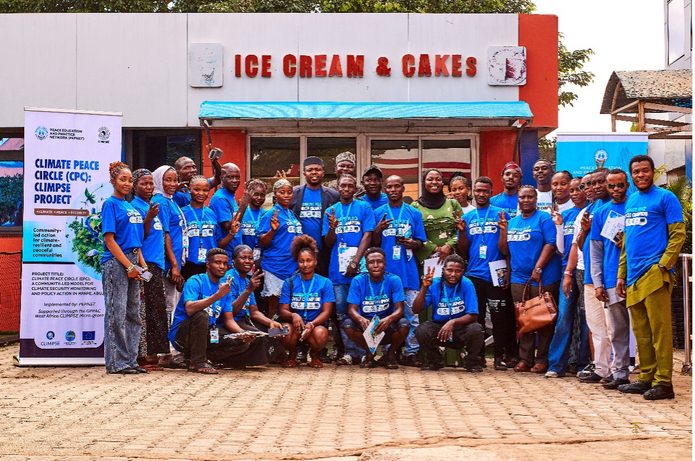
The Peace Education and Practice Network (PEPNET) has trained community members in Mpape, Abuja, on the links between climate change, human security and peacebuilding, as part of efforts to strengthen community capacity to identify and respond to emerging climate-related security risks.
The two-day Climate Peace Circle (CPC) training, held on August 21st and 22nd, 2026, brought together residents, youths, women, community leaders, government representatives, researchers, peacebuilding practitioners, media professionals and other stakeholders. The training was organised under the CPC CLIMPSE Project, with the theme, “A Community-Led Model for Climate Security Monitoring and Policy Action in Mpape, Abuja.”
The initiative seeks to place communities at the centre of efforts to understand the effects of climate change and develop practical responses to environmental and security challenges. Speaking during the programme, PEPNET’s Executive Director, Amb Moses ABOLADE urged participants to take ownership of the initiative and ensure that knowledge gained during the training reaches other members of their communities. He also encouraged participants to document their experiences and communicate the impact of the project within their communities.
The training examined the growing implications of climate change for human security, with participants discussing challenges including flooding, unsafe water supply, extreme heat, loss of livelihoods, resource scarcity, migration and displacement. Facilitators explained that while climate change does not automatically cause conflict, environmental pressures can interact with existing social and economic vulnerabilities and contribute to tensions.
For instance, the destruction of crops and livestock by flooding or desertification can result in livelihood losses, while climate-induced migration may increase competition over land and other resources. Participants were consequently encouraged to strengthen community resilience and develop effective early-warning mechanisms capable of identifying emerging risks and supporting timely responses. The training also examined the role of climate-sensitive peacebuilding in preventing environmental pressures from worsening existing tensions.
Facilitated by Dengiyefa Angalapu, the session on Climate-Sensitive Peacebuilding emphasised the need for development and peacebuilding interventions to take both environmental and conflict risks into account.
Participants were encouraged to consider how development projects could unintentionally contribute to flooding, erosion, competition over resources or tensions between community groups if climate and conflict considerations are overlooked.
Another major component of the programme was a session on Community Climate Security Monitoring, facilitated by Timothy Ogenyi. The session focused on enabling community members to identify emerging climate-related risks, document relevant information and communicate concerns to appropriate institutions. According to the training report, community-level monitoring can support the early identification of risks and promote timely responses.
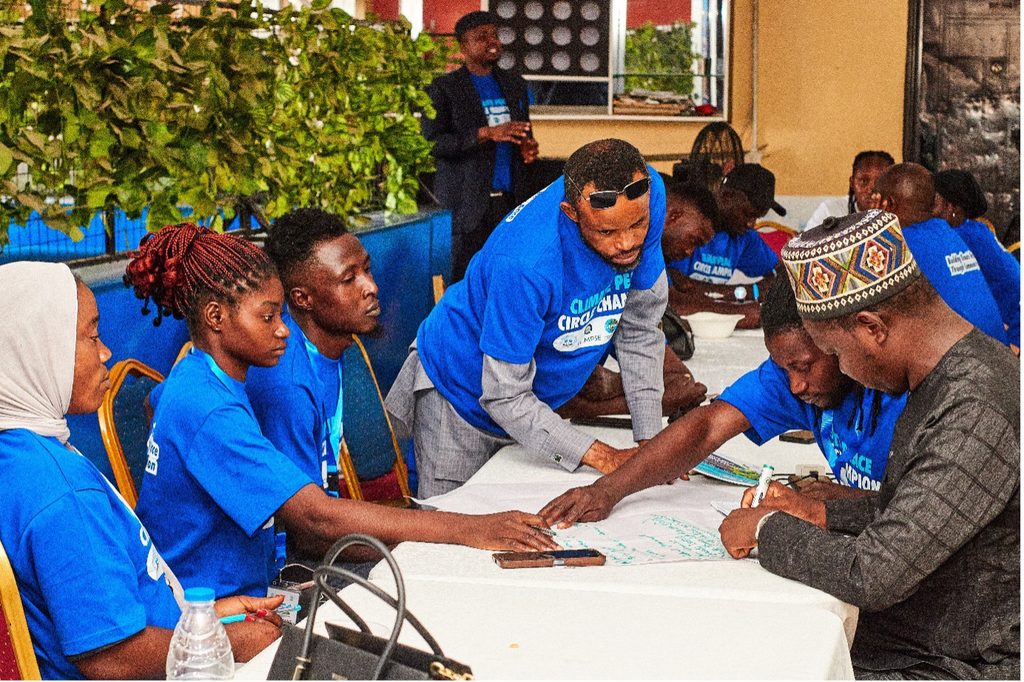
The programme also provided participants with an opportunity to put their knowledge into practice.
During a practical exercise, participants were divided into four groups and tasked with identifying climate-security challenges affecting their communities, proposing mitigation measures and identifying the relevant government institutions responsible for addressing the issues. Each group subsequently presented its findings to the wider group, allowing participants to compare experiences and consider locally appropriate responses. The exercise reflected one of the central objectives of the CPC CLIMPSE Project: moving beyond awareness to community-based observation, documentation and action.
The training also featured reflections from participants, an evaluation of the programme and the presentation of certificates at the closing session. Participants emerged from the programme as Climate Peace Circle Champions, who are expected to remain engaged through subsequent CPC activities and continue sharing knowledge and identifying emerging climate-security concerns within their communities.
The next phase of the project will focus on community climate-security observation, mapping and risk analysis. Information generated through these activities is expected to contribute to a Community Climate Security Policy Brief, linking community experiences with relevant policymakers and institutions. The project is also expected to strengthen collaboration between communities and government institutions.
Representatives of the Federal Ministry of Environment, National Emergency Management Agency (NEMA), Abuja Environmental Protection Board (AEPB), Nigeria Hydrological Services Agency (NIHSA), National Environmental Standards and Regulations Enforcement Agency (NESREA), Nigerian Institute of Social and Economic Research (NISER), and Institute for Peace and Conflict Resolution (IPCR) participated in the engagement. Among the representatives was Jonah D. Barde, Deputy Director, Climate Change Department, Federal Ministry of Environment, who participated in the opening engagement.
The involvement of government and research institutions provided an opportunity for community experiences to be considered alongside institutional and technical perspectives.
The organisers also highlighted the role of the media in extending the conversation beyond the training venue. PEPNET said the media remains an important platform for public education, amplifying community voices and encouraging wider conversations around climate, peace and security.
The Climate Peace Circle initiative is being implemented in Mpape by PEPNET with support through the CLIMPSE Micro Grant of GPPAC West Africa, with Building Blocks for Peace Foundation (BBFORPEACE) also supporting the initiative. The organisation said the conclusion of the two-day training marks the beginning of a longer process of community monitoring, dialogue, evidence generation and policy engagement.
The training’s key lessons included the need to recognise climate change as a human security and peacebuilding concern, strengthen early-warning and monitoring systems, involve communities in climate adaptation and mitigation, and ensure that development interventions are both climate-sensitive and conflict-sensitive. For PEPNET, the experience in Mpape demonstrates the potential of community-led approaches to climate security and provides a foundation for continued collaboration between residents, institutions and other stakeholders.
The Climate Peace Circle conversation, organisers said, continues beyond the training as communities move from knowledge to collaboration, action and resilience.