Home Blog Page 5

African Girls’ Assembly Opens Call for Girls to Help Shape Conversations on Girls’ Rights Across Africa

0

Across Africa, conversations about girls’ rights, equality and opportunity continue to shape programmes and initiatives designed to improve girls’ lives. But one question is increasingly important: how often are girls themselves given the opportunity to help shape those conversations?

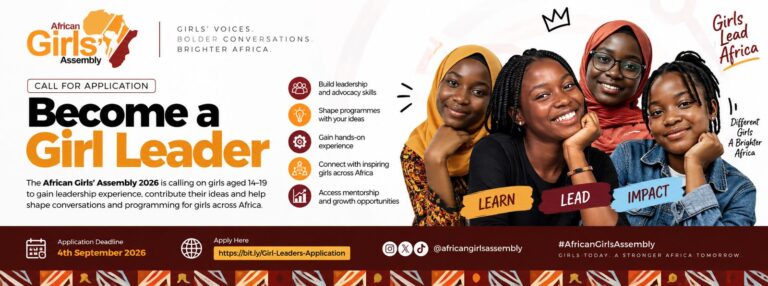
The African Girls’ Assembly is responding to that gap with the launch of its 2026 Girl Leaders programme, an initiative designed to place girls at the centre of conversations and programming that affect their lives and futures.

The programme is inviting girls aged 14 to 19 from across Africa to become Girl Leaders and gain practical experience in leadership, advocacy, collaboration and programme development while contributing their ideas and perspectives to the African Girls’ Assembly.

Rather than positioning girls solely as beneficiaries of programmes created for them, the initiative creates an opportunity for them to participate as contributors — bringing their experiences, questions and ideas into spaces where conversations about girls’ rights and equality are taking place.

Selected Girl Leaders will have opportunities to contribute to conversations and programming, gain hands-on experience in conference planning and delivery, connect with other girls and young leaders across Africa, and access mentorship, learning and opportunities for personal growth.

The initiative is particularly seeking girls who are passionate about girls’ rights and equality, curious and open-minded, confident in sharing their ideas and perspectives, and ready to collaborate, contribute and take initiative.

The need for meaningful youth participation is particularly important when programmes are designed to address issues affecting young people. Girls experience these issues firsthand, yet opportunities for them to participate in shaping responses can be limited.

The Girl Leaders programme seeks to change that dynamic by creating a platform where girls can develop the confidence and skills to speak, contribute and participate meaningfully in conversations that concern them.

“Girls should not only be spoken about; they should have opportunities to speak, contribute and help shape the conversations that affect their lives.”

Through the programme, the African Girls’ Assembly aims to build a community of young African women who can learn from one another, develop their leadership capacities and contribute to a broader movement for girls’ rights and equality across the continent.

Applications are open to girls aged 14–19. Selected applicants will receive further information about the Girl Leaders opportunity and the next steps.

The application deadline is September 4, 2026.

The African Girls’ Assembly is calling on eligible girls across Africa to step forward, share their voices and take their place in a platform designed to help them learn, lead and contribute to conversations shaping the future of girls across the continent.

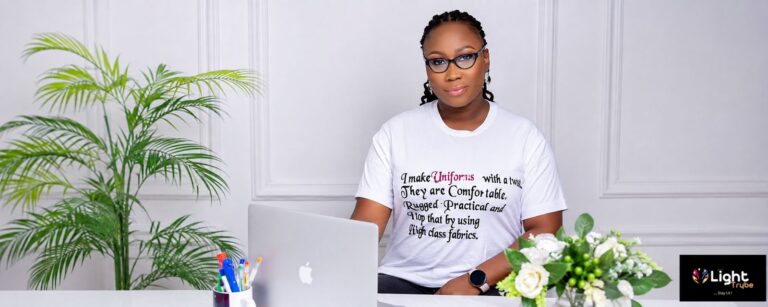
Abiola Olukunle Is Helping Organizations Stand Out With Uniforms

0

Every day, children head to school in uniforms. Workers report to offices, hotels, restaurants and businesses dressed for the jobs they do. Teams step into their workspaces looking like teams.

And behind many of those uniforms is a business most people will probably never think about.

BRS Signatures.

And behind BRS Signatures is Abiola Olukunle, a Nigerian entrepreneur who has built a garment manufacturing business around something we all use, but hardly ever stop to think about: what people wear when they show up.

From school uniforms to workwear for hospitality, catering, retail and oil and gas, Abiola’s business makes clothing for people and organisations across different sectors.

But the more I learnt about Abiola, the more I realised there was more to her story than the clothes she makes.

Because there is a whole lot that happens between an organisation saying, “We need uniforms,” and someone eventually putting one on.

There are fabrics. Measurements. Designs. Branding. Production. Fittings. Finishing. Deadlines. Clients. People.

Somebody has to make all of that happen.

Abiola sits right in the middle of it.

As Founder and Creative Director of BRS Signatures, she has built a business serving organisations across different sectors, with education being one of the spaces closest to the everyday lives of many Nigerians.

The uniform may be what we see.

But there is a whole business behind it.

And I think that is what makes her work interesting.

She has taken something as ordinary as clothing and built something useful around it, something that helps schools, businesses and teams look like themselves and feel ready for the work they have to do.

What makes Abiola’s story even more interesting is that garment manufacturing was not where her journey started.

She studied Microbiology at Crawford University and later studied Public Health at the University of Lagos, specialising in Epidemiology. Then came entrepreneurship training at the Enterprise Development Centre of Pan-Atlantic University.

From science and public health to garment manufacturing.

Not exactly the career path you would predict.

But then again, whose life actually follows the plan we started with?

Sometimes, the path only makes sense when you look backwards.

And the more I looked at Abiola’s work, the more I noticed another thread.

She teaches.

Her history includes working with children through Beyond the Classroom Tutoring, volunteering with HACEY’s Health Initiative and mentoring teenagers through her church. She has also been involved with Knit Africa Initiative, where she has taught children and adults the craft of knitting.

And I really like this part of her story.

Because even as her businesses have grown, there seems to be this part of Abiola that still wants to teach.

To take something she knows and say, “Come, let me show you.”

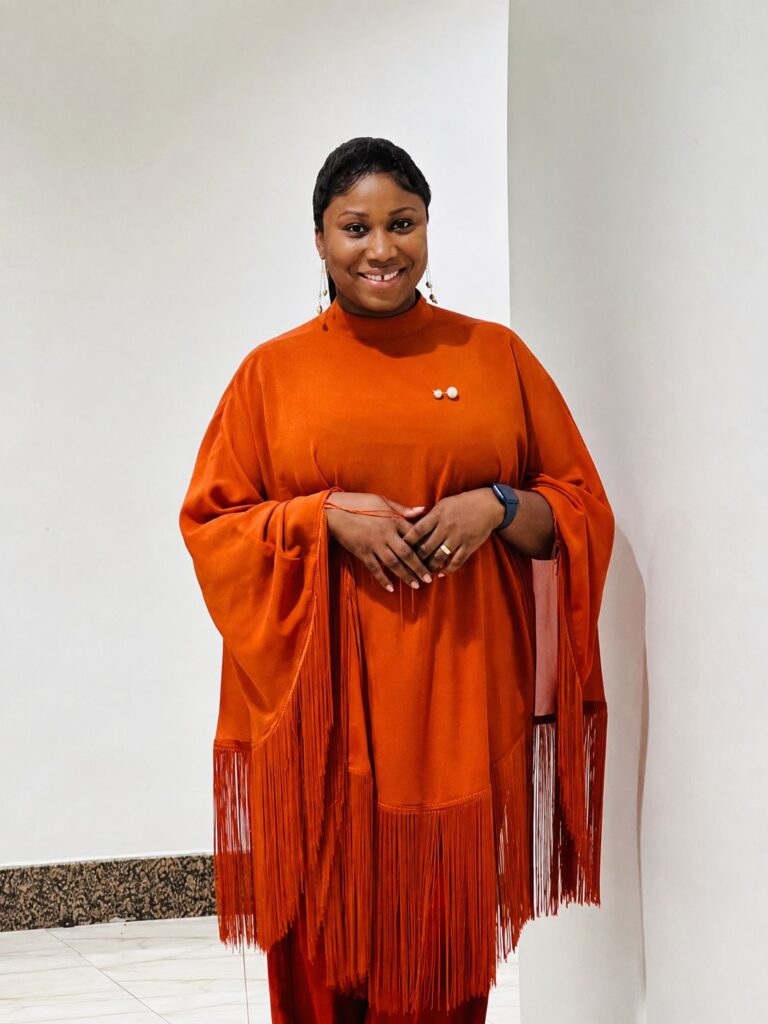
Abiola Olukunle

Knit Africa is not the centre of what she does today, BRS Signatures and the uniform business clearly are, but it tells us something about the person behind the entrepreneur.

She doesn’t just seem interested in making things.

She is also interested in helping other people learn how to make things.

And there is a difference.

Her creativity also shows up in The Light Trybe, her faith-inspired clothing venture.

Again, these are different things. Uniforms. Knitting. Clothing. Teaching. Entrepreneurship.

But when you put them together, you start to see the thread.

She keeps finding ways to turn creativity into something useful.

A uniform becomes a business.

A creative idea becomes a clothing line.

A skill like knitting becomes something that can be taught, shared and potentially turned into a livelihood.

And I think that is what stayed with me about Abiola.

We tend to think of uniforms as ordinary.

A child puts one on and goes to school.

A hotel worker puts one on and starts a shift.

A restaurant team gets dressed and gets to work.

We see the uniform.

We don’t usually see the person who made it.

We don’t see the business behind it.

We don’t think about the skill, the work, the people and the decisions that went into getting that garment from an idea to someone’s body.

Abiola does.

She has built a business around that overlooked space, making the clothes that help people step into their roles every day.

And maybe that is the quiet beauty of what she is building.

She isn’t making clothes simply for people to wear.

She is making something that helps people show up.

And behind that work is a woman whose journey has taken her from Microbiology and Public Health to garment manufacturing, entrepreneurship, creative education and mentorship, and somehow, all those different threads have found their way into the same story.

A woman who is building businesses, but still making room to teach.

A woman who makes uniforms, but also understands the value of a skill.

A woman who has found different ways to turn what she can create with her hands into something that other people can use.

And maybe that is why I wanted to share her story.

Because sometimes, the people doing the most interesting work are not the loudest people in the room.

Sometimes, they are simply busy making something useful and helping other people show up.

Abiola Olukunle is making uniforms. But she is also building businesses, skills, creativity and opportunities around the simple act of making.

And the next time you see someone in a uniform, maybe you will think about it differently.

Someone made that.

Concerned Hearts Foundation, WEFTA Improve WASH Access for Pupils at Volta School

0

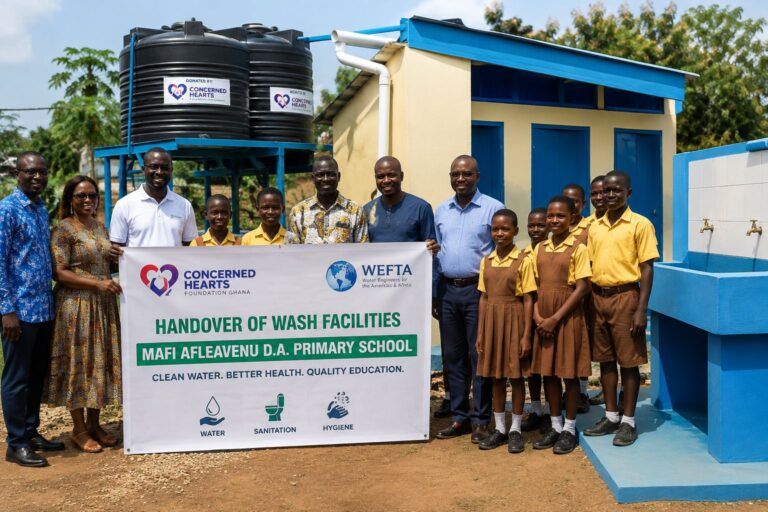
Pupils and staff of Mafi Afleavenu D.A. Primary School in the Central Tongu District of Ghana’s Volta Region now have improved access to safe water and sanitation following the completion and handover of a new Water, Sanitation and Hygiene (WASH) project.

The intervention was delivered by Concerned Hearts Foundation Ghana in partnership with Water Engineers for the Americas and Africa (WEFTA), a US-based non-governmental organisation, with support from members of the Mafi Afleavenu community.

Implemented under the theme “Clean Drinking Water and Sanitation for Quality Education in Ghana,” the project includes a rainwater harvesting system with poly tanks and toilet facilities designed to address longstanding WASH challenges at the school.

For a school serving a deprived community, the intervention goes beyond infrastructure. Reliable access to water and appropriate sanitation can have a direct bearing on pupils’ health, dignity, attendance and ability to participate fully in school activities.

Speaking at the handover ceremony, Emmanuel Kwadzo Amezah, Executive Director of Concerned Hearts Foundation Ghana, said the project was initiated after the Foundation identified the school’s critical water and sanitation needs.

He said the Foundation recognised that creating a conducive learning environment requires more than classrooms and teaching materials.

“Access to basic water and sanitation is closely connected to public health and quality education, particularly in underserved communities.”

According to Amezah, the Foundation, established in 2023, has focused on promoting girl-child education, supporting vulnerable women, providing teaching and learning materials to underserved communities and schools, and advocating against child marriage.

The organisation has since expanded its work into WASH interventions, recognising the role that basic infrastructure plays in enabling children to learn in safer and healthier environments.

The project was made possible through funding from WEFTA after Concerned Hearts Foundation Ghana approached the organisation for support following its assessment of the school’s needs.

Amezah expressed appreciation to WEFTA for funding the intervention and to the Mafi Afleavenu community for contributing to the successful completion of the project.

The completed facilities have been formally handed over to the school’s Headteacher, School Management Committee (SMC) and Parent-Teacher Association (PTA) for use and management.

Students, teachers and school authorities have also committed to protecting and maintaining the facilities to ensure they continue serving the school and wider community.

Concerned Hearts Foundation Ghana will conduct regular monitoring visits to assess the condition, functionality and use of the facilities, while providing WEFTA with updates on the project’s impact and any emerging needs.

Tim Wellman, Executive Director of WEFTA, said the organisation was pleased to partner with Concerned Hearts Foundation Ghana on the intervention, noting that safe drinking water and decent sanitation were fundamental to children’s health, dignity and educational development.

He stressed that the long-term success of the project would depend on the commitment of the school and community to maintaining the facilities and keeping them functional.

Traditional leaders and members of the Mafi Afleavenu community welcomed the intervention, describing it as an important step towards resolving the school’s longstanding water and sanitation challenges.

They pledged to work with the school authorities to protect and maintain the facilities so that they remain available to pupils and staff for years to come.

For the pupils of Mafi Afleavenu D.A. Primary School, the new facilities represent more than tanks and toilets. They provide some of the basic conditions children need to stay healthy, remain in school and learn with dignity.

The project also demonstrates how partnerships between local organisations, international development partners and communities can help address practical barriers to education in underserved communities.

About Concerned Hearts Foundation Ghana

Concerned Hearts Foundation Ghana is a development organisation established in 2023 working to promote girl-child education, support vulnerable women and children, provide educational resources to underserved communities and schools, advocate against child marriage, and increasingly support WASH interventions in deprived communities.

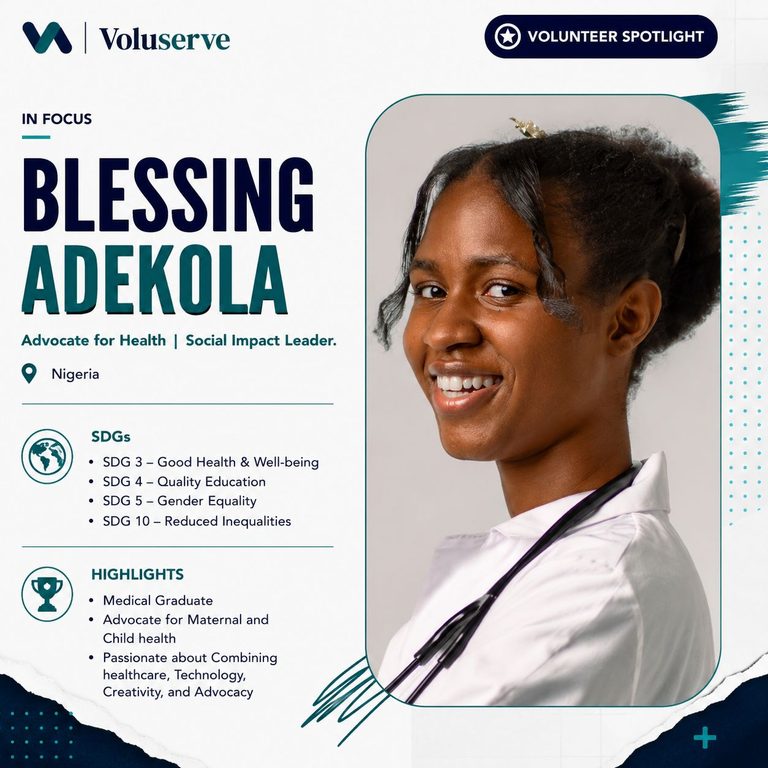
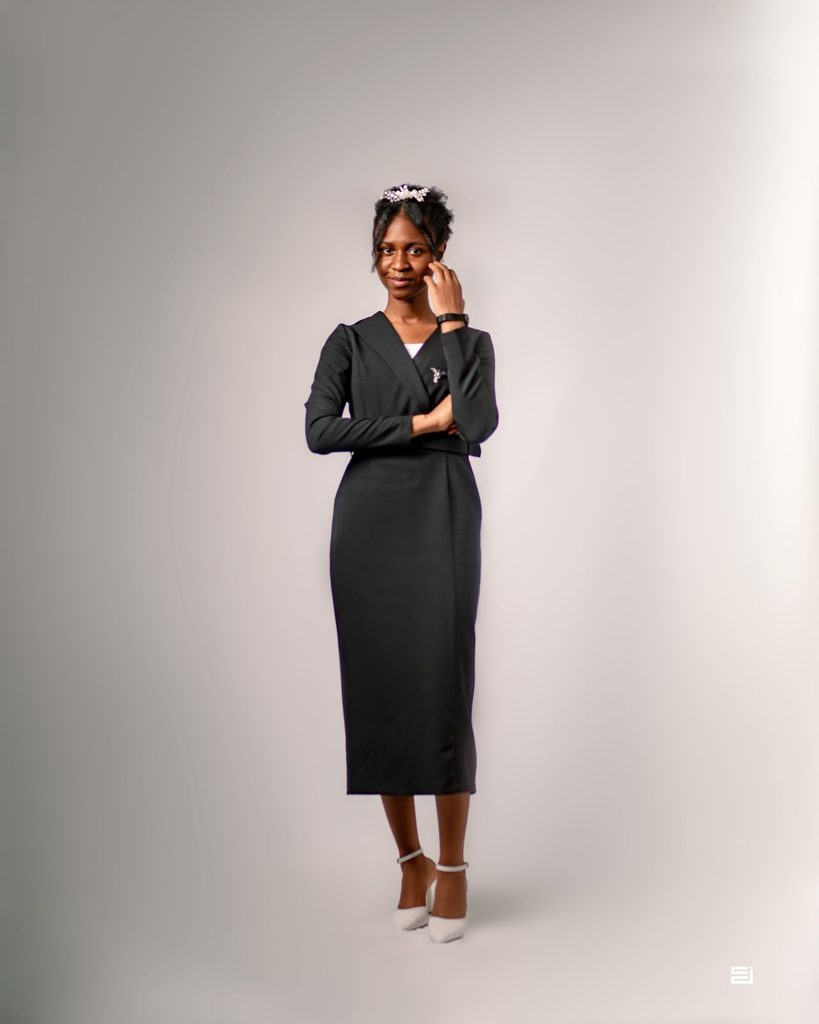
Meet Blessing Adekola: The Volunteer Exploring New Ways to Create Healthier Communities

At 14, Blessing Adekola started studying medicine.

She was young, curious, and interested in medicine, but she didn’t know then where that decision would take her. She certainly didn’t have her entire career mapped out.

She just started.

Years later, that decision has taken her through medical training, clinical experiences and encounters with people that changed the way she understood healthcare.

Because somewhere along the way, medicine stopped being only about diseases, diagnoses and treatment.

It became about people.

In different clinical settings, Blessing met patients and families from different backgrounds. She saw the uncertainty that comes with illness, the questions families have when someone they love is unwell, and the difference that empathy and simple acts of care can make.

The more she experienced, the more curious she became.

She started looking beyond the patient in front of her.

What happens before someone gets to the hospital?

Why do some people have access to better healthcare than others?

How does education affect the choices people make about their health?

And how much of a person’s health is actually determined by what happens outside the hospital?

Those questions introduced Blessing to public health and opened up a much bigger way of thinking about medicine.

Today, she doesn’t see medicine and public health as two paths competing for her attention.

She sees them as two sides of the same work.

Medicine gives her the opportunity to understand and care for people individually. Public health allows her to think about the wider systems and circumstances that affect entire communities.

That perspective has shaped her growing interest in maternal and child health, women’s health, health inequalities, community interventions and healthcare policy.

But there is another part of Blessing’s story that makes her journey even more interesting.

She is not only interested in healthcare.

She is also interested in creativity, technology and communication.

With skills in video editing, digital content creation and social media management, she is exploring how these tools can be used alongside healthcare and advocacy.

Because getting people healthier isn’t only about having the right medical knowledge.

Sometimes, it is about finding the right way to communicate that knowledge.

Making information easier to understand.

Using a video to reach someone who may never attend a health seminar.

Using creativity to make an important conversation feel less intimidating.

For Blessing, these interests aren’t separate pieces of her life. She is still discovering how they might come together.

And that same spirit of exploration is part of why she volunteers.

She sees volunteering as an opportunity to step outside her usual environment, meet people with different experiences, contribute what she knows and learn something new in the process.

She doesn’t pretend to have everything figured out.

In fact, she is quite comfortable saying that she is still figuring out what comes next.

After starting medicine at 14 and eventually becoming a medical graduate, she could easily choose one path and stay firmly on it.

Instead, she is asking more questions.

Maybe her future will take her deeper into medicine.

Maybe public health will become a bigger part of her work.

Maybe technology, advocacy, education or creative communication will become part of the picture too.

Perhaps it will be all of them.

For now, Blessing is allowing herself to explore, and there is something powerful about that.

Because sometimes, the most meaningful careers aren’t built from a perfect plan. They are built from curiosity, experience, service and the willingness to keep learning.

At 14, Blessing thought she was simply beginning her journey into medicine.

She couldn’t have known that the journey would eventually make her look beyond the hospital walls and ask bigger questions about how communities live, learn and stay healthy.

She is still figuring out where those questions will lead.

But she knows what she wants the journey to stand for: using what she knows, learning from others, and finding meaningful ways to give back.

And that is why, this week, we are proud to celebrate Blessing Adekola as our Voluserve Volunteer Spotlight.

whatsapp image 2026 08 21 at 12.36.21 pm

Oluwadunsin Bolaji Is Turning Waste Into Possibility

0

Sometimes, the people who change things are the people who simply refuse to accept them as they found them. They see a problem where others have become comfortable with one. They see possibility where others have already decided something has little value.

Oluwadunsin Bolaji has spent much of her life doing exactly that.

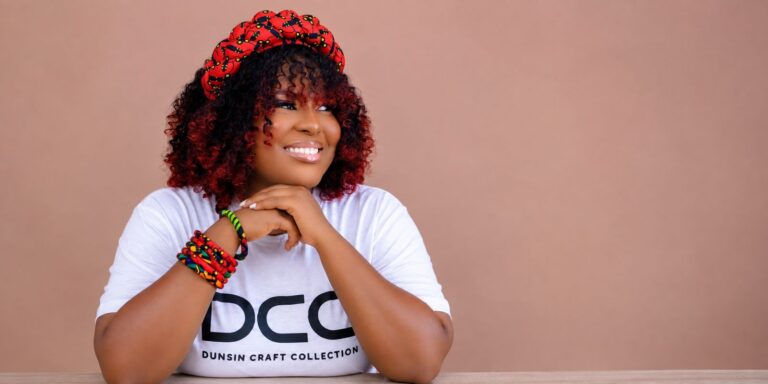
Today, she is the founder and Creative Director of DunsinCrafts, a brand that has evolved from making Afrocentric accessories into exploring what happens when African craftsmanship, science and circular fashion meet. She is working with post-consumer sachet nylon, the “pure water” sachets that are such an ordinary part of everyday Nigerian life, and transforming them into textile material using traditional Aso Oke weaving techniques. The result is aso òrá.

And there is something beautiful about the idea. A material that most of us use for a few minutes and throw away is being given another life. Not simply recycled, but reimagined.

In 2026, DunsinCrafts’ Aso-Òrá work was featured at Lagos Fashion Week’s Woven Threads VII, with more than 5,500 discarded nylon sachets used for the collection.

But Oluwadunsin’s work with waste doesn’t stop at what happens inside the workshop. She is also thinking about what happens before the waste gets there. That thinking is behind SachetBank Africa, the system she is building to create a more organised and traceable way for households to participate in waste collection and recovery, while creating incentives for people to take part.

And then there is the part that really caught my attention: Waste-to-Food.

Households can exchange collected plastic waste for food items. Think about that. Something most of us would throw away without thinking twice can become something a family actually needs. A sachet that could have ended up in a gutter can become food in someone’s home.

Suddenly, the story is no longer just about recycling. It is about value. It is about incentives. It is about livelihoods. It is about creating systems where solving an environmental problem can also create something tangible for the people participating in the solution.

And the more I looked at Oluwadunsin’s work, the more I began to see that this idea runs through much of what she has built. She has trained thousands of women and girls. She has worked with young people through skills-development initiatives. She has turned fabric scraps into school bags. She has built a business around African craftsmanship. And now she is asking whether one of Nigeria’s most pervasive waste materials can become an industrial resource.

But let me take you a few steps back.

Because things haven’t always looked like this for Oluwadunsin.

And perhaps that is what makes her story even more interesting.

She grew up in a low-income family of seven. At 15, she lost her father to cancer. Her mother was left to carry the responsibility of raising her children, and Oluwadunsin watched her work hard to keep the family going.

There are some experiences that stay with you. Watching someone you love work simply to provide. Understanding, from a young age, that money can determine what is possible and what is not. Knowing what it means to have limited options.

Perhaps that is why financial independence became more than an entrepreneurial goal for Oluwadunsin. She knew what it meant. And perhaps somewhere in that experience was the beginning of her desire not just to build a life for herself, but to create opportunities for other people too.

When I think about that now, the Waste-to-Food idea feels different. The girl who watched her mother work hard to put food on the table is now building a system where another household can collect something considered worthless and turn it into food.

I don’t know if Oluwadunsin set out to create that kind of full circle. But there is something deeply moving about it. Because she didn’t simply build a life that looked different from where she started. She seems to have taken what life taught her and carried it into the way she builds for other people.

And perhaps that is the thread that connects everything.

But her entrepreneurial story itself began with something much smaller: a handbag.

As an undergraduate at the Federal University of Technology, Akure, Oluwadunsin would go to the market looking for bags and keep seeing locally made products carrying fake Gucci and Louis Vuitton logos. Something about it bothered her. Why did something made here have to pretend to be from somewhere else? Why couldn’t a Nigerian-made product simply be beautiful because it was Nigerian?

It was a simple question. But she didn’t just ask it. She acted on it.

In 2017, while still an undergraduate, Oluwadunsin started DunsinCraft Collection, creating Ankara bags and accessories that celebrated African fabrics and Nigerian identity. She was a student. She was learning business. She was trying to become financially independent. She was also trying to figure herself out.

Around the same period, she entered the Miss FUTA contest. She didn’t win, but the experience became part of a season in which she was pushing herself to become more confident, more independent and more willing to put herself out there.

Then, as happens when you start building something, the problems began to show up.

Customers loved the fabrics, but they complained about them too. The products got dirty easily. Water affected the fabric. The materials didn’t always perform the way she wanted them to.

Oluwadunsin could have accepted that as simply one of the limitations of working with African fabrics. Instead, she went back to what she knew. She had studied Biology.

So she researched. She experimented. She kept trying. For about a year, she worked on finding a treatment that could make her products more waterproof and dirt resistant.

And there, perhaps, was another glimpse of the entrepreneur she would become. She wasn’t comfortable simply saying, “This is how things are.” She wanted to know if they could be different.

By 2019, while still a student, her work had earned her a $5,000 Tony Elumelu Foundation grant.

But DunsinCrafts was becoming more than a way for Oluwadunsin to make money. She began teaching other young women and girls the skills she had developed. Over time, thousands of women and girls would benefit from her skills-development work.

And this part of her story matters. Because the girl who had watched her mother struggle to provide was now helping other women acquire skills they could use to create income for themselves.

Sometimes, the things we become passionate about giving other people are the things we once needed ourselves.

Then Oluwadunsin noticed something else: waste.

The pieces of fabric left behind after production. Beautiful materials that had served their original purpose but were now destined for the bin.

Again, she could have simply accepted that as part of doing business. Instead, she asked: What else could this become?

The answer became the DunsinCrafts School Bag Initiative. Fabric scraps were turned into school bags for children, and in 2023, the initiative reached 1,677 students at Community Secondary School, Adegbayi, Ibadan.

But the bags were not simply bags. They also became a way to introduce children to entrepreneurship and the Sustainable Development Goals. Something that had been discarded became something useful.

And perhaps by this point, the pattern becomes impossible to miss. Oluwadunsin keeps taking things that could easily be dismissed and asking whether they really have to remain that way.

Then her Biology background took her into a much bigger question.

During her final-year research, she studied the effects of waste-contaminated water on catfish. She began to see plastic waste differently—not simply as something ugly on the streets, not simply as something that blocks drains, but as something that moves through our environment and can affect aquatic life and the food chain.

The problem was much bigger than the waste she could see.

And perhaps the question that had begun with fabric scraps became something bigger: What if waste itself could become a resource?

That question has now taken DunsinCrafts somewhere I don’t think that undergraduate making Ankara bags could have imagined.

A traditional Nigerian craft is now being used to respond to a modern environmental crisis. A loom, sachet waste, African craftsmanship and circular fashion are all meeting in one place.

And when you look at the journey as a whole, something becomes clear.

She has spent years taking things that have been given one definition and asking whether they deserve another.

A Nigerian-made product doesn’t have to imitate a foreign brand. A fabric doesn’t have to remain limited by its weaknesses. A woman without an income-generating skill can learn one. A fabric scrap doesn’t have to be waste. Plastic doesn’t have to remain rubbish. And a difficult beginning doesn’t have to determine the rest of a person’s life.

Maybe that is why I find Oluwadunsin’s story so compelling.

Oluwadunsin Bolaji

Because the work she does seems to carry something from the life she lived before the work existed.

She knows what it means to start with little. She knows what it means to have to make something out of what you have. And she seems to have carried that belief into everything she builds.

That is why the awards are not the most interesting part of her story, although there have been many, including recognition on SME100’s 25 Under 25 list for Social Entrepreneurship.

It is not even the numbers, although thousands of women and girls have been trained through her work.

It is the journey.

A young woman who wanted to create something that looked proudly African. A student who turned a customer complaint into a year of research. A founder who looked at fabric scraps and saw school bags. A Biology student who looked at plastic pollution and saw an opportunity to rethink manufacturing. And now, a woman looking at an entire waste stream and asking how it can be turned into something valuable.

Maybe that is what innovation really looks like.

Not always creating something that has never existed before. Sometimes, it is looking at what everyone else has accepted and saying:

I don’t think this has to be the end of the story.

And perhaps that is what I find most beautiful about Oluwadunsin Bolaji.

She keeps taking things that have been given one definition and asking whether they deserve another.

A difficult beginning can become determination. A frustration can become a business. A scrap can become a school bag. Waste can become a textile. Plastic can become food. A skill can become a livelihood. And a business can become a way of helping someone else imagine a different life.

She started with Ankara. She found her way through Biology. She kept asking questions. And somewhere along the way, she learned to see possibility in the things other people had already stopped seeing.

Perhaps that is what she is really building.

Not just a fashion brand. Not just a waste solution. Not just another business.

But a different way of looking at what we have.

And maybe the question she has been asking all along is one we should all learn to ask a little more often:

What else could this become?

DirectAid Brings Relief to Alajo Flood Victims, Extends Support to 1,500 Families

0

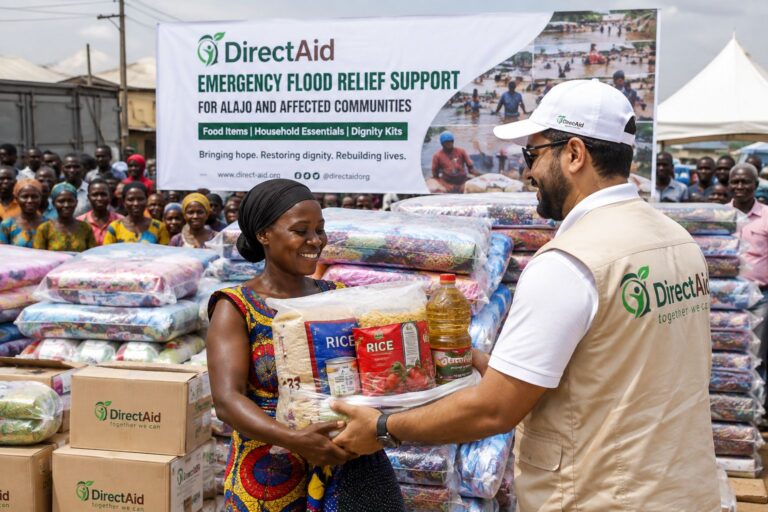
Relief has reached families affected by the devastating June 2026 floods in Alajo, Accra, as humanitarian organisation DirectAid distributed food and essential household items to affected residents.

The relief distribution, held on Tuesday, August 25, forms part of a wider GH¢2 million relief intervention by DirectAid aimed at supporting approximately 1,500 families across five communities affected by the floods.

The programme covers Alajo, Alogboshie, Kasoa, Nana Krom and Abeka, with distributions scheduled to continue across the communities through next week.

At Alajo, families received food packages containing bags of rice, six litres of cooking oil, 10 packs of spaghetti, beans, tomatoes and other essential food items.

DirectAid also provided household necessities, including mattresses, bedsheets, blankets, towels, soap and Parazone, to help families cope with the immediate challenges of recovering from the floods.

Speaking during the distribution, Sami Henedak Ahmed, Country Director of DirectAid, said the intervention was designed to provide practical support to families whose homes and livelihoods were affected by the June floods.

He explained that the relief items were made possible through the support of DirectAid’s donors in Kuwait, with assistance from government officials involved in coordinating the exercise.

“This intervention is about standing with families who have been affected by the floods and helping them through this difficult period. We are grateful to our donors in Kuwait and the government officials who have supported the distribution.”

Beyond household relief, DirectAid is also planning to extend its intervention to clinics and hospitals, with medical supplies and other essential items expected to be donated to support their operations.

Bringing relief where it is needed

The distribution at Alajo was met with excitement and gratitude from beneficiaries, many of whom expressed appreciation as they received the relief packages.

For families still rebuilding after the floods, the assistance provides immediate access to food and household essentials while they work to restore their homes and livelihoods.

DirectAid described the intervention as a gesture of solidarity from its donors in Kuwait to flood-affected families in Ghana, reaffirming its commitment to supporting communities facing humanitarian challenges.

The remaining distributions are scheduled for Alogboshie on Wednesday, Kasoa on Thursday, Nana Krom on Saturday, and Abeka next Tuesday, bringing the wider relief programme to a close next week.

The June floods caused significant loss of life and extensive property damage across affected communities, leaving thousands of families in need of immediate assistance and longer-term recovery support.


About DirectAid

DirectAid is a humanitarian organisation working to provide assistance and support to vulnerable communities through relief, development and humanitarian interventions.

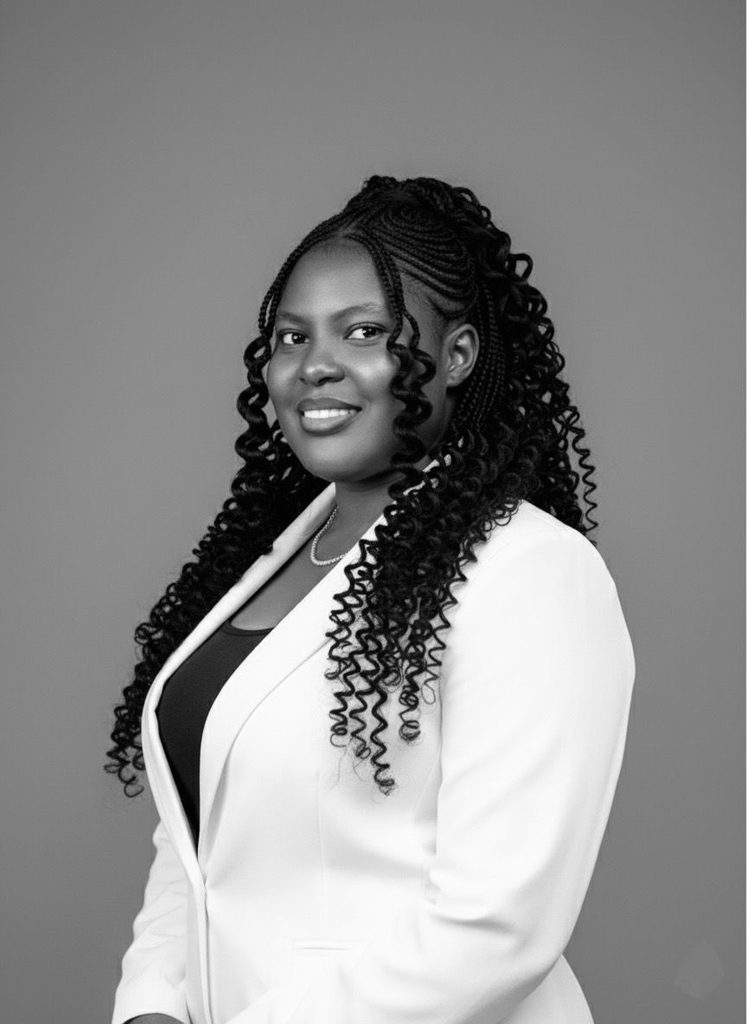
UCHE OKORO: REDEFINING THE FOUNDATION OF EARLY YEARS EDUCATION

0

Early Years education is often treated as the beginning of a child’s academic journey, but what happens during these formative years goes far beyond learning letters and numbers. It is where children begin to develop confidence, communication, independence, social skills and a sense of who they are.

With years of experience in Early Years education, teacher development and curriculum implementation, Uche Okoro has made it her work to strengthen how educators and schools understand and approach this critical stage of learning.

We sat down with Okoro to talk about the state of Early Years education in Nigeria, the role of teachers, play-based learning, inclusion and safeguarding, and why she believes the country must begin taking the first five years of a child’s life much more seriously.

1. Uche, take us back to the beginning. What first drew you to Early Years education, and when did you realise that this was more than simply a career path for you?

This is an interesting one! In 2002, I had just finished secondary school and was waiting for my JAMB results. One morning, while my dad was dropping off my younger sisters at school, I noticed a school nearby and casually told him, “I’d like to work here.” Long story short, I got the job!

I started as an assistant teacher, helping to care for the children, making sure they were comfortable, feeding them, changing them and supervising them during playtime until their parents came to pick them up.

The children brought me so much joy. They made me laugh endlessly, and I found myself looking forward to going to school every single day. What started as something I simply wanted to try soon became something much deeper. I realised that I genuinely loved being around young children and found so much fulfilment in caring for and supporting them. That was the moment I knew I couldn’t imagine myself doing anything else. It was the beginning of a journey that has shaped who I am today.

2. You have worked closely with teachers, schools and education stakeholders over the years. What have you seen in our classrooms that made you realise there was a deeper problem with the way we approach Early Years education?

Sadly, many people still see Early Years education as a waste of time. They believe children simply go to school to play and that whatever is missed at this stage can easily be taught when they get to primary school. But Early Years is not a waiting room for “real learning” to begin. It is the foundation upon which future learning, development, confidence and character are built. When we miss the opportunity to get the foundation right, we don’t simply lose the moment; we can affect the future.

3. We often reduce Early Years education to teaching children their ABCs, numbers and basic classroom routines. What do you think we fundamentally misunderstand about what young children actually need to learn and develop?

There are milestones children need to achieve before we even get to ABCs and numbers. And when those milestones are in place, learning many other things becomes much easier.

For example, eye contact is something we look out for in the Early Years. But back in the day, a child looking directly at an adult while speaking could easily be seen as disrespectful. Yet, when a child can look at you while communicating, they are developing confidence and learning how to interact with others. The same goes for a 3-year-old being able to resolve a simple conflict with another child without an adult immediately jumping in. That is a milestone too, but as adults, we are often so quick to step in and solve everything for them.

That is exactly why we call it the Foundation. Early Years is not just about letters and numbers. It is about social interaction, communication, confidence, independence, problem-solving, emotional development and helping children develop a sense of who they are. When we get these things right from the beginning, we make the journey ahead so much easier for the child.

4. You have experience with the Early Years Foundation Stage (EYFS) and its implementation. What can Nigerian schools learn from the framework, and where do you think we need to adapt international approaches to fit our own context rather than simply copy them?

We must first understand our environment, culture, resources and what is realistic for Nigerian schools. The EYFS offers valuable lessons in play-based learning, child-centred practice, observation, inclusion and holistic development. These principles can strengthen how we support and develop young children in Nigeria.

However, we must avoid putting ourselves under pressure simply because we want to be like other countries. International approaches should be adapted to our realities, rather than copied without considering our context.

We need to consider factors such as class sizes, teacher capacity, resources and cultural expectations.

For me, the goal should be a globally informed but locally relevant Early Years system that works for Nigerian children.

5. Teachers are central to the quality of any education system, yet Early Years educators do not always receive the training, recognition or professional support they deserve. From your experience, what needs to change?

Teachers are at the heart of any education system, but sadly, Early Years teachers are still not given the training, recognition and support they truly deserve. I think one of the biggest things we need to change is how we see the Early Years teacher and the work they do.

For me, Early Years teachers MUST first understand how important their job is. You are not just keeping children busy, teaching them ABCs and 123s, or waiting for them to move on to primary school. You are laying the foundation for everything that comes after. The way you speak to a child, respond to their needs, encourage them to try and help them develop confidence can stay with that child for years.

So, we need to invest more in our Early Years educators, not just with one-off training, but with continuous professional development, coaching, mentorship and the right resources. And we also need to give them the recognition they deserve as professionals. If we want better outcomes for our children, we have to start by equipping and valuing the people who are shaping their earliest years.

6. You are particularly passionate about play-based learning, inclusion and safeguarding. How do these areas come together in creating an environment where a child can feel safe, seen and genuinely able to thrive?

Honestly, play-based learning, inclusion and safeguarding are three words that truly capture what my passion is about. I believe children learn best when they feel safe enough to explore, confident enough to express themselves and supported enough to be who they are.

Play gives children the freedom to explore, make choices, solve problems, communicate and learn in ways that are meaningful to them. Inclusion ensures that every child, regardless of their ability or background, feels seen, valued and given the opportunity to participate. And safeguarding creates the safe environment that makes all of this possible.

For me, these three areas cannot be separated. When children are safe, included and given the freedom to learn through play, they don’t just learn, they thrive. And that is really what I want every child to experience.

7. You founded The EYFS Hub. What gap did you see that made you decide to create it, and what kind of change are you hoping to drive through the platform?

I am particularly grateful for this question. Early Years Hub was born out of a gap I kept seeing in Early Years education: there are many passionate educators, but not enough access to practical training, the right support and a community that helps them grow and actually apply what they learn. I wanted to create something that goes beyond training just for the sake of training but something that equips educators with the knowledge, confidence, tools and support they need to transform what happens in their classrooms every day.

My vision is to build a community where Early Years educators can learn, connect, share ideas, ask questions, access practical resources and continuously develop professionally. I want us to move away from the idea that Early Years is simply about keeping children busy or teaching ABCs and 123s and help educators truly understand the importance of these foundational years.

Ultimately, I want to see a shift in the quality and perception of Early Years education across Africa, one educator, one classroom and one child at a time. Because when we change the people who shape the earliest years, we change the future of the children they serve.

8. After years of working in this space, what is one uncomfortable truth about Early Childhood Education in Nigeria that you believe we need to confront more honestly?

I think one uncomfortable truth we need to confront is that we still don’t take the first five years of a child’s life as seriously as we should. We talk a lot about education, but somehow, the Early Years are still treated as though they are just a stage children have to pass through before the “real learning” begins.

The government and the Ministry of Education need to do more to ensure that the message about the importance of these early years is taken seriously, not just through policies, but through proper funding, teacher training, monitoring and support for Early Years settings. We need to understand that what happens in those first five years can shape how a child learns, communicates, builds relationships, develops confidence and sees themselves.

For me, if we really want to change the education narrative in Nigeria, we have to start from the foundation. We cannot keep saying children will catch up later. By the time they get to primary school, so much has already been built or missed. The first five years matter, and we need to start treating them that way.

9. If you were given the opportunity to influence Early Years education in Nigeria at a policy level today, what are the first three things you would change?

Hmmm! This is a thought-provoking question indeed. But honestly, I have wished to be asked this question someday.

Sincerely, if I had the opportunity to influence Early Years education at policy level, my first three priorities would be the people, the practice and the priority we give to the Early Years.

First, I would invest in and professionalise Early Years teachers through quality training, continuous development, coaching and better recognition.

Second, I would strengthen the implementation of play-based, child-centred and developmentally appropriate learning, so we can stop pushing children into formal academics before they are ready.

Third, I would make the first five years a genuine national priority, with stronger government investment, policies, monitoring and public awareness. We cannot keep saying children will catch up later. If we want to change the future of education in Nigeria, we must fix it now!

10. Finally, when you look at the work you have done with children, teachers and schools, what do you hope your contribution will ultimately change about the way Nigeria understands and invests in the early years?

Honestly, I want to be that small voice that keeps disturbing the table until we finally get it right!

I want Nigeria to stop seeing Early Years as “just play” and start seeing it for what it really is, the foundation of everything that comes after.

I want teachers to understand the incredible responsibility they carry, schools to invest in quality Early Years practice, parents to value these years and government to put its money where its mouth is when it comes to Early Childhood Education.

If years from now, someone says, “Uche was part of the people who helped us change how Nigeria sees the Early Years,” I will be happy. I don’t need my name everywhere. Although, if they want to put a little plaque somewhere, I won’t complain!

But seriously, my biggest hope is that we stop waiting for children to get to primary school before we realise what they needed all along. I want us to get the foundation right, and I want to be one of the people who helped make that happen.
whatsapp image 2026 08 17 at 1.32.00 pm

KFC Nigeria, Lagos Food Bank Partner to Provide Food Support to 100 Vulnerable Families

0

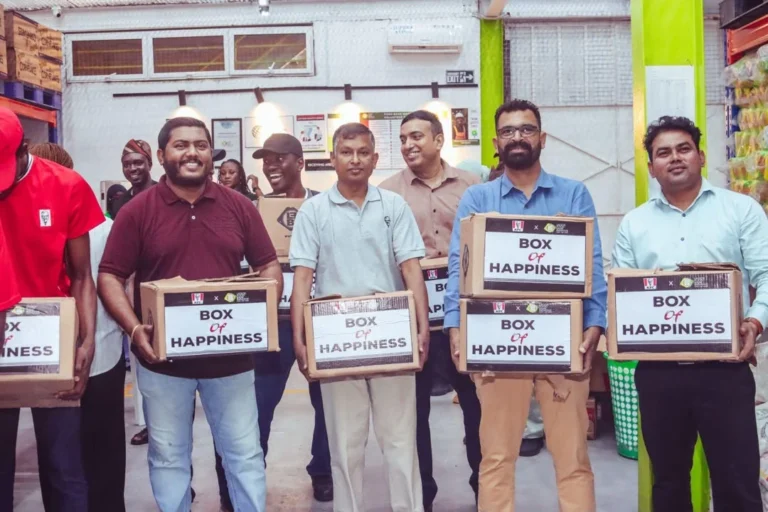
One hundred vulnerable families in Lagos have received food support following a partnership between KFC Nigeria and the Lagos Food Bank Initiative (LFBI) aimed at helping households facing food insecurity.

The intervention, implemented under the Temporary Emergency Food Assistance Programme (TEFAP), saw KFC employees, LFBI staff and volunteers come together at the Lagos Food Bank warehouse in Mangoro, Ikeja, to package and distribute more than two tonnes of food to families in need.

A total of 2,137kg of food, equivalent to an estimated 7,123 meals, was distributed during the outreach. While 100 families benefited directly, the intervention is estimated to have provided additional support to 512 household members.

The food packages contained a combination of staple and other food products, including rice, vegetable oil, sausages, patties, Wellcome snacks and Sympli potatoes.

Beyond the food donated, the partnership also created an opportunity for KFC employees to contribute their time and skills directly to the intervention. Twenty-two KFC team members volunteered a combined 88 hours, supporting beneficiary registration, food packaging, distribution and documentation.

The outreach represents the third intervention under the ongoing partnership between Devyani International Nigeria, operators of KFC Nigeria, and the Lagos Food Bank Initiative.

Speaking on the partnership, Anthony Katchy, Head of Human Resources at Devyani International Nigeria, said the company was pleased to continue working with LFBI on an intervention that provides practical assistance to families facing difficult circumstances.

“We are pleased to continue this partnership with the Lagos Food Bank Initiative and contribute to an intervention that provides meaningful support to families in need.”

For LFBI, the collaboration highlights the importance of sustained partnerships in responding to food insecurity and ensuring that vulnerable households have access to food.

Dr Michael Sunbola, Executive Director of the Lagos Food Bank Initiative, expressed appreciation to KFC Nigeria for its continued support, noting the importance of collaboration in expanding efforts to address food insecurity and improve access to nutritious food.

While the immediate focus of the intervention was food assistance, the partnership also demonstrates how employee volunteering can strengthen corporate community interventions.

By having employees participate directly in registration, packaging and distribution, KFC’s contribution extended beyond financial or in-kind support to include hands-on service to the communities being reached.

The two organisations are expected to continue exploring opportunities to expand the partnership and reach more vulnerable households and communities through the TEFAP programme.

At a time when many households continue to face pressure from rising living costs and food insecurity, interventions that combine resources, partnerships and volunteer action can provide immediate relief while strengthening community-based responses to hunger.

Meet Tomiwa Adetayo: The Volunteer Building With Technology, Leading With Purpose

For Tomiwa Adetayo, service has taken many forms over the years.

Sometimes it has meant leading a student organisation. Sometimes it has meant creating opportunities for young people. And today, it also means using technology, product thinking and his professional experience to help people and organisations solve real problems.

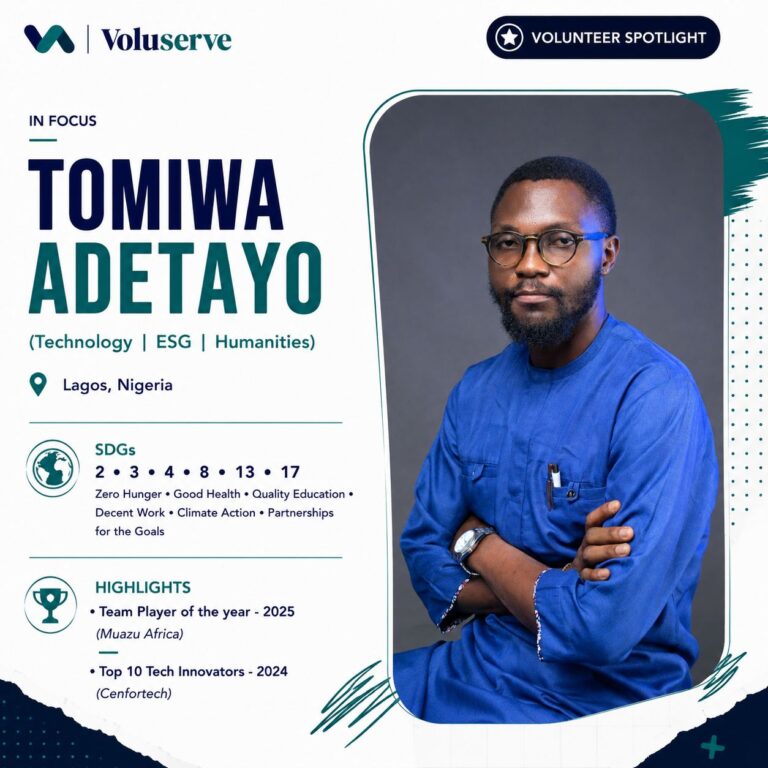
Based in Lagos, Tomiwa is a social entrepreneur, AI product manager and career coach with interests spanning technology, ESG and the humanities. His work reflects something that has remained consistent throughout his journey: a desire to use what he knows to create value for other people.

His service journey goes back more than a decade.

As a student at the University of Lagos, Tomiwa was actively involved in leadership and volunteering. In 2014, he served as President of the UNILAG Anti-AIDS Club and was also recognised as an outstanding student leader in Lagos.

Those early experiences gave him an opportunity to work with people, lead teams and contribute to causes beyond himself.

Years later, that commitment to service would grow into something bigger.

In 2019, Tomiwa co-founded Reach the Peak Initiative, an organisation focused on supporting young people and communities around areas including health, education and sustainable development. Through the initiative, he has been involved in volunteer programmes and efforts aimed at helping people build healthier and more empowered lives.

His work has also taken him into spaces across Nigeria’s development and social impact ecosystem, where he has contributed to initiatives involving young people, education, health and community development.

But Tomiwa didn’t leave service behind as his professional career evolved.

Instead, he brought it with him.

Today, his work in product management places him firmly within Nigeria’s technology ecosystem. He has worked across business analysis, product and technology roles, developing solutions and improving products with the needs of users and organisations in mind.

His work in technology has also earned recognition. In 2024, he was among the Nigerian tech professionals recognised by Cenfortech for innovation and contribution to the country’s technology ecosystem.

Yet technology is only one part of Tomiwa’s story.

His interest in people has continued through career coaching, mentoring and his involvement in initiatives that create learning and development opportunities. More recently, he has also contributed to children’s education and creativity spaces, including serving as Front House Manager at the 2026 Akada Children’s Book Festival, which brought together children from more than 15 schools for activities centred on reading, storytelling and creative skills.

It is this combination that makes his journey interesting.

Tomiwa is not simply a technology professional who volunteers on the side.

He has built a career around people, problem-solving and service, allowing each experience to inform the next.

From leading as a university student, to creating opportunities through social entrepreneurship, to building technology products and supporting people in their careers, his journey shows that service doesn’t have to look the same at every stage of life.

Sometimes, service is volunteering your time.

Sometimes, it is building something that makes someone’s life easier.

Sometimes, it is helping another person see a possibility they hadn’t considered before.

For Tomiwa Adetayo, it has been all three.

And as his journey continues, he is showing what it can look like when the skills you build professionally become tools for creating impact personally and socially.

This week, we celebrate Tomiwa Adetayo as our Voluserve Volunteer Spotlight.

Nigerian-founded Somalens Launches AI-Powered Wellness Platform to Help People Build Healthier Everyday Habits

0

Nigerian-founded health technology company Ocelot Group has launched a redesigned version of its wellness platform, Somalens, introducing artificial intelligence, personalised health insights and gamification to help people become more intentional and consistent about their everyday wellbeing.

Designed for people who want to pay greater attention to their health before concerns become urgent, Somalens combines daily wellness check-ins, personalised insights, health missions, progress tracking, streaks, levels and digital rewards in one mobile experience.

The platform allows users to regularly check in on aspects of their wellbeing, including mood, energy, sleep and pain, creating a record that can help them recognise patterns in how they feel over time.

Rather than simply providing health information, Somalens is designed around a simpler question: What small action can you take today to take better care of yourself?

Turning Wellness Into Everyday Action

For many people, maintaining healthy routines can be difficult. Work, family responsibilities and the demands of everyday life can make it easy for personal wellbeing to become something people only think about when they are unwell.

Somalens seeks to address this gap by breaking wellness into manageable actions that users can complete consistently.

Its health missions encourage users to take practical steps as part of their routine, while progress tracking allows them to see how consistently they are engaging with their wellbeing.

Users can also earn SOMA Coins, Somalens’ digital reward system, by completing eligible activities.

The company says the gamification is not intended to turn healthcare into entertainment, but to make healthy habits easier to maintain.

Designed With Users in Mind

Joy Bachashe Samuel, a Nigerian product designer based in Manchester and co-founder and lead UX designer at Somalens, played a central role in developing the redesigned experience.

According to Samuel, the team wanted to move beyond the traditional model of giving people health information and leaving them to determine what to do with it.

“We did not want Somalens to feel like another app that gives people information and then expects them to figure everything out alone.”

She explained that the redesigned platform focuses on helping users take small, repeatable actions while giving them a clearer view of their progress and wellbeing patterns.

“Health is serious, but the experience of caring for yourself does not have to feel intimidating or exhausting,” Samuel said. “Our goal was to use missions, streaks, levels and rewards responsibly, so that users feel encouraged to keep showing up for themselves.”

Nigerian Innovation With a Global Outlook

Ocelot Group is registered in the United States and Nigeria, with its founding team comprising Nigerians working across the United Kingdom and United States.

The launch reflects the growing contribution of Nigerian technology professionals to digital products serving users beyond Nigeria, while maintaining a connection to the needs and experiences of African users.

With smartphones increasingly becoming an important channel through which people access information and manage everyday activities, Somalens is built around a mobile-first experience that makes wellness engagement accessible as part of users’ daily routines.

Supporting Wellness, Not Replacing Medical Care

Somalens is designed to support health awareness and everyday wellness management. It is not intended to replace professional medical care or provide medical diagnoses.

Users experiencing symptoms or health concerns are encouraged to seek advice from qualified healthcare professionals.

The redesigned Somalens experience is now available to existing and new users through their device’s app store.

About Somalens

Somalens is a digital wellness platform developed by Nigerian-founded health technology company Ocelot Group. The platform uses technology, artificial intelligence, personalised insights and behaviour-focused features to help users become more aware of their wellbeing and build healthier everyday habits.