


Every day, children head to school in uniforms. Workers report to offices, hotels, restaurants and businesses dressed for the jobs they do. Teams step into their workspaces looking like teams.
And behind many of those uniforms is a business most people will probably never think about.
BRS Signatures.
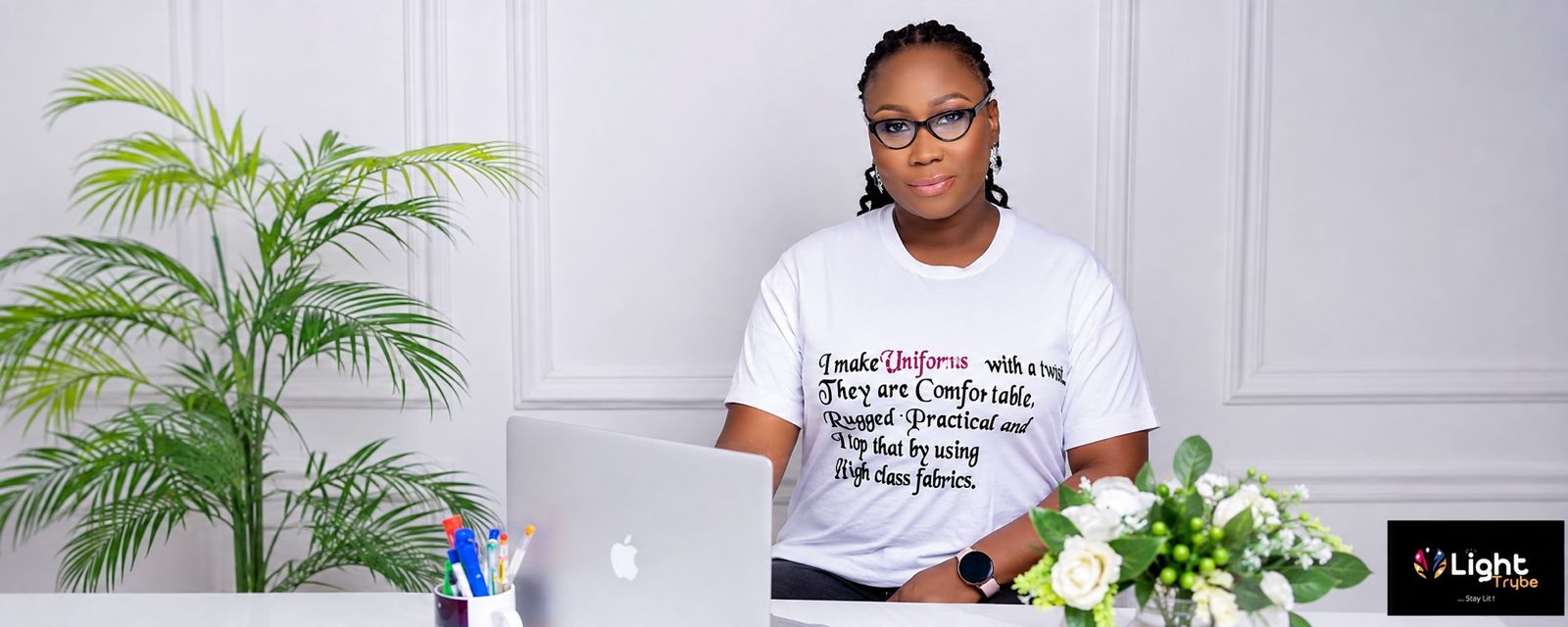
And behind BRS Signatures is Abiola Olukunle, a Nigerian entrepreneur who has built a garment manufacturing business around something we all use, but hardly ever stop to think about: what people wear when they show up.
From school uniforms to workwear for hospitality, catering, retail and oil and gas, Abiola’s business makes clothing for people and organisations across different sectors.
But the more I learnt about Abiola, the more I realised there was more to her story than the clothes she makes.
Because there is a whole lot that happens between an organisation saying, “We need uniforms,” and someone eventually putting one on.
There are fabrics. Measurements. Designs. Branding. Production. Fittings. Finishing. Deadlines. Clients. People.
Somebody has to make all of that happen.
Abiola sits right in the middle of it.
As Founder and Creative Director of BRS Signatures, she has built a business serving organisations across different sectors, with education being one of the spaces closest to the everyday lives of many Nigerians.
The uniform may be what we see.
But there is a whole business behind it.
And I think that is what makes her work interesting.
She has taken something as ordinary as clothing and built something useful around it, something that helps schools, businesses and teams look like themselves and feel ready for the work they have to do.
What makes Abiola’s story even more interesting is that garment manufacturing was not where her journey started.
She studied Microbiology at Crawford University and later studied Public Health at the University of Lagos, specialising in Epidemiology. Then came entrepreneurship training at the Enterprise Development Centre of Pan-Atlantic University.
From science and public health to garment manufacturing.
Not exactly the career path you would predict.
But then again, whose life actually follows the plan we started with?
Sometimes, the path only makes sense when you look backwards.
And the more I looked at Abiola’s work, the more I noticed another thread.
She teaches.
Her history includes working with children through Beyond the Classroom Tutoring, volunteering with HACEY’s Health Initiative and mentoring teenagers through her church. She has also been involved with Knit Africa Initiative, where she has taught children and adults the craft of knitting.
And I really like this part of her story.
Because even as her businesses have grown, there seems to be this part of Abiola that still wants to teach.
To take something she knows and say, “Come, let me show you.”
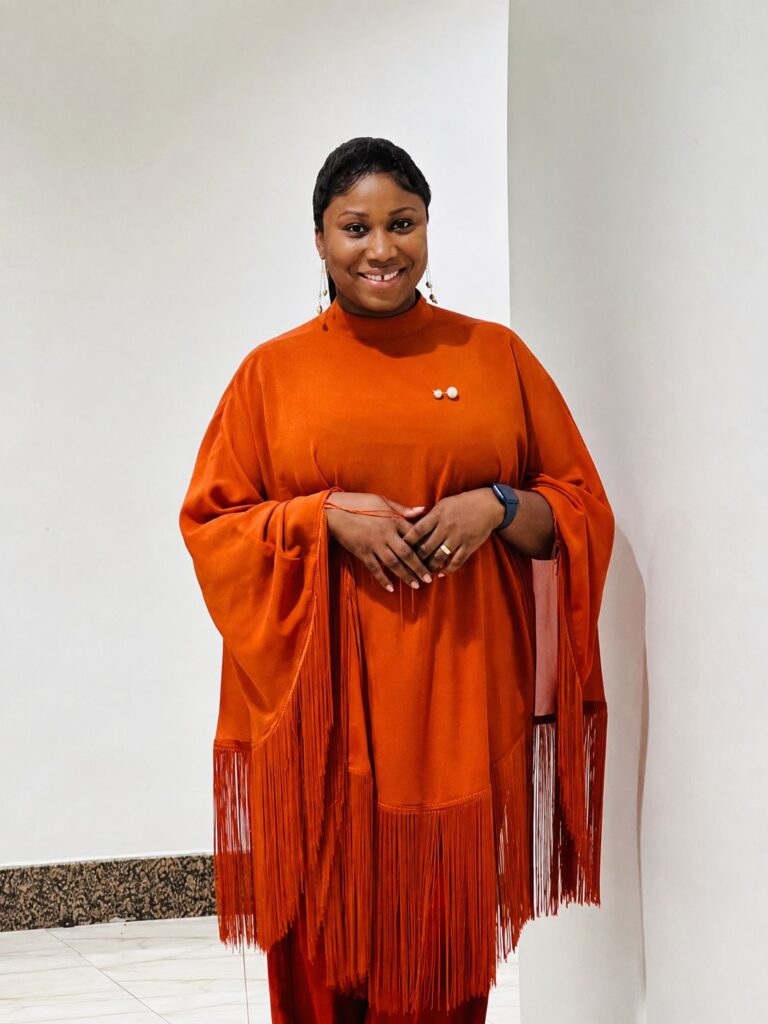
Knit Africa is not the centre of what she does today, BRS Signatures and the uniform business clearly are, but it tells us something about the person behind the entrepreneur.
She doesn’t just seem interested in making things.
She is also interested in helping other people learn how to make things.
And there is a difference.
Her creativity also shows up in The Light Trybe, her faith-inspired clothing venture.
Again, these are different things. Uniforms. Knitting. Clothing. Teaching. Entrepreneurship.
But when you put them together, you start to see the thread.
She keeps finding ways to turn creativity into something useful.
A uniform becomes a business.
A creative idea becomes a clothing line.
A skill like knitting becomes something that can be taught, shared and potentially turned into a livelihood.
And I think that is what stayed with me about Abiola.
We tend to think of uniforms as ordinary.
A child puts one on and goes to school.
A hotel worker puts one on and starts a shift.
A restaurant team gets dressed and gets to work.
We see the uniform.
We don’t usually see the person who made it.
We don’t see the business behind it.
We don’t think about the skill, the work, the people and the decisions that went into getting that garment from an idea to someone’s body.
Abiola does.
She has built a business around that overlooked space, making the clothes that help people step into their roles every day.
And maybe that is the quiet beauty of what she is building.
She isn’t making clothes simply for people to wear.
She is making something that helps people show up.
And behind that work is a woman whose journey has taken her from Microbiology and Public Health to garment manufacturing, entrepreneurship, creative education and mentorship, and somehow, all those different threads have found their way into the same story.
A woman who is building businesses, but still making room to teach.
A woman who makes uniforms, but also understands the value of a skill.
A woman who has found different ways to turn what she can create with her hands into something that other people can use.
And maybe that is why I wanted to share her story.
Because sometimes, the people doing the most interesting work are not the loudest people in the room.
Sometimes, they are simply busy making something useful and helping other people show up.
Abiola Olukunle is making uniforms. But she is also building businesses, skills, creativity and opportunities around the simple act of making.
And the next time you see someone in a uniform, maybe you will think about it differently.
Someone made that.