
Sometimes, the people who change things are the people who simply refuse to accept them as they found them. They see a problem where others have become comfortable with one. They see possibility where others have already decided something has little value.
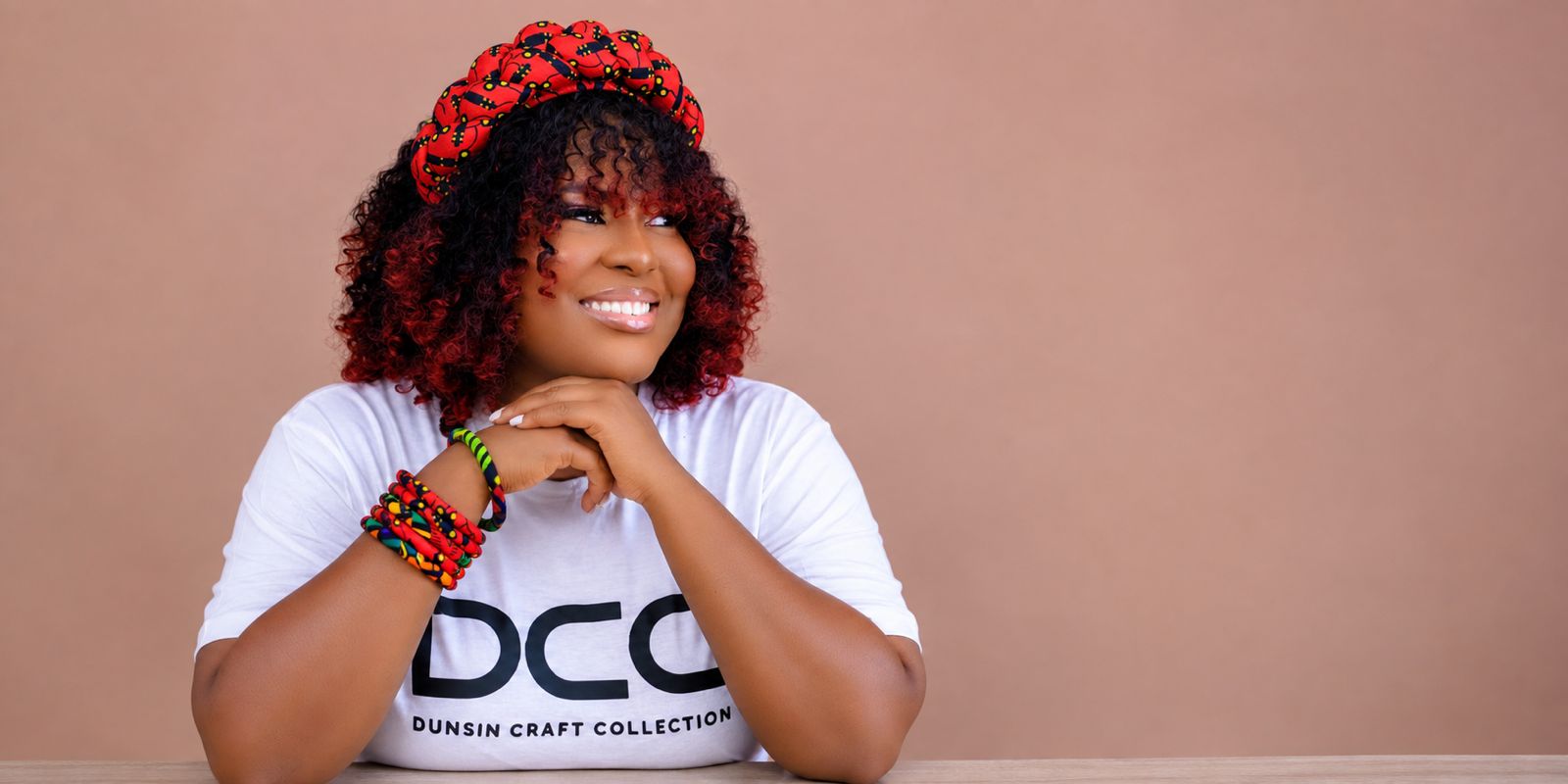
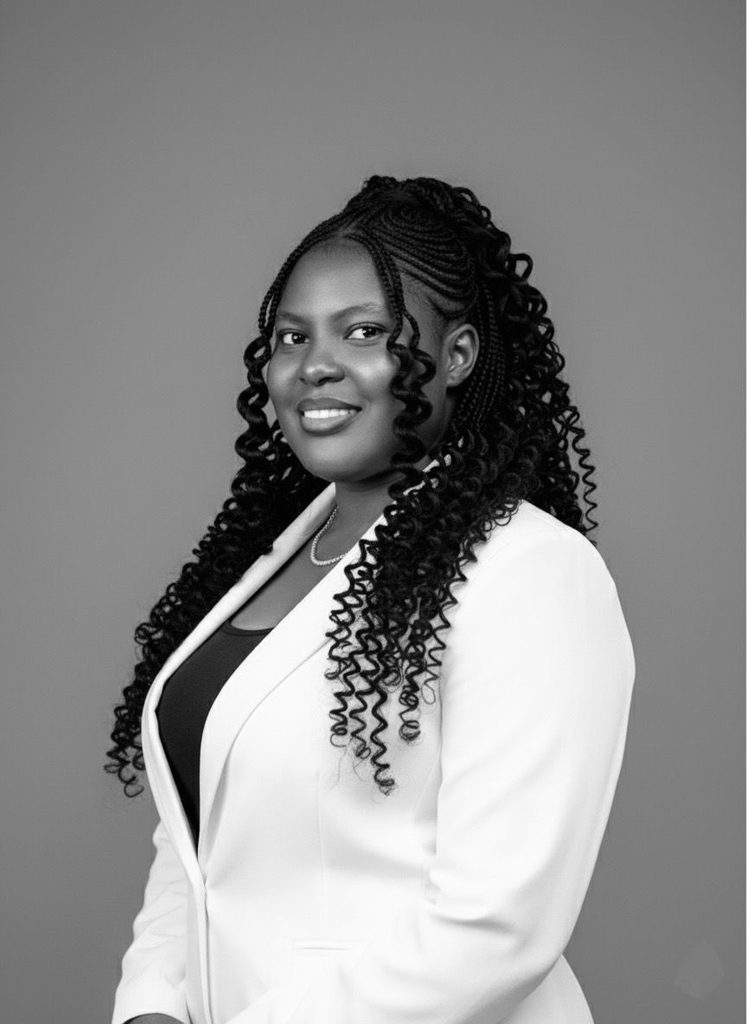
Oluwadunsin Bolaji has spent much of her life doing exactly that.
Today, she is the founder and Creative Director of DunsinCrafts, a brand that has evolved from making Afrocentric accessories into exploring what happens when African craftsmanship, science and circular fashion meet. She is working with post-consumer sachet nylon, the “pure water” sachets that are such an ordinary part of everyday Nigerian life, and transforming them into textile material using traditional Aso Oke weaving techniques. The result is aso òrá.
And there is something beautiful about the idea. A material that most of us use for a few minutes and throw away is being given another life. Not simply recycled, but reimagined.
In 2026, DunsinCrafts’ Aso-Òrá work was featured at Lagos Fashion Week’s Woven Threads VII, with more than 5,500 discarded nylon sachets used for the collection.
But Oluwadunsin’s work with waste doesn’t stop at what happens inside the workshop. She is also thinking about what happens before the waste gets there. That thinking is behind SachetBank Africa, the system she is building to create a more organised and traceable way for households to participate in waste collection and recovery, while creating incentives for people to take part.
And then there is the part that really caught my attention: Waste-to-Food.
Households can exchange collected plastic waste for food items. Think about that. Something most of us would throw away without thinking twice can become something a family actually needs. A sachet that could have ended up in a gutter can become food in someone’s home.
Suddenly, the story is no longer just about recycling. It is about value. It is about incentives. It is about livelihoods. It is about creating systems where solving an environmental problem can also create something tangible for the people participating in the solution.
And the more I looked at Oluwadunsin’s work, the more I began to see that this idea runs through much of what she has built. She has trained thousands of women and girls. She has worked with young people through skills-development initiatives. She has turned fabric scraps into school bags. She has built a business around African craftsmanship. And now she is asking whether one of Nigeria’s most pervasive waste materials can become an industrial resource.
But let me take you a few steps back.
Because things haven’t always looked like this for Oluwadunsin.
And perhaps that is what makes her story even more interesting.
She grew up in a low-income family of seven. At 15, she lost her father to cancer. Her mother was left to carry the responsibility of raising her children, and Oluwadunsin watched her work hard to keep the family going.
There are some experiences that stay with you. Watching someone you love work simply to provide. Understanding, from a young age, that money can determine what is possible and what is not. Knowing what it means to have limited options.
Perhaps that is why financial independence became more than an entrepreneurial goal for Oluwadunsin. She knew what it meant. And perhaps somewhere in that experience was the beginning of her desire not just to build a life for herself, but to create opportunities for other people too.
When I think about that now, the Waste-to-Food idea feels different. The girl who watched her mother work hard to put food on the table is now building a system where another household can collect something considered worthless and turn it into food.
I don’t know if Oluwadunsin set out to create that kind of full circle. But there is something deeply moving about it. Because she didn’t simply build a life that looked different from where she started. She seems to have taken what life taught her and carried it into the way she builds for other people.
And perhaps that is the thread that connects everything.
But her entrepreneurial story itself began with something much smaller: a handbag.
As an undergraduate at the Federal University of Technology, Akure, Oluwadunsin would go to the market looking for bags and keep seeing locally made products carrying fake Gucci and Louis Vuitton logos. Something about it bothered her. Why did something made here have to pretend to be from somewhere else? Why couldn’t a Nigerian-made product simply be beautiful because it was Nigerian?
It was a simple question. But she didn’t just ask it. She acted on it.
In 2017, while still an undergraduate, Oluwadunsin started DunsinCraft Collection, creating Ankara bags and accessories that celebrated African fabrics and Nigerian identity. She was a student. She was learning business. She was trying to become financially independent. She was also trying to figure herself out.
Around the same period, she entered the Miss FUTA contest. She didn’t win, but the experience became part of a season in which she was pushing herself to become more confident, more independent and more willing to put herself out there.
Then, as happens when you start building something, the problems began to show up.
Customers loved the fabrics, but they complained about them too. The products got dirty easily. Water affected the fabric. The materials didn’t always perform the way she wanted them to.
Oluwadunsin could have accepted that as simply one of the limitations of working with African fabrics. Instead, she went back to what she knew. She had studied Biology.
So she researched. She experimented. She kept trying. For about a year, she worked on finding a treatment that could make her products more waterproof and dirt resistant.
And there, perhaps, was another glimpse of the entrepreneur she would become. She wasn’t comfortable simply saying, “This is how things are.” She wanted to know if they could be different.
By 2019, while still a student, her work had earned her a $5,000 Tony Elumelu Foundation grant.
But DunsinCrafts was becoming more than a way for Oluwadunsin to make money. She began teaching other young women and girls the skills she had developed. Over time, thousands of women and girls would benefit from her skills-development work.
And this part of her story matters. Because the girl who had watched her mother struggle to provide was now helping other women acquire skills they could use to create income for themselves.
Sometimes, the things we become passionate about giving other people are the things we once needed ourselves.
Then Oluwadunsin noticed something else: waste.
The pieces of fabric left behind after production. Beautiful materials that had served their original purpose but were now destined for the bin.
Again, she could have simply accepted that as part of doing business. Instead, she asked: What else could this become?
The answer became the DunsinCrafts School Bag Initiative. Fabric scraps were turned into school bags for children, and in 2023, the initiative reached 1,677 students at Community Secondary School, Adegbayi, Ibadan.
But the bags were not simply bags. They also became a way to introduce children to entrepreneurship and the Sustainable Development Goals. Something that had been discarded became something useful.
And perhaps by this point, the pattern becomes impossible to miss. Oluwadunsin keeps taking things that could easily be dismissed and asking whether they really have to remain that way.
Then her Biology background took her into a much bigger question.
During her final-year research, she studied the effects of waste-contaminated water on catfish. She began to see plastic waste differently—not simply as something ugly on the streets, not simply as something that blocks drains, but as something that moves through our environment and can affect aquatic life and the food chain.
The problem was much bigger than the waste she could see.
And perhaps the question that had begun with fabric scraps became something bigger: What if waste itself could become a resource?
That question has now taken DunsinCrafts somewhere I don’t think that undergraduate making Ankara bags could have imagined.
A traditional Nigerian craft is now being used to respond to a modern environmental crisis. A loom, sachet waste, African craftsmanship and circular fashion are all meeting in one place.
And when you look at the journey as a whole, something becomes clear.
She has spent years taking things that have been given one definition and asking whether they deserve another.
A Nigerian-made product doesn’t have to imitate a foreign brand. A fabric doesn’t have to remain limited by its weaknesses. A woman without an income-generating skill can learn one. A fabric scrap doesn’t have to be waste. Plastic doesn’t have to remain rubbish. And a difficult beginning doesn’t have to determine the rest of a person’s life.
Maybe that is why I find Oluwadunsin’s story so compelling.
Because the work she does seems to carry something from the life she lived before the work existed.
She knows what it means to start with little. She knows what it means to have to make something out of what you have. And she seems to have carried that belief into everything she builds.
That is why the awards are not the most interesting part of her story, although there have been many, including recognition on SME100’s 25 Under 25 list for Social Entrepreneurship.
It is not even the numbers, although thousands of women and girls have been trained through her work.
It is the journey.
A young woman who wanted to create something that looked proudly African. A student who turned a customer complaint into a year of research. A founder who looked at fabric scraps and saw school bags. A Biology student who looked at plastic pollution and saw an opportunity to rethink manufacturing. And now, a woman looking at an entire waste stream and asking how it can be turned into something valuable.
Maybe that is what innovation really looks like.
Not always creating something that has never existed before. Sometimes, it is looking at what everyone else has accepted and saying:
I don’t think this has to be the end of the story.
And perhaps that is what I find most beautiful about Oluwadunsin Bolaji.
She keeps taking things that have been given one definition and asking whether they deserve another.
A difficult beginning can become determination. A frustration can become a business. A scrap can become a school bag. Waste can become a textile. Plastic can become food. A skill can become a livelihood. And a business can become a way of helping someone else imagine a different life.
She started with Ankara. She found her way through Biology. She kept asking questions. And somewhere along the way, she learned to see possibility in the things other people had already stopped seeing.
Perhaps that is what she is really building.
Not just a fashion brand. Not just a waste solution. Not just another business.
But a different way of looking at what we have.
And maybe the question she has been asking all along is one we should all learn to ask a little more often:
What else could this become?