What does it mean to become a better version of yourself, and how can that journey make a difference in the lives of others?
For Emmanuel Adah Ugbaha, it starts with purpose, intentionality and a willingness to keep growing.
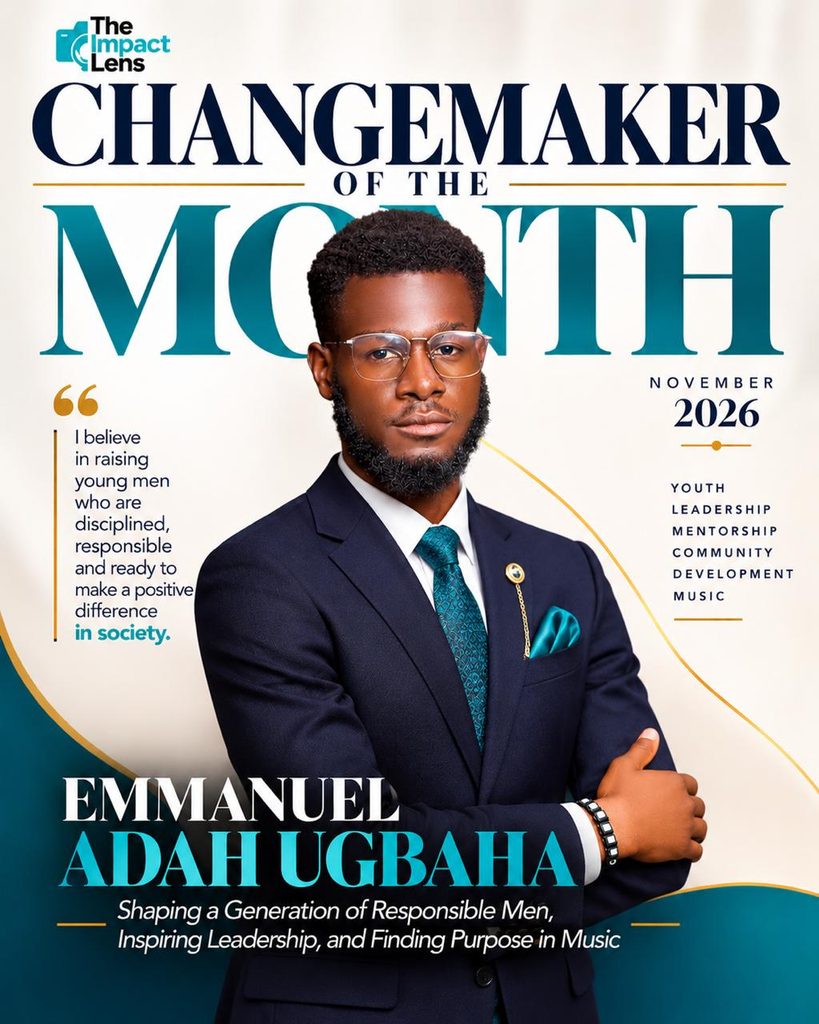
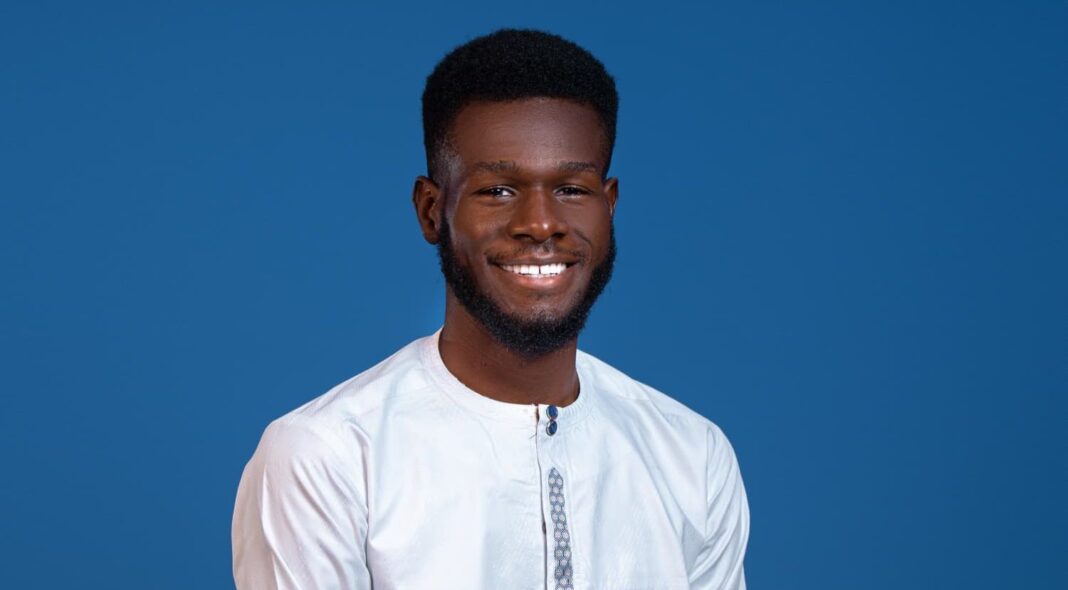
Emmanuel is a project manager, youth advocate, conference convener and music enthusiast. He is passionate about personal development, leadership and helping young people discover their potential.
Through his work at Beyond the Classroom Foundation, he has been involved in initiatives that engage boys and girls on issues of identity, responsibility, leadership and personal growth. His involvement in the He For Her Project and Big Brother Conversations has also deepened his interest in the boy child and the importance of raising young men who understand their responsibilities and the role they can play in building a better society.
He is also the Project Manager and Conference Convener of the King Theory Conference, an initiative born out of his desire to see men become more intentional about their responsibilities to themselves, their families and society.
Beyond his work in community development, Emmanuel has a strong love for music, which he sees as an opportunity to express his creativity, share his faith and inspire others.
For our November 2026 Changemaker of the Month feature, The Impact Lens sat down with Emmanuel to talk about his journey, the values that guide him, his passion for the boy child, his faith, career experiences and his plans for the future.
We also got to explore another side of him: the young man behind the projects, his love for music and his desire to keep becoming better.
Here is our conversation with him.
TIL: Beyond your achievements, professional titles and the projects you’ve been involved in, who is Emmanuel Adah Ugbaha? What values define you, and how have they shaped your journey so far?
Emmanuel: I think one thing that has always driven me is the belief that I can become and do better. Better for myself, better with my life and, ultimately, better for the people around me. I believe that no matter what circumstances we find ourselves in, there is always room to improve.
I’m someone who believes strongly in purpose, growth, intentionality and excellence. I think this started when I was much younger. I began to notice that the people making meaningful impact were very intentional about these things. I also wanted my life to count for something beyond myself.
That desire has influenced the way I live, the things I do and even how I relate with people. I try to be deliberate about my choices because I’ve come to understand that becoming better doesn’t just happen. You have to be intentional about it.
For me, it’s about becoming someone who can lead, build something meaningful and leave a legacy that others can carry on. That’s the kind of life I want to live.
TIL: How important is your faith to you? How does your relationship with God influence the way you live, work and make decisions?
Emmanuel: My faith is a very personal part of my life. I take my walk with God seriously, and it influences almost everything about how I live.
I think one thing people sometimes get wrong about freedom is the idea that it means being able to do whatever you want, whenever you want. But I’ve come to understand that true freedom also comes with boundaries and guardrails. You cannot really separate freedom from the guidance of a higher authority.
That’s where my relationship with God comes in. I know that my life is being directed by Someone bigger than me. I trust Him to order the affairs of my life, guide my decisions and keep me from losing myself along the way.
One thing I’ve learnt is that just because something is allowed for someone else doesn’t mean it’s necessarily allowed for me. And this is true even when the thing itself isn’t necessarily wrong.
I think that’s one of the ways my faith has shaped me. I don’t have to do something simply because everyone else is doing it. I have to be mindful of my own convictions and what God expects of me.
TIL: You studied Biology but have built a career across operations, project management and community development. How did this journey unfold, and what has the experience been like for you?
Emmanuel: My journey into project management actually started around the COVID year. I had an opportunity to volunteer with an organisation that worked with young people, helping them discover their purpose and walk in it.
At the time, I already had a passion for organisation and planning, so volunteering gave me an opportunity to put those interests to work. I started gaining experience, learning how to coordinate activities and manage projects. It also opened doors for me to serve individuals and organisations that needed those skills.
One particularly important part of that journey has been my time at Beyond the Classroom Foundation, working with Raquel Kasham Daniel (RKD). That experience helped me develop my skills further and gave me the opportunity to work on a bigger platform and reach more people.
Looking back, I’m grateful for how things have unfolded. Each experience has added something to what I can do today, and I see it all as an opportunity to continue growing and serving my community.
TIL: You have a strong interest in the boy child, particularly through your work with the He For Her Project and Big Brother Conversations. Where did this passion come from, and why is it important to you?
Emmanuel: I’ve always enjoyed speaking to young people and helping them become better versions of themselves. But my specific interest in speaking to boys came during my participation in the first He For Her Project with Beyond the Classroom Foundation in 2025.
That experience really opened my eyes. I met young boys who had so much energy and potential, but many of them didn’t have the leadership skills or self-awareness they needed. They were constantly being told that they were the leaders of tomorrow, but I began to wonder how prepared they actually were for that responsibility.
Some of them understood their physical strength and abilities, but they didn’t necessarily understand how to become protectors, role models and positive examples to the girls and other people around them.
I remember going home that day and thinking about how much I could relate to those boys. They were eager to learn, and it felt like they were waiting for someone to show them the way. In a way, it was as though they were calling out for help beneath their tight fists and frowned faces.
That experience stayed with me. I knew I wanted to speak to many more boys and help them discover themselves. It became the foundation for the work I now do with them.
I believe that if we want to see lasting change in society, we need men and women who have strong values. And that journey has to start early. Boys need to be seen, given opportunities to express themselves and guided in the right direction. They have gifts, ideas and strengths that need to be recognised and properly developed.
That’s why this work matters so much to me.
TIL: Through your work at Beyond the Classroom Foundation, you have engaged thousands of young people. What has working with them taught you?
Emmanuel: One thing I’ve noticed is that young people are really eager for the right role models.
Sometimes, all it takes is for them to meet an adult who is intentional about life and willing to have honest conversations with them. I’ve seen how their eyes light up when someone takes the time to talk about the things they’re confused about or trying to understand.
Young people genuinely want to learn. But they also need people who can guide them, people they can look up to and who can help them make sense of the decisions they have to take as they grow.
I’ve come to realise that beyond all the information we give young people, they need people who can serve as anchors and captains in their lives. People who are willing to help them navigate their journey.
TIL: You are also the Project Manager and Conference Convener of the King Theory Conference. Tell us about the initiative. What inspired it, and what do you hope to achieve through it?
Emmanuel: The inspiration for King Theory came from something I experienced while listening to the Beyond Her Odds Radio Show, hosted by Beyond the Classroom Foundation.
I remember listening to an episode where the guest shared her experience of abuse at the hands of her husband. She spoke about how he had abused her in different ways and eventually abandoned her and their child.
Honestly, I listened to that conversation almost with tears in my eyes. It affected me deeply. I remember going home feeling very sad. I kept thinking about how a man, a husband who should be a source of strength in his home, could become the very person destroying the family he was supposed to protect.
What made it even more personal was when I eventually discovered that the man was from my state. I felt a strong sense of repulsion, but at the same time, I felt that I needed to do something.
That was how I decided that the first King Theory Conference would hold in Benue State. On July 19, 2025, three other speakers and I spoke to a group of 12 young boys. That was how the journey began.
I believe we’re living in a time when we’re seeing a lot of moral decline, and I think men have a significant role to play in addressing it.
I want King Theory to be a voice that challenges men to look inward, confront the battles they’re fighting within themselves and take responsibility for who they are becoming. We need men who understand that other people depend on them and that their actions have consequences.
At the heart of it all, I want to keep reminding men that they need to become better.
TIL: Beyond your professional and community work, you have a love for music. What does music mean to you, and how does it fit into the person you are?
Emmanuel: Music is probably the highest form of my creative expression. It’s something I got from my mother, and it has become a part of who I am.
But for me, it’s not just about enjoying music or making something that sounds good. I’m also very interested in the message I’m passing across whenever I have the opportunity to make music.
I see music as a tool. It has power and influence, and I believe it takes the shape of the person using it. I’ve made a decision to use that influence for Jesus.
I want to make music that reminds people to give God thanks, no matter what they’re going through. I also want to make music that encourages people to do better with their lives and with the people around them.
More than anything, I want my music to bring joy to people’s hearts and draw them closer to God.
If I were to put it simply, I want my music to generate the joy of the Lord in the hearts of those who listen.
TIL: What has navigating your career as a young man been like? What challenges have you faced, and what lessons have you picked up along the way?
Emmanuel: I think one of the hardest things about navigating a career is knowing when to make certain decisions. Knowing when to move, how to move, when to remain loyal, when to start building something for yourself, who to serve and even when it’s time to walk away.
These are things I’ve had to learn along the way, and I wouldn’t say I’ve figured everything out.
One thing that has become clear to me, though, is the importance of having the right people around you. No matter how brilliant you are, there are some things you simply won’t see clearly on your own. Sometimes you need people with more experience, wisdom and perspective to guide you. That’s why mentors are important.
I’ve also learnt to follow my heart and remain true to myself. At the same time, I’ve learnt not to rush everything. Sometimes, you just have to give things time and allow your abilities to speak for themselves.
And of course, I have learnt to value the counsel of people I respect. Having the right people to guide you can make a real difference in how you navigate your journey.
TIL: What other personal initiatives or projects are you passionate about? What are you currently building, and what would you love to accomplish in the years ahead?
Emmanuel: I think it’s important to explain what “The Adah” means to me because it wasn’t a name I came up with just because it was trending or sounded cool.
I see myself as a system and a template. In a way, I want my life to show people that certain things are possible. I want anyone who watches my journey closely to see that they too can become and do better.
That’s why I like to explore different sides of myself and take advantage of the opportunities life presents. I don’t want to put myself in a box or limit what I can become.
Right now, I’m working towards releasing my debut single, which will introduce people to my music. I’m also looking forward to more opportunities to speak to boys and men and help them understand how they can become better.
I’ve also started developing an interest in business, so that’s another area I’m looking forward to exploring.
But when I think about everything I want to achieve, one thing stands out: I want my life to demonstrate possibility. I want to be known as someone who explored his potential and expressed himself in as many areas of life as possible.
TIL: Imagine you have an opportunity to sit in a room full of teenage boys. What would you teach them about growing up, becoming responsible men and finding their place in the world? What is the one message you would want them to remember?
Emmanuel: I would tell them that every young man must first learn to wage the war within himself and win.
It’s not an easy battle, and the truth is that it never really ends. There will always be questions around identity, your convictions, your character and your sense of purpose. These are things every young man needs to work through and settle within himself.
I want them to understand that being a man comes with responsibility. They need to take their character seriously and recognise that they have the ability to influence and lead the world around them.
Above all, I want them to understand the weight of responsibility and the importance of who they are becoming. Before you can lead others or make a difference in the world around you, you must first learn to take responsibility for yourself.
That’s the message I would want them to leave with.
THE IMPACT LENS celebrates individuals whose work, ideas and commitment are contributing to meaningful change in their communities.
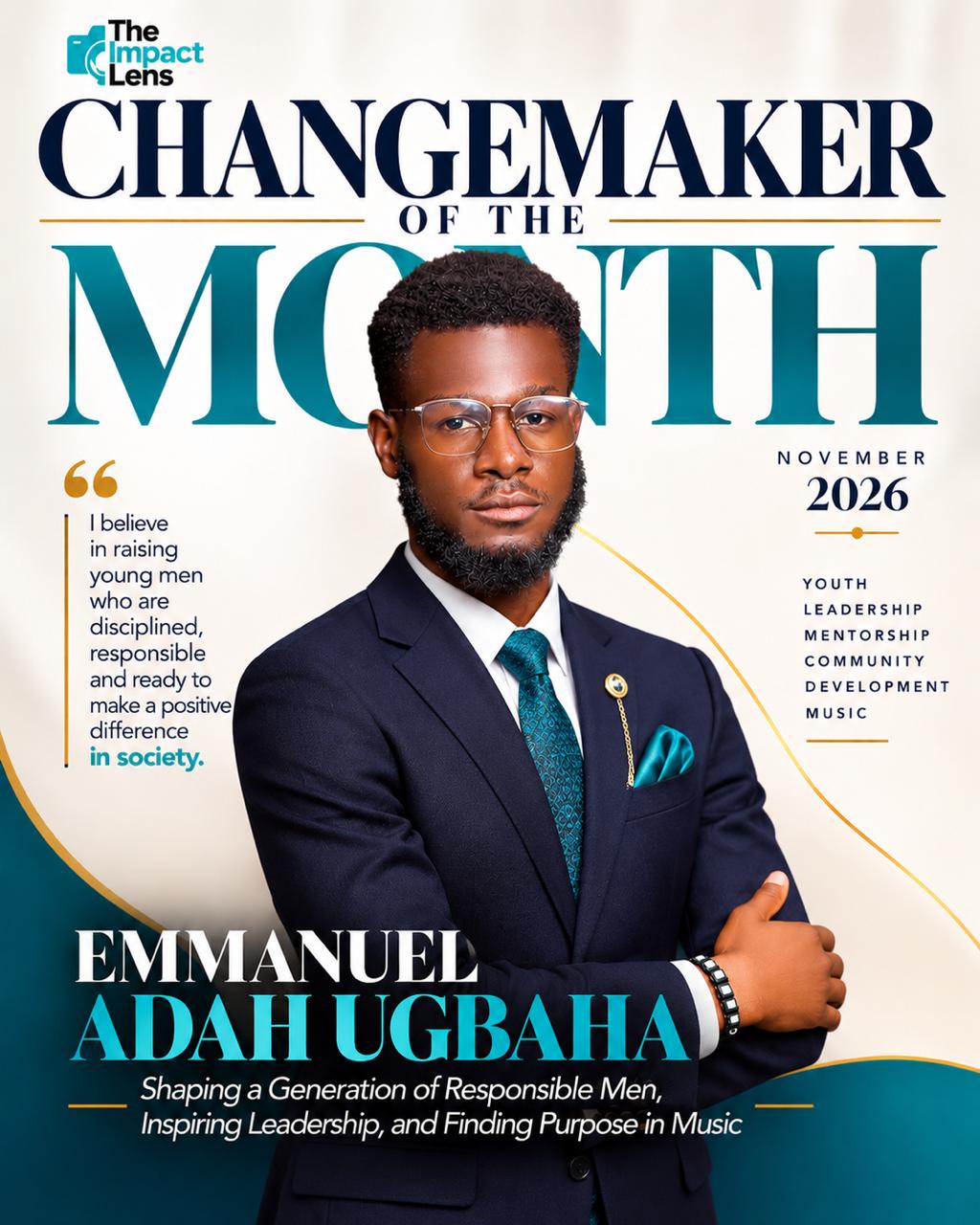
Emmanuel Adah Ugbaha is The Impact Lens Changemaker of the Month for November 2026.