
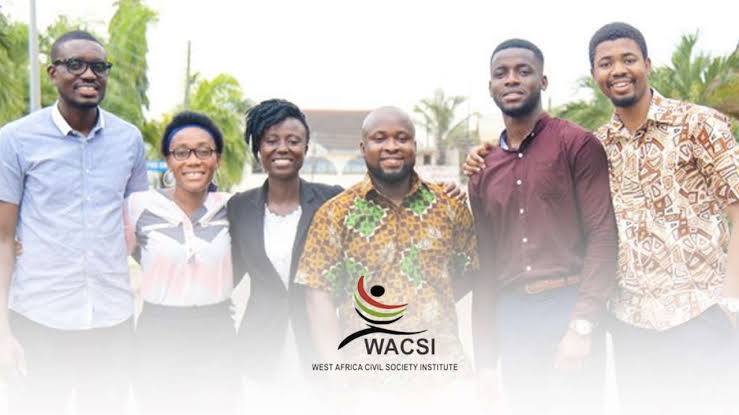
The West Africa Civil Society Institute (WACSI) has launched a two-volume research study examining the work, influence and challenges of women’s and feminist movements across 18 African countries.
Titled The Feminist Landscape: Women, Movements and Change in Africa, the study explores how women’s movements organise, contribute to social and policy change, and work to advance gender equality across the continent.
The research covers 10 Anglophone and eight Francophone African countries, including Nigeria, Kenya, Mali and the Democratic Republic of Congo. It was conducted with support from the Open Society Foundations.
At the virtual launch on November 6, researchers and civil society representatives discussed a central finding of the study: increased visibility for African women has not necessarily translated into greater influence over decisions, resources and policies that affect their lives.
Omolara Balogun, Head of WACSI’s Policy Influencing and Advocacy Unit, said that visibility alone does not guarantee influence, noting the growing resistance to gender equality across parts of the continent.
The discussions also highlighted several challenges confronting women’s movements, including declining funding, shrinking civic space, rising authoritarianism and fragmentation among advocacy groups.
Professor Kehinde Olayode, who led the Anglophone research, raised concerns about the effects of traditional project-based donor funding, arguing that it has contributed to fragmentation among activist groups. Michèle Aguey, who led the Francophone study, also pointed to the competition for limited resources.
Participants further highlighted the language barriers that can prevent Francophone organisations from accessing funding and participating fully in regional advocacy spaces. Gloria Agueh, founder of the Réseau des Femmes Leaders pour le Développement, called on funders to publish opportunities and accept applications in both English and French.
Dr Honorine Eféfa Honkou-Laté of the Coordination des Organisations Féminines du Togo urged funders to provide support for organisations themselves, rather than limiting funding to individual projects.
The study also points to the need for stronger collaboration between established women’s movements and younger, youth-led groups, as well as sustained support for organisations working at grassroots level.
Beyond documenting the challenges, the research seeks to strengthen women’s movements and feminist networks through improved advocacy, collaboration and collective action. It also connects to broader priorities around digital inclusion, financial inclusion and climate change adaptation.
WACSI said it would continue engaging stakeholders in the countries covered by the research to discuss the findings and encourage action on its recommendations.
The Anglophone volume has been published online, while the Francophone volume is being made available to participants.