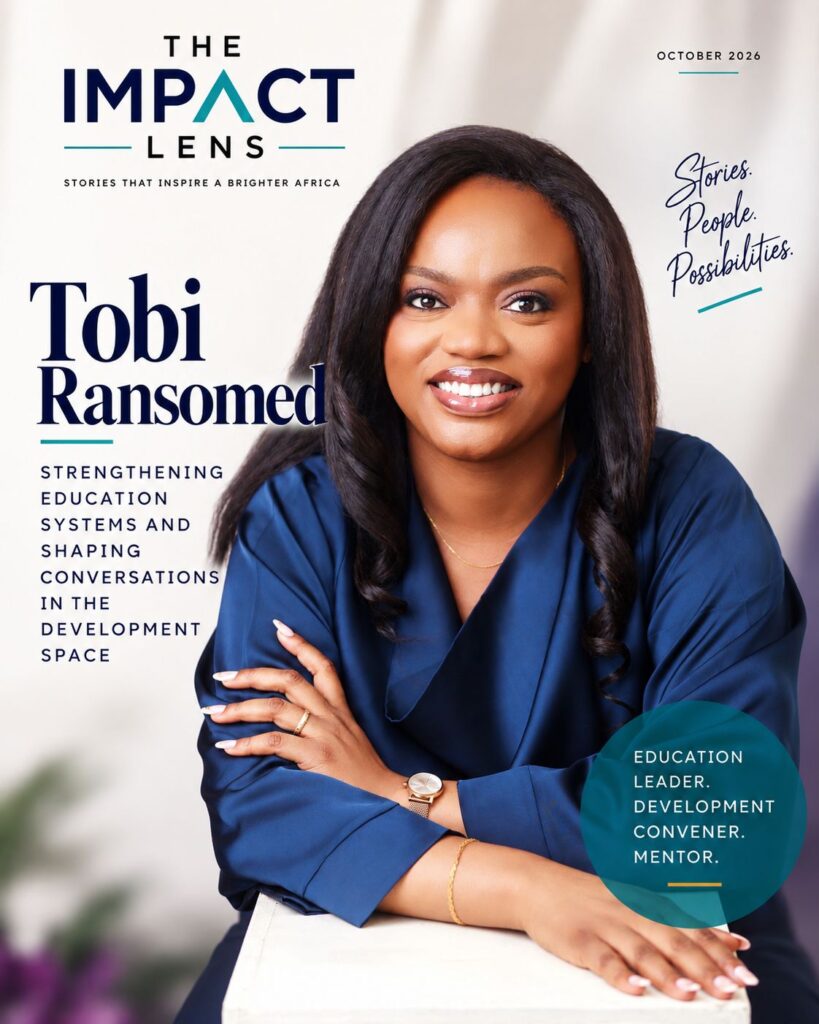
Tobi Ransomed works at the intersection of education, systems strengthening and social impact. She is a Senior Technical Advisor – Education with CARE International’s Global Education & Skills team, supporting programmes across Nigeria, Niger, Somalia and Sudan. She also serves as Project Director of RE-IMAGINE, a research-driven initiative in Zinder, Niger, focused on adolescent girls’ agency and life outcomes.
Her career spans humanitarian education, foundational literacy, teacher development and accelerated learning. She has worked with organisations including Save the Children, Plan International, Creative Associates and FHI 360, contributing to programmes that have reached hundreds of thousands of learners and supported thousands of teachers.
But as I looked through Tobi’s journey, I found myself wanting to go back a little. Before the professional titles and the work of influencing education systems, who was Tobi? What first drew her to this work?
One detail caught my attention. Tobi studied Industrial Chemistry at the University of Jos, yet today she works in education and development. So, how did that happen?
Looking a little closer, I found that her interest in helping people started long before university. As a teenager, she volunteered with a family friend’s NGO supporting people living with HIV/AIDS. At the time, she did not know anything about international development as a career. She simply wanted to help.
Teaching was one of the first ways she explored that interest. During her final year at university, Tobi taught at a missionary school in Jos. She had imagined teaching or setting up a school in a remote community, and the classroom gave her an opportunity to work directly with children. She continued teaching after university, working with young children in Abuja and Lagos.
Her degree was in chemistry, but her early work was taking her in another direction. She eventually moved from teaching into education programmes, and her work took her to Northeast Nigeria.
At Save the Children and Plan International, Tobi worked on education programmes in Borno and Yobe, where conflict and displacement had disrupted children’s schooling. Her responsibilities included project management and coordinating education-in-emergencies responses. She also helped establish the Education in Emergencies Working Group with UNICEF.
At Creative Associates, she worked as a Teacher Education Specialist on the USAID-funded Northern Education Initiative Plus programme, supporting teacher professional development in Bauchi and Sokoto. Her work was increasingly moving beyond the classroom to the systems and structures that support teachers.
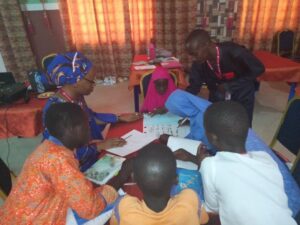
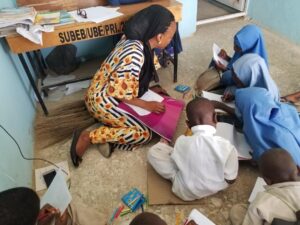
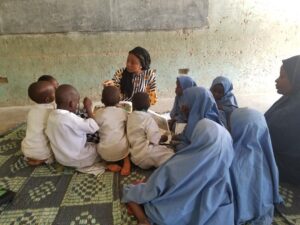
She later took on a broader leadership role with FHI 360’s Partnership for Learning for All in Nigeria programme, known as PLANE. Funded by the UK Foreign, Commonwealth and Development Office, PLANE was a £95 million programme supporting foundational and accelerated learning.
As Output 1 Lead, Tobi oversaw teams and subcontractors responsible for work representing 60 per cent of the programme portfolio. The interventions she directed reached more than 400,000 learners and supported the training of over 10,000 teachers and school leaders.
Her responsibilities also extended into national education policy. She led engagement with the Teachers Registration Council of Nigeria (TRCN), securing accreditation for teacher professional development programmes and contributing to national teacher standards. She oversaw the development and rollout of curriculum-aligned teaching materials in Hausa and English, introduced technology-enabled approaches to classroom observation and coaching, and contributed to efforts to strengthen professional standards for teachers and school leaders.
Tobi later returned to Plan International in a broader leadership role as Basic Education Thematic Lead and Consortium Team Lead – Education Advisor. She provided strategic and technical direction for the basic education portfolio and worked with partners on an EU-funded education programme across Kano, Sokoto and Jigawa.
One of her major areas of responsibility was supporting efforts to institutionalise the Accelerated Basic Education Programme (ABEP), which provides an alternative route for children and adolescents who have missed out on schooling to reconnect with education. She also helped pilot professional standards for school leaders across Kaduna, Kano and Jigawa.
Tobi has written about the challenge of out-of-school children, arguing that identifying how many children are outside the school system is not enough; there must be meaningful pathways back into education. This question connects with much of her work: helping children access learning while supporting the programmes, teachers and institutions that make that learning possible.
Today, at CARE International, she continues to work across education programmes in several countries. As Project Director of RE-IMAGINE, she works on a research-driven initiative focused on adolescent girls’ agency and life outcomes in Niger. The initiative brings together programme implementation, research partners and evidence generation to inform programme design and learning.
The focus on adolescent girls adds another dimension to her work. Their opportunities are shaped by more than what happens in the classroom, and understanding their experiences is part of designing programmes that respond to their lives.
There is another part of Tobi’s work that I found interesting, and it sits outside the formal roles on her CV: The Development Conversations Global (TDC), the pan-African platform she founded to bring development practitioners together through webinars, podcasts and community dialogue.
What prompted her to create a space for these conversations?
Tobi has spoken about discussions she had with fellow practitioners over time. They talked about the impact of their work, career uncertainty, professional challenges, wellbeing and what it means to keep working in development. These conversations were not just about projects and results; they were also about the people doing the work and the experiences they were having along the way.
Those discussions inspired Tobi to create TDC, a space where practitioners could share their experiences and learn from one another. Through its webinars, podcasts and community conversations, the platform gives people working across the development sector an opportunity to discuss issues that may not always feature in formal programme reports or professional profiles.
I find this side of her work interesting because it offers a different view of Tobi’s contribution to the sector. While much of her professional career has involved coordinating teams, engaging institutions and supporting education programmes, TDC creates room for practitioners to talk about their own experiences: what they are learning, what they find difficult and how they navigate their careers.
She also mentors young women and emerging professionals through initiatives including Her Next Step, the Fierce Women Mentorship Programme and TUBE mentorship.
Looking at Tobi’s journey, I keep coming back to where she started. As a teenager, she volunteered with an NGO supporting people living with HIV/AIDS. Later, she taught in the classroom, working directly with children. At that point, she could not have known that her career would take her into humanitarian response, teacher development, education policy and research across different countries.
Tobi studied Industrial Chemistry, but that is not what brought her into education and development. It was her heart for service, and her desire to help people, that first set her on this path. Over time, that desire found different expressions, from teaching children to strengthening the systems that support their learning and creating spaces for development practitioners to share their experiences.
And perhaps that is what makes her journey interesting to me. The degree tells us what she studied, but her journey tells us something more about what drew her to the work she does today.