

Gloria Hauwa Gbemudu is a Nigeria-based leadership coach and an ICF Professional Certified Coach (PCC) with more than a decade of experience spanning corporate leadership, sales, business development and professional coaching.
Before moving into coaching, Gloria spent 16 years working across telecommunications, oil and gas, aviation, sales and business development. Since 2017, she has served as Lead Coach with MarkOwens Coaching and Leadership, working with Fortune 500 and blue-chip organisations across Nigeria, Europe and the United States.
Her work today focuses on leadership, personal development and helping people navigate the internal questions that often sit beneath professional success. She has accumulated more than 1,800 hours of coaching experience and has contributed her expertise through mentoring, pro-bono coaching, leadership development and service to the coaching profession.
Gloria also serves on the Board of Directors of The Nigeria Chapter of ICF as the Director of Membership
But behind the credentials is a woman whose understanding of leadership has been shaped by faith, family, culture, career, relationships, responsibility and loss.
In this conversation with The Impact Lens, Gloria opens up about the experiences that shaped her, the lessons she carried from 16 years in corporate life, what drew her into coaching, why achievement does not always quiet self-doubt, and what she has learned about helping people trust themselves and grow.
TIL 1: Gloria, if we temporarily put aside the titles, certifications and professional achievements, what experiences have most shaped the woman you are today?
CGG: The experiences that have shaped me most began with my upbringing.
My late father, Rev. Victor Musa, was a clergyman, and my mother, Mary Musa, was a homemaker. They were exemplary parents who modelled for me what it meant to live a genuine, God-centered life. Faith wasn’t something they simply talked about; it was how they lived. Ours was also a very musical family, filled with faith, songs and so many precious memories.
That foundation was reinforced by my education. All the schools I attended growing up were missionary schools, and they had a profound impact on my values and worldview.
I started at Kent Academy, an American missionary boarding school in Nigeria for children whose parents were serving on the mission field in Africa. The curriculum and much of the culture were American. I gave my life to Jesus at about six years old, and those early years were filled with Christian teaching, music and values that have stayed with me. I also formed friendships there that I still treasure today.
While I was at Kent, my father went to Bible school in South Carolina, and our family joined him in the United States for a year. To my young mind, it was the best year ever. I didn’t want to come back to Nigeria! But that exposure to another culture broadened the way I saw the world and shaped many of the perspectives I carry today.
Then came Baptist High School, another missionary school, but culturally it was a completely different experience. I went from an almost entirely American environment to a very Nigerian one. It was quite a culture shock, and even the food was a rude awakening! Yet it taught me independence, resilience and a much deeper understanding of Nigerian life and culture. It also gave me some of my strongest friendships. There is a group of girls, now women whom I met there that are still a large part of my life today.
University was another important chapter. At the University of Jos, I experienced greater freedom and began to understand something that has stayed with me ever since: with freedom comes responsibility, great responsibility. Once again, I formed friendships that have endured through the years.
My relationship with God and my family, my parents, siblings, husband and children, has perhaps been the greatest influence on who I am. These relationships have shaped my purpose and the way I love, speak, respond, aspire and show up in the world. They make me want to keep becoming a better person and have influenced many of the choices I make.
And then, this year, I experienced one of the biggest and most painful shaping experiences of my life: the death of my precious father.
I don’t think I ever truly entertained the thought that my father would one day no longer be here. Of course, intellectually, we know that life ends, but knowing something and experiencing it are two very different things. Losing him confronted me with the reality that even a life filled with love, faith and beautiful memories will also hold loss.
It has made me look differently at what really matters. More than ever, my focus has shifted towards eternity, towards living this life with an awareness that it is not all there is. It has made me more intentional about the people I love, the things I give my energy to and the kind of life I want to live. In a very painful way, my father’s death is still shaping me.
My career has shaped me too. Every job, every season, every lesson and many of the people I have encountered along the way have influenced the decisions I have made and the direction my life has taken.
When I look at it all, I realise that who I am today has been shaped by faith, family, culture, friendship, responsibility, love and loss. And perhaps what I am learning now is that we never really stop being shaped. Life continues to teach us what matters, who we are and, for me, where my ultimate hope lies.
TIL 2: You spent 16 years working across telecommunications, oil and gas, aviation, sales and business development. When you look back at those years now, what did that season teach you about ambition, people and leadership that you could not have learned anywhere else?
CGG: Those 16 years taught me lessons about ambition, people and leadership that I don’t think I could have learned from a classroom.
On ambition, I learned that ambition must be driven by you. If there is no internal desire to aspire, grow and stretch yourself, it is very easy to simply blend into the crowd. But I also learned that ambition alone is not enough. You need people. Building alliances, both within and outside your organisation, matters. You cannot go very far entirely on your own. The right relationships can become part of the ladder that helps you rise.
On people, I learned that people can surprise you, in both directions. Some people you are convinced are for you may eventually show you that you thought wrong. But people can also be your greatest advocates, supporters and assets. So I learned to build authentic relationships and, importantly, to use things, not people. Genuine relationships should not be transactional. Some of the relationships I built during those years have lasted far beyond the jobs themselves.
And leadership? I learned that leadership can make or break you, at least temporarily. I experienced leadership that brought out the best in me, and I also experienced leadership that taught me what I never wanted to reproduce for someone else.
So my philosophy became quite simple: when you experience great leadership, pay it forward, with change to spare. When you experience poor leadership, learn from it and determine to do better for the people you will one day lead.
Looking back, those years taught me that ambition may start with you, but very little of significance is achieved by you alone. People matter. Relationships matter. And the way we lead people can leave an impact long after the job itself is over.
TIL 3: You eventually moved from a successful corporate career into professional coaching. What had changed inside you by the time you made that decision, and what were you searching for that your previous career could no longer give you?
CGG: Great question!
What had changed most inside me was my tolerance for living below my potential. I had reached a point where I could no longer comfortably remain in a place where I felt I was not fully using who I was or what I had to offer.
I was searching for a space where I could be my authentic self, live my values more fully without compromise. I had become tired of workplace politics and, particularly at that time, the environment I was working in. Something in me was saying, there must be more than this.
I wanted work that felt meaningful to who I was at my core, work that allowed me to use more of myself, make a real difference in people’s lives and feel that what I was doing was aligned with who I was becoming.
Coaching became that place for me.
Looking back, I don’t think I was simply leaving a corporate career. I was moving towards a version of myself that I was no longer willing to leave unexplored.
TIL 4: Coaching gives you access to conversations that people may never have with their colleagues, friends or even families. After more than 1,800 hours of coaching, what have you discovered about successful people that might surprise those who only see their achievements from the outside?
CGG: One of the biggest things I have discovered is that success is very much an internal journey, regardless of what the external evidence may suggest.
Many highly successful people still doubt themselves. They have very human fears, insecurities and questions that can genuinely keep them awake at night. They wonder whether they are good enough, whether they are making the right decisions, whether they can handle the next level, or whether they truly deserve to be where they are.
From the outside, you would never imagine it. You see the position, the achievements, the confidence, the influence, and assume that the person experiencing all of that must feel as successful on the inside as they appear on the outside.
Often, they don’t.
After more than 1,800 hours of coaching, I have learned that achievement does not automatically silence self-doubt. Sometimes the higher people climb, the more there is to lose, the greater the expectations become, and the more privately they wrestle with themselves.
Perhaps that is what has surprised me most: behind impressive achievements are still very human people.
TIL 5: We often assume that competence eventually produces confidence. But you work with people who may have the credentials, experience and track record to prove they are capable and still struggle to trust their own judgement. What do you think creates that disconnect between what a person has achieved and what they believe about themselves?
CGG: I think one of the biggest disconnects is the assumption that competence will automatically produce confidence. They can certainly reinforce each other, but one does not simply replace the other. They need to work hand in hand.
You can have years of experience, credentials and a strong track record and still struggle to trust yourself. Part of the reason is our inability to gather enough evidence to challenge our automatic negative thoughts.
In the moment, a thought can feel like the whole truth: I got this wrong, therefore I’m not good enough. I struggled with this, therefore I’m not ready.
One mistake can quickly become a story that defines how we see ourselves, despite years of evidence that suggests otherwise.
The interesting thing is that the evidence is often already there. But so many of us are running through life, moving from one responsibility to the next, without creating the space to step back, reflect and ask, “Is what I am telling myself actually true? What does the evidence say?”
Competence gives us evidence of what we can do. Confidence also requires us to recognize, internalize and trust that evidence. When we don’t, our achievements can tell one story while the story we believe about ourselves tells another.
For me, that is where the disconnect lies.
Sometimes you might not even have the evidence to support the competence you have gained, you just have to step out courageously with the mindset that even if you fail, that in itself is information you can use to keep moving forward. Confidence will come after you keep trying and find out “I can do this” So, another disconnect between Competence and confidence is lack of consistent courageous action even if you feel you will fail.
TIL 6: Women are often told to be more confident, more visible and more assertive. But what if the issue is not simply confidence, but the expectations women have been taught to carry into leadership? What have you observed about the tension between being successful and still feeling the need to be acceptable?
CGG: The tension is very real. When the desire to be acceptable requires you to move further and further away from your authentic self, it creates an internal tension that can be exhausting and difficult to sustain.
There are behaviors that leadership requires, visibility, assertiveness, communication, influence, decision-making, but I don’t believe they all have to be demonstrated in one so-called “acceptable” way.
An extroverted leader may approach visibility very differently from an introverted leader. One may command a room through energy and presence; another may build influence through thoughtful contributions, strong relationships and carefully chosen moments to speak. Both can be effective.
I think some of the tension for women comes when we confuse what leadership requires with how we have been told a leader should look or behave.
Understanding who we truly are gives us the confidence to ask, “How can I meet the demands of leadership without abandoning myself in the process?”
For me, that is the goal: not to reject what leadership requires, but to find an authentic way of delivering it and still achieving the expected results.
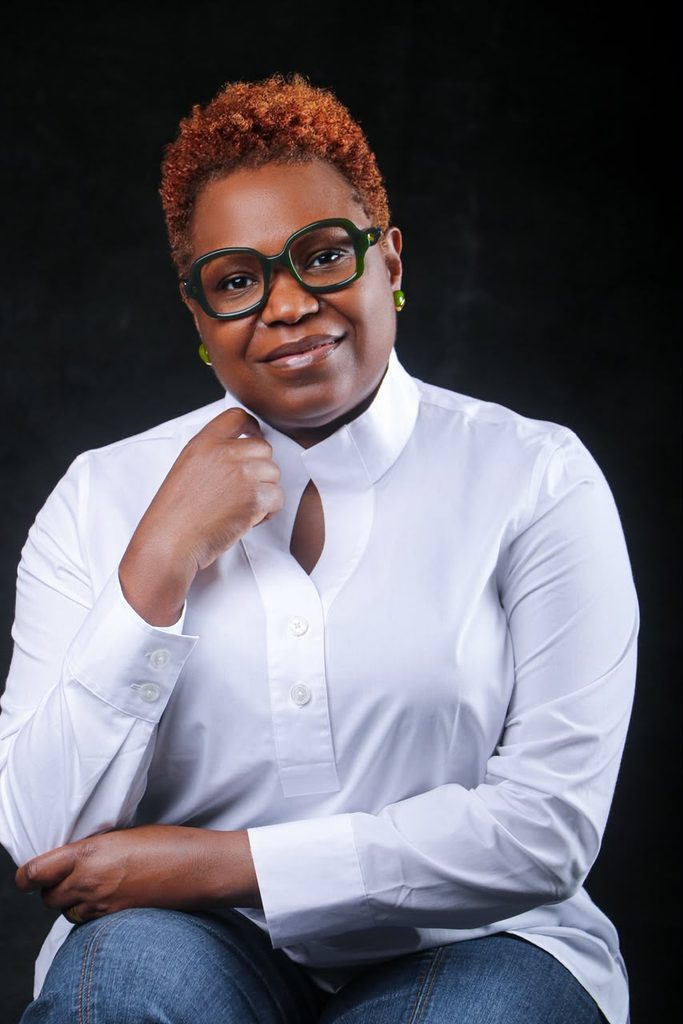
TIL 7: There is a particular kind of woman who becomes indispensable, she is dependable, capable, available and often the person everyone turns to. At what point can that strength become a limitation, and what does it take to step out of that role without feeling that you are letting people down?
CGG: I think that strength becomes a limitation when being dependable starts to mean always being available, regardless of the cost to you or to the growth of the people around you.
For many women, saying no can immediately feel like, “I’m letting someone down.” But what if sometimes saying no actually means, “I’m helping you up”?
Perhaps I am giving you the opportunity to build the muscle to do this yourself. Perhaps my answer isn’t “no,” but “not right now.” Perhaps I can’t do it for you, but I can point you towards someone who can help. And sometimes, perhaps you simply need the opportunity to figure it out for yourself.
Being indispensable can feel like a strength, but it becomes a limitation when the people around us cannot grow because we are always stepping in. It becomes a limitation when we are buckling under the weight of proving that we are always available. That simply isn’t sustainable.
And sometimes you know you have crossed that line when you begin to feel resentful towards the very people you keep saying yes to. They may not be the problem. Perhaps we simply haven’t been brave enough to say, “I can’t do that.”
There are also times when we must put on our own oxygen mask first. Not because we care less about others, but because continually pouring from an empty place eventually leaves us with very little to give.
So stepping out of the role of “the one who always handles everything” doesn’t necessarily mean letting people down. Sometimes it means allowing other people to step up.
TIL 8: Your contribution goes beyond individual coaching. You have given your expertise through pro-bono coaching, social-impact initiatives, mentoring and coach development. What responsibility do you believe people with experience and expertise have to make that knowledge available beyond the people who can afford to pay for it?
CGG: I believe that when we have gained experience and expertise, we have a responsibility to find ways of making some of that knowledge accessible beyond the people who can afford to pay for it.
That can take many forms. We can offer our services pro bono or low bono. We can mentor others, contribute to social-impact initiatives, or create more scalable and affordable ways for people to access what we know.
But I also believe sharing knowledge itself is a form of giving.
We can speak, write, teach and keep conversations going about what we have learned and the value our experience can bring. Not everyone may be able to sit across from us as a paying client, but they may read something we have written, hear us speak, attend a community program or encounter an idea that changes what they believe is possible for themselves.
For me, where there is knowledge, there is light. And sometimes that light is all someone needs to begin asking better questions, aspiring to something more, or seeking out the knowledge and support that can help them grow.
I don’t believe expertise should only create value for the person who possesses it. Some of it should find its way back into the world that helped us acquire it.
TIL 9: When you look across the different chapters of your life, from corporate professional to coach, mentor, trainer and leader within the Nigerian Chapter of ICF, what is the deeper thread connecting all of them? What do you think you have really been building all along?
CGG: When I look across the different chapters of my life, from corporate professional to coach, mentor, trainer and leader within the Nigerian Chapter of ICF, the deeper thread connecting them all is helping others grow.
That thread has been present in every role I have held. Whether I was working in a corporate environment, coaching an individual, mentoring someone, facilitating learning or serving within the ICF community, I have always been drawn to helping people develop, gain clarity and move towards their potential.
But there is another thread that feels just as important: creating safe spaces where people can truly be themselves.
I have always valued the power of listening, not simply hearing what someone says, but being fully present with them and creating an environment where they feel seen, respected and understood. When people trust that they will be actively listened to, they are often able to explore more honestly, ask deeper questions and consider possibilities they may not have allowed themselves to imagine before.
So, when I look at what I have really been building all along, I would say it is this: safe spaces where people can be listened to, supported and empowered to grow into who they have always wanted to be.
That has been the common thread across all the chapters of my life. And perhaps, at its heart, it is also a way of making knowledge, experience and encouragement accessible to others. I believe that when we gain experience and expertise, we have a responsibility to share some of it in ways that can help others move forward.
For me, where there is knowledge, there is light. Sometimes that light comes through a conversation, a coaching session, a training programme, a mentoring relationship or simply the experience of being genuinely heard.
And sometimes, that light is all someone needs to begin asking better questions, aspiring to something more or taking the next step towards becoming who they are capable of being.
TIL 10: Five years from now, when you look back at this chapter of your life, what do you hope you will have built, changed or contributed, and what would you like Gloria Hauwa Gbemudu to be known for by then?
CGG: Five years from now, I hope I will be able to look back and say, “I did more.”
I hope I will have created bigger safe learning spaces, at greater scale, where people can have honest, sometimes difficult, but ultimately life-changing conversations.
I want to have created more spaces where people feel safe enough to think differently, question what they have always believed about themselves, discover what is possible and grow.
I hope I will have contributed more thought-provoking insights, through coaching, mentoring, teaching, speaking and writing, that bring light, challenge thinking and ultimately transform lives.
And I want that impact to reach further. I don’t want the work I do to be limited only to the people I can personally coach or teach. I want to find ways to take these conversations, ideas and learning spaces to many more people.
As for what I would like Gloria Hauwa Gbemudu to be known for, the words that come to mind are authenticity, warmth, growth, wisdom and transformation.
But perhaps more than being known for those things, I would like people to say that they experienced them in their interactions with me, that they felt safe to be themselves, that something shifted in their thinking, that they saw themselves or their possibilities differently, and that somehow, after our paths crossed, there was a little more light.
If I can look back five years from now and see that I have done that at a much greater scale, I will know I have contributed something worthwhile.