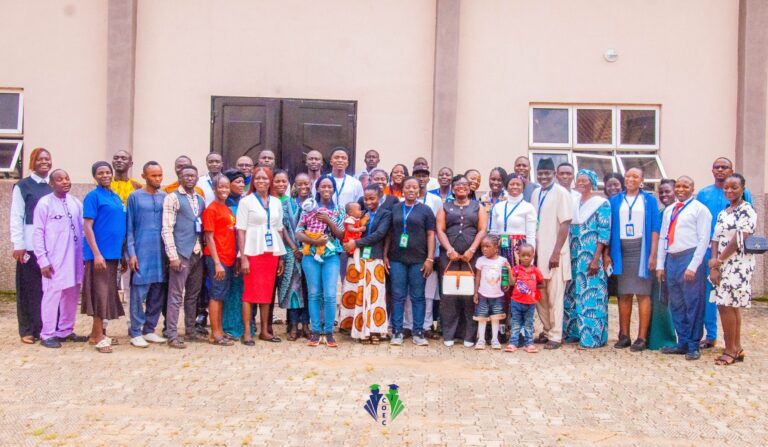
The Unstoppable Woman Impact Summit drew women across Abuja for a day of learning, inspiration, and strategic conversations centred on empowerment, leadership, and community impact.
Organised by the Unstoppable Woman Network, the summit brought together speakers, entrepreneurs, professionals, and emerging leaders for a series of sessions designed to strengthen women’s confidence, capacity, and influence in their personal and professional lives.
The event featured a keynote address by Mrs. Chioma Momah, a policy expert and Head of Policy at Guinness. She focused on the widely acclaimed framework known as the 7 Cs, which highlights the role of character, courage, consistency, communication, competency, confidence, and community in shaping women’s success. The session received strong feedback from attendees, many of whom described it as “clarifying,” “transformative,” and “deeply practical.”
Other speakers included Mr. Chris Chukwunyere, who spoke on the theme Finishing Strong; Mrs. Irene Bangwell, who addressed Boldness and self belief for Impact and business growth; and Mr. Fabian Igbaji, a psychotherapist who delivered insights on emotional wellness and recognising the power of now. Facilitators encouraged participants to embrace self-mastery, build meaningful networks, and pursue long-term impact.
In her opening remark, the convener of the Summit and Founder of the Unstoppable Woman Network Africa, Ijeoma Igbaji, said the goal of the gathering was to create a platform where women could gain clarity, knowledge, and community. “We want women to feel supported and equipped to rise to their full potential,” she said. “The summit is more than an event; it is a platform for transformation and a catalyst for national development.”
Participants commended the organisers for creating an environment that fostered learning, authenticity, and connection. Many noted that the summit provided practical insights they could immediately apply in their businesses, careers, and personal lives.
The event was supported by Nisa Wellness Retreat, Roomeo, Plink Cabs, and Every Detail Events, whose contributions helped ensure a smooth and impactful experience for attendees. According to organisers, the Summit will continue to grow as a platform for empowering women and amplifying their voices in society.
The Unstoppable Woman Network is a community-focused initiative committed to helping women build influence, leadership capacity, and generational legacy through education, mentorship, and collaborative impact.
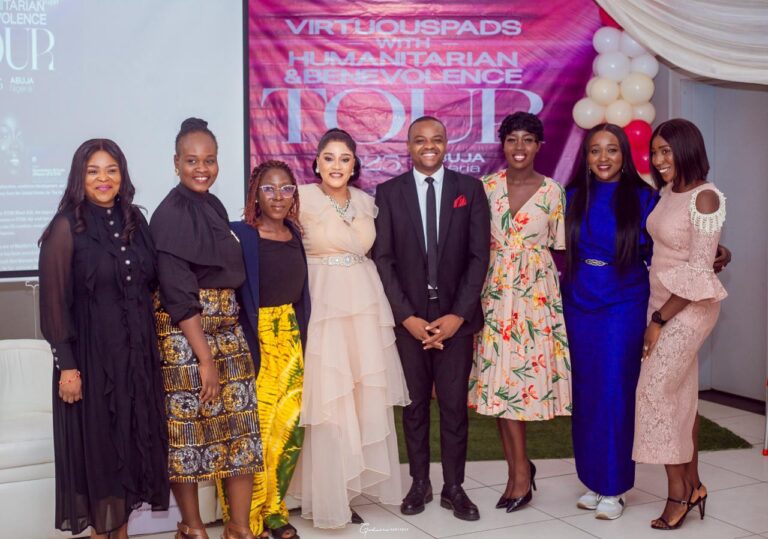
A renewed wave of energy for girl empowerment swept through Abuja as humanitarian leader and STEM advocate Nyamekye Wilson brought her ongoing West African Humanitarian Leadership Tour to a powerful close with the SPARK Conference 2025.
For several months, Nyamekye has traveled across West Africa, speaking at universities in Ghana, meeting young leaders in Nigeria, and engaging displaced girls and women in the Abuja IDP camp. Everywhere she goes, her message remains unwavering: courage transforms stories and unlocks destinies.
Her tour has focused heavily on leadership, resilience, and menstrual dignity. Through her partnership with Virtuous Pads, she expanded the Dignity for Her Phase 2 Project, reaching vulnerable girls with reusable pads and menstrual health education. “Wherever I go, I meet girls who want more, more opportunity, more dignity, more support,” Nyamekye said. “This tour is about reminding them that they matter, their dreams matter, and they can rise with courage no matter their circumstances.”
The SPARK Conference, organized in collaboration with Virtuous Pads, became one of the defining highlights of this humanitarian journey.
The fireside chat between Nyamekye Wilson and Val Okafor ignited the room with its raw honesty and depth. Speaking on purpose, pain, and perseverance, the conversation left the audience visibly moved. Val Okafor reflected afterward, saying, “Nyamekye carries a conviction that awakens people. The way she speaks about resilience makes you believe that courage is not optional, it’s necessary.”
A highly energizing panel session followed, featuring influential voices including Raquel Kasham Daniel, Mayowa Adegbile, Blessing Ibi, and Emiola Adetunji Mustapha. They spoke candidly about navigating challenges, building purpose-driven work, and creating sustainable impact. According to Raquel Daniel, “Community work must go beyond interventions. Advocacy is what unlocks lasting change. If we stay silent, systems will continue to fail girls.”
A deeply emotional moment of the conference was the award ceremony, where exceptional individuals were honored for their courage, leadership, and commitment to girls’ education.
Award recipients included Nyamekye Wilson, Raquel Kasham Daniel, and Peter Molo, each recognized for the impact of their service and their dedication to empowering girls and communities. The atmosphere was filled with pride and gratitude as they received their awards, celebrating the milestones achieved through their work.
In her closing remarks, Tabitha Arenson Abimiku officially launched Dignity for Her Phase 2, expanding the initiative’s reach and reinforcing the commitment to menstrual equity. “This conference was not just an event, it was the strengthening of a movement,” she said. “We are building a future where girls can rise with confidence and dignity, and we are just getting started.”
The SPARK Conference 2025 stands as a transformational milestone in Nyamekye’s humanitarian tour, a celebration of courage, leadership, and resilience. It reaffirmed a powerful truth: when women rise together, communities are transformed.
The global social impact organisation, Rise Up Together, has launched an initiative to empower 25 local civil society leaders to champion gender equity reforms across Nigeria. The programme targets persistent gaps affecting women, girls, and gender-nonconforming individuals, equipping leaders to influence lasting social change in their communities.
The beneficiaries, drawn from the Federal Capital Territory, Rivers, Anambra, Kaduna, and Nasarawa States, will use their leadership skills to expand access to health, education, and economic opportunities for marginalized populations.
According to Theresa Effa, Country Director of Rise Up Together Nigeria, the 2025 Leadership and Advocacy Accelerator is an intensive, week-long training programme designed to strengthen advocacy, enhance leadership skills, and prepare participants to drive policy and systems change. Supported by Cummins Inc, the programme provides participants with the strategies and resources needed to improve laws, policies, and programmes in their communities.
“The Accelerator equips leaders with the tools to influence policy outcomes, expand community access to essential services, and create opportunities for women and girls. This is a strategic step in our mission to advance gender equity and justice in Nigeria,” Effa said.
Participants will undergo training in leadership, advocacy, policy change, and movement building. Upon completion, they will be eligible to apply for competitive grants to implement locally led advocacy projects addressing economic inclusion, education, healthcare access, and women’s rights.
The initiative builds on the successes of Rise Up Together alumni. For instance, Nsini Udonta, who joined the programme in 2018, leveraged her training and grant support to expand her work with Project Alert on Violence Against Women, creating a tangible impact in policy and practice. Nsini reflected, “I became a Rise Up Leader because I want to do more; I want to see changes in policies and practices to actually improve women’s rights.”
Dr. Nawani Aboki, Executive Director of the Center for Women, Youth and Community Action and one of the 2025 Accelerator facilitators, emphasised the programme’s transformative potential. “The energy, creativity, and dedication I’ve seen from Nigerian leaders is truly inspiring. During the Accelerator, we work alongside these leaders to strengthen their advocacy skills so they can influence policy, expand access to education and healthcare, and create economic opportunities that uplift their communities for generations,” he said.
Since 2009, Rise Up Together has built a global network of over 800 leaders across Africa, Latin America, South Asia, and the United States. Collectively, alumni have contributed to over 218 new or improved laws and policies, positively affecting more than 172 million people worldwide.
This initiative underscores Rise Up Together’s commitment to developing local leadership capable of creating sustainable change and advancing gender equity across Nigeria.
Founder of Policy Shapers, Ebenezar Wikina, has earned global recognition as a 2026 Next Generation Foresight Practitioners Fellow, highlighting his innovative citizen-driven development initiatives in Rivers State.
Organised by the United Kingdom-based School of International Futures, the fellowship selected 25 fellows from 24 countries out of more than 700 applicants. Wikina, a Rivers State native, was one of only two global fellows chosen under its Democracy & Sustainable Development Foresight Transformation Mission. The programme recognises emerging foresight leaders who use futures thinking to drive positive, community-centred change.
Wikina, a policy analyst and civic-tech entrepreneur, founded Policy Shapers to equip young people with the knowledge, skills, and tools to engage meaningfully in public policy. His fellowship project, Rivers 2050 Vision, seeks to co-create a 25-year development blueprint for the state, ensuring citizens play an active role in shaping their future.
Speaking on his selection, Wikina said, “The last time Rivers State had a development plan was 50 years ago, in 1975. Given our recent political and public leadership challenges, this project puts power back in the hands of citizens to fight for the state they believe they deserve.”
He added that the fellowship offers him the chance to bring African perspectives into global foresight conversations and collaborate with other leaders shaping long-term development strategies.
Wikina’s recognition adds to a decade-long list of accolades, including the 2015 Rivers Business and People Award, 2017 Global Investigative Journalism Conference Fellowship, 2020 Mandela Washington Fellowship, 2022 Royal African Youth Leadership Award, and the 2024 Skoll Fellowship, among others.
Nigeria continues to face an alarming rise in teenage pregnancy and school dropout rates, a crisis that disproportionately affects girls and threatens their long-term opportunities. In states like Benue, early pregnancy remains one of the leading contributors to girls dropping out of school, cutting short their education and exposing them to lifelong socio-economic disadvantages. Many of these girls never return to school, and the cycle of poverty, early marriage, and limited prospects continues.
In response to this growing challenge, Beyond the Classroom Foundation launched the Books Over Boys Campaign in the FCT in May 2025, an intentional shift from reaction to prevention. Instead of only supporting girls after they become pregnant, the campaign focuses on early education, empowerment, and behavioural change, helping girls understand the value of their education and the risks that distractions can pose to their future.
Since its launch, the campaign has reached several states across Nigeria, touching hundreds of girls with real, practical messages about self-worth, focus, and long-term goals. And now, the movement has extended to Benue State, where the need for preventive intervention has become urgent.
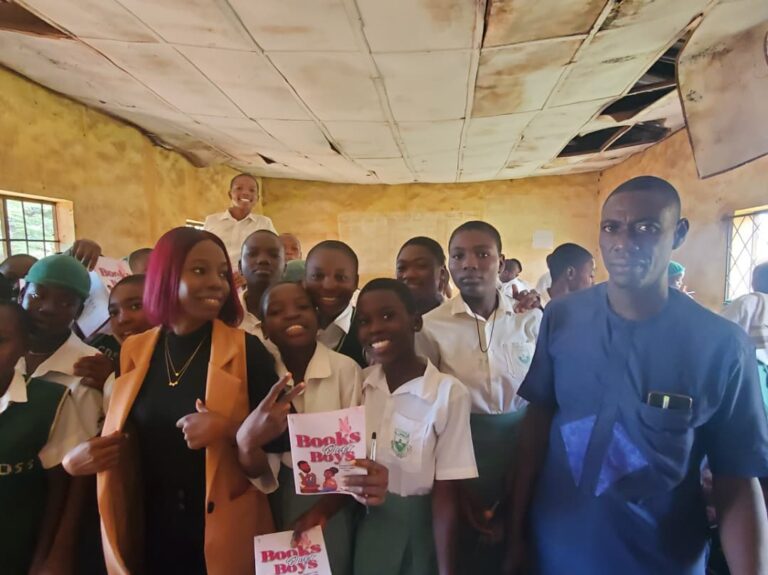
On Tuesday, 18th November 2025, 55 girls from Government Day Secondary School, Otukpo came together for an inspiring Books Over Boys reading session. The session was led by Christie Onogwu, a passionate advocate committed to reaching girls in her community. She was supported by Mr. Enokela Sunday, Dean of Studies at GDSS Otukpo, who helped coordinate the students and ensure an engaging session.
The girls listened with excitement and curiosity as passages from the Books Over Boys booklet were read aloud. Every line resonated deeply. The discussions helped them understand how peer pressure, seeking validation, and distractions from boys can lead to choices that jeopardise their education, often with lifelong consequences. Many of the girls shared how relatable the stories were, reflecting the real struggles young girls face in Otukpo and neighbouring communities.
The session was not just a reading, it was a preventive intervention, a reminder that girls’ dreams deserve protection, and that the path to a better future begins with informed decisions today. The joy on the girls’ faces showed how empowering the right knowledge can be when given at the right time.
Beyond the Classroom Foundation remains committed to ensuring that more girls across Nigeria receive this message before they face life-altering setbacks. The campaign will continue to expand, reaching more schools, more communities, and more girls who deserve every opportunity to stay focused, stay safe, and stay in school.
For more information on the Books Over Boys Campaign or partnership inquiries, please contact Beyond the Classroom Foundation www.beyondtheclassroomfoundation.org
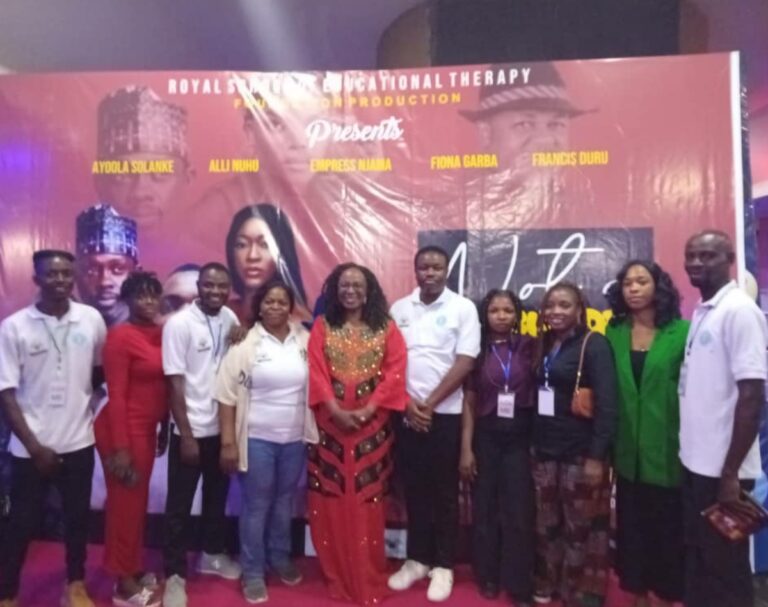
The advocacy film “Not a Burden”, which highlights the challenges faced by children with neurodevelopmental disorders such as autism and cerebral palsy, premiered over the weekend at Silverbird Cinemas in the Federal Capital Territory (FCT). The event brought together filmmakers, Nollywood actors, government officials, and the film’s cast and crew.
The initiative, led by the Royal School of Educational Therapy Foundation (RSETF) in collaboration with Lancelot Imasuen’s Media Network Limited, seeks to raise awareness about the deprivation, neglect, and societal stigma faced by children with special needs. The film promotes empathy, inclusion, and equal opportunities for all children to achieve their full potential, challenging the perception of children with disabilities as “useless.”
Directed and produced by legendary filmmaker Lancelot Imasuen, the film features seasoned actors including Ali Nuhu, Francis Duru, Empress Njama, Fiona Garba, Adaku Dike, and Demola Ogunsi, alongside children with special needs who share their stories on screen.
Speaking at the premiere, Imasuen said:
“Through this movie, people will realise that we have underestimated these children. God doesn’t make mistakes. They may face challenges in one area, but in many others, they are extraordinary. This film is a service to humanity and an experience I will cherish forever.”
Dr. Badewa Adejugbe-Williams, founder of RSETF and Executive Producer of the film, explained that “Not a Burden” is inspired by real-life experiences of individuals with disabilities and their families. She said the film aims to shift societal attitudes, challenge stigma, and promote inclusive development.
“When children see that they have abilities, they begin to grow. Our goal is to empower them, advocate for their inclusion, and build holistic intervention plans that nurture their strengths,” she said.
The film also garnered praise from Senator John Azuta-Mbata, President-General of Ohanaeze Ndi Igbo Worldwide, who called it a timely intervention.
“This project is an important step in bringing the realities of children with special needs into the public eye. More support from government, private sectors, and individuals is needed to improve their lives,” he said.
Plans are underway to screen “Not a Burden” at relevant international film festivals, with calls for partnerships and support to further its advocacy goals.
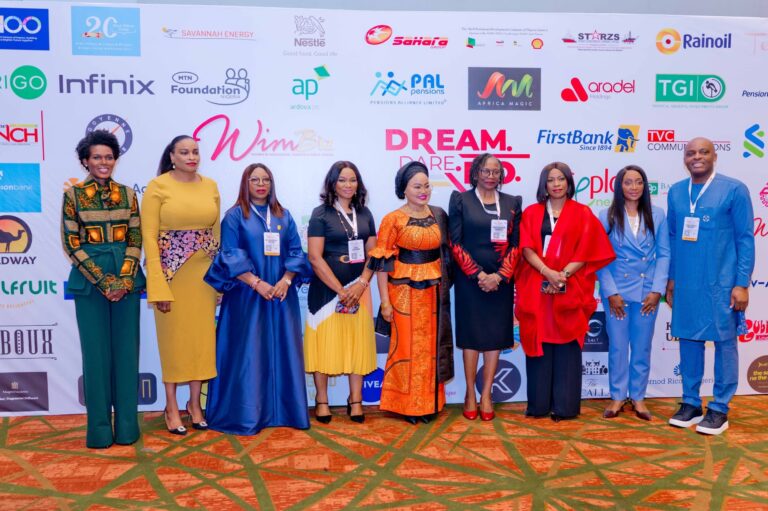
The 24th Women in Management, Business and Public Service (WIMBIZ) Annual Conference took place on November 14–15, 2025, at the Eko Hotel and Suites, Victoria Island, Lagos, gathering thousands of women leaders, entrepreneurs, policymakers, and professionals from across Nigeria and the diaspora. With the theme “O.W.N – Own, Walk, Nurture,” this year’s conference served as a powerful reminder of the responsibility women carry in shaping a new era of leadership rooted in authenticity, courage, and collective progress.
Leadership, ambition, and resilience took center stage as speakers urged women to embrace ownership of their journeys while nurturing systems and communities that support gender equity and national development.
In his goodwill message, Lagos State Governor Babajide Sanwo-Olu, represented by Commissioner Folashade Ambrose, reaffirmed his administration’s commitment to women’s leadership, equity, and inclusion. He praised WIMBIZ’s 24-year legacy of empowering more than 15,000 women through mentorship, capacity-building, and leadership programs, calling the organisation “one of Africa’s most respected voices for women’s contribution to growth and innovation.”
Sanwo-Olu stressed that true leadership goes beyond ambition, requiring stewardship, humility, and a commitment to legacy. Highlighting Lagos State’s progress, he revealed that over 40% of his executive council and more than half of the state’s permanent secretaries are women—describing this as an unprecedented milestone. He also announced new gender sensitivity frameworks and unconscious bias training across ministries to strengthen inclusive governance.
“When women rise, economies grow; when women lead, communities thrive; and when women own, walk, and nurture, nations transform,” he concluded.
Conference Chairperson, Hon. Justice Amina Augie (Rtd.), set the reflective tone, urging women to embrace authenticity as the foundation of meaningful impact. “Authenticity is not optional,” she noted. “It is the foundation upon which impact is built.”
Returning to the WIMBIZ stage after 14 years, former World Bank Treasurer and renowned economist Arunma Oteh delivered the keynote address. She challenged women to intentionally own their journeys, linking collective leadership to national development.
Oteh celebrated WIMBIZ’s growth, 340,000 women impacted, 78,000 families supported, and 10,000 girls mentored, describing the organisation’s footprint as transformational. But she also emphasized Nigeria’s alarming gender gap in political representation.
“Nigeria ranks 143 out of 144 countries in women’s political representation. We have no female president, no female vice president, no female senate president, and only four female senators out of 109. That is unacceptable,” she declared.
Her message was direct: Nigerian women must prepare for the 2027 elections, get registered, obtain their PVCs, and organise with strategic urgency equal to the men already preparing.
Oteh outlined her leadership pillars, Character, Competence, Compassion, and Courage, urging women to cultivate excellence, clarity of purpose, and boldness. “Define success on your own terms,” she said. “No one else can do your push-ups for you.”
WIMBIZ Executive Director, Omowunmi Akingbohungbe, reflected on her time leading the organisation, describing it as transformative. Under her leadership, WIMBIZ has strengthened collaboration and advocacy, forming the Women in Leadership Coalition with WISCAR and the Nigerian Governors’ Forum to push for 35% female representation on corporate boards and in government.
She also advocated progressive labour reforms such as 16 weeks maternity leave with full pay and two weeks paternity leave, stressing that caregiving should not rest solely on women. Major institutional advances, including acquiring a corporate headquarters and a hectare of land on the Lekki-Epe Expressway for a future WIMBIZ Resource Facility—were highlighted as steps toward long-term sustainability.
One of the most emotional sessions came from Olori Atuwatse III, Queen Consort of the Warri Kingdom, who spoke candidly about identity, self-worth, and the power of authenticity. Sharing her personal journey from insecurity to confidence, she encouraged women to silence the inner critic and detach their identity from societal expectations.
“You are already capable. You are already enough. Let your light shine and pull another sister up as you rise,” she urged.
The newly appointed Chair of the Board of Trustees, Ebisan Akinsayan, pledged to expand WIMBIZ’s influence across Africa and continue shaping conversations around gender-responsive leadership.
Across four powerful plenary sessions, experts shared insights on economic empowerment, leadership development, resilience, wellness, and intergenerational collaboration:
Key Panel Highlights
Economic Empowerment & Sustainability: Sola Adesakin, Richmond Bassey, Natalie Beinisch, Dr. Folasade Femi-Lawal, Olaitan Martins, and Adetumi Atayero dissected financial systems, investment strategies, digital innovation, and women’s economic power.
Inner Leadership & Purpose: Iphie Chuks-Adizue, Dr. Soromidayo George, Hilda Manyo-Dickson, Dr. Busola Tejumola emphasized balancing ambition with vulnerability, and leading with purpose and clarity.
Impact Beyond the Spotlight: Chioma Ude, Ruqayya Tofa-Basheer, Nonye Nweke, and Oreoluwa Atinmo shared stories of resilience and purpose-driven leadership away from public recognition.
Wellness & Wholeness: Ebunoluwa Collins, Mosunmola Dosunmu, Bunmi George, Dr. Agility Obi-Ihesie, and Unoma Grant recentered health as a vital component of sustainable leadership.
Intergenerational Collaboration: Eni Adeoluwa, Olusiji Adeyinka, Dr. Morenike Molehin, Adesuwa Onyenokwe, and Iroghama Ogbeifun highlighted mutual respect, mentorship, and collaboration as bridges across age divides.
The event closed with a tribute to pioneers in the legal profession, including Dame Priscilla Kuye, Justice Aloma Mukthar, Chief Folake Solanke, Justice Rose Ukeje, and Catherine Edeh—women who broke barriers and paved the way for future generations.
In a bid to boost nutrition and reduce hunger, a nonprofit organization, One Meal a Day for the Children Initiative, weekend, took food and educational interventions to Abuja Children’s Home, Karu, Abuja Municipal Area Council, AMAC, Federal Capital Territory, FCT, Abuja.
Speaking on the sidelines of the visit and donations to the children, the Founder and Chief Executive Officer, CEO, One Meal a Day for the Children Initiative, Ijeoma Nwokpoku, said the essence of the donation is to ensure nutritious meals are given to the children while she explained that her passion has been to see that no child goes hungry, because it is the right of every child to have access to good food no matter the situation, which she has been doing for over 10 years.
She said: “I have always had this mind to be able to give back to the society. Over 10 years ago this dream came about.
“I feel so excited because this is one of the things I have always dreamed to do. My happiness is when I see other people are happy, I feel fulfilled. My husband jokingly said, ‘I hope wont come back and then, you have sold this house to be able to feed people’, so it is my passion, it is something that gives me joy.”
She further stated that what drives her passion and of the organization is to fight malnutrition among vulnerable children and parents.
She added that government a lone cannot solve the problems affecting Nigerians, hence, she is doing what she can to intervene, which she said if every well meaning Nigerian lit his or her candle of kindness every Nigerian would have a sense of belonging.
“Child malnutrition is a pandemic. It is a disease, and that was one of the things that made me venture into it because when you go out and see what some of these children eat at times is not even food at all, it is really something that disturbed me, and that made me to take up this challenge in my own little way.
“I may not be able to solve all the problems but in my own little way let me see how I can to put smiles on these children’s faces by providing for them and then for the government too”, she added.
However, she said the have been visiting the Abuja Children’s Home in Karu, and they brought food items and learning materials to support the Home, and is solely funded by her organization, but are open to sponsors who want to help upscale what they have been doing.
The Administrator, Abuja Children’s Home, Karu Site, FCT, Quincy Patrick, described the gesture from One Meal a Day for the Children initiative as a “great initiative”, and commended the activities of the organization.
“It’s a great initiative, we are happy and excited about it, not just for our children but for every Nigerian child.
“Food is one of the rights of a child, and if an organization is putting together an initiative where children get one meal a day, I think it’s a huge contribution to society, and also to the lives of the children, to the upbringing, development, all around wellness of the children.
“So not just for the children here, every child anywhere should have access to food. They had come and told us about the initiative, told us what they were doing, we applauded it as a good one”, Patrick added.
According to her, the sharing of food will also help the children understand the concept of sharing and giving back, which she also disclosed that the Abuja Children’s Home “is one of the homes that enjoys a lot of donations, and we, in turn, reach out to other homes that are not as probably situated as ours.”
Meanwhile, the Co-Founder and Chief Executive Officer, CEO, Ibrahim Baba-Inna, IBI, Foundation, Lieutenant Commander, Ibrahim Baba-Inna, Retd, in his remarks, commended Ijeoma Nwokpoku for her care and concern for the children, and pointed out that NGOs are really doing their best to ensure the less privileged are positively impacted with their scare resources, which they go the extra mile to reach out to vulnerable Nigerians.
“The non-governmental organizations have been doing their best because these are people that are sacrificing their time, energy, effort, and resources to ensure that people have a better living, condition; education, welfare, and so many things.
“And just like One Meal a Day for the Children initiative that we are here partnering with have sacrificed a lot to ensure that they are here to help these vulnerable children, and as you can see, the United Nations Sustainable Development Goal 2, which talks about zero hunger, it’s all about ensuring that people have a meal”, he said.
Other members of One Meal a Day for the Children initiative including a legal practitioner, Prudential Igbokwe; a lecturer and entrepreneur, Dr. Austin Osuhor; Bilkisu Raji; and Chika Ikegbunam, in their goodwill messages commended the Founder and CEO, One Meal a Day for the Children Initiative, Ijeoma Nwokpoku for her passion and interventions for vulnerable Nigerians, and acknowledged that she has given her all to really give hope to the children at Abuja Children’s Home despite the economic challenges.
However, urged government and development partners to tackle the root causes of children being abandoned and thrown away to the streets, and said the laws on such actions should be enforced to curtail the act, therefore, promote tolerance amongst Nigerians in order to safeguard against such actions, and added that the government should make the process of child adoption less cumbersome in order for Nigerians to adopt the children.
Nene Isinomen Imoisili-Bejide, Founder and Principal Consultant of Blanche Aigle Communications, has been recognised for excellence in storytelling and strategic communication at the 10th Nigeria Digital PR Summit.
The summit, themed “Digital PR in Action: Owning Your Narrative, Telling Your Story,” celebrated leaders who are redefining communication in Nigeria’s digital era. Nene Bejide was featured on the cover of the official Digital PR Digest magazine and received a prestigious award acknowledging her outstanding contributions to the communications industry and the advancement of public relations in the digital age.
Her feature, titled “Inside Nene Bejide’s Head: Telling Stories that Move Hearts, Shift Culture, and Shape Tomorrow,” offered a compelling reflection on the role of storytelling in shaping perception, driving influence, and inspiring societal change. The piece positioned her as a leading voice in redefining how narratives are crafted and sustained in modern public relations.
Speaking after receiving the award, Nene Bejide expressed gratitude and reaffirmed her commitment to empowering brands to communicate with clarity and integrity.
“Storytelling remains one of the most powerful ways to connect brands with people and to shape how organisations are perceived in a rapidly changing digital world. At Blanche Aigle Communications, our mission is to help brands and individuals own their narrative and tell their story with clarity, courage, and conviction,” she said.
Blanche Aigle Communications, a strategic communications agency, has earned recognition for helping clients find their voice and tell their stories with purpose. Through brand positioning, digital strategy, and reputation management, the agency delivers insight-driven storytelling that strengthens trust and builds meaningful connections with audiences.
Today, Blanche Aigle Communications is recognised as one of Nigeria’s leading PR and marketing communications agencies, driving impactful narratives that inspire loyalty and influence across diverse sectors in a fast-evolving digital landscape.
Nene Bejide’s recognition at the Nigeria Digital PR Summit underscores her role as a creative force shaping the next chapter of marketing communications across Africa, further cementing Blanche Aigle Communications’ position at the forefront of strategic storytelling and brand leadership.
In a bid to bridge the digital literacy gap at the grassroots level, Community Outreach For Educational Change (COEC), Nigeria, has successfully trained over 145 teachers, facilitators, and staff from eight implementing TLG Schools on the use of digital tools for teaching and learning.
The one-day ICT training, held in Kaduna, focused on equipping educators with the digital skills necessary to integrate technology into lesson planning, classroom delivery, and student engagement. Speaking to the Daily Sun, Swanta Blessing Bonat, Executive Director of COEC, explained that the initiative also aimed to promote safe, ethical, and effective use of the internet for teaching, research, and professional development.
A pre-training assessment revealed that 80 percent of participating rural teachers had no prior knowledge of basic ICT, highlighting the urgent need for such capacity-building interventions. The training sessions covered practical areas such as safeguarding online presence, creating strong passwords, identifying fraudulent websites or messages, and effectively leveraging digital platforms for lesson planning and classroom instruction.
Participants shared positive feedback about the impact of the training. Mr. Daniel, a mathematics teacher, noted:
“I’ve been calculating my students’ grades manually for years. Now, I can use formulas to grade automatically, saving me hours of work.”
Similarly, Miss Faith, a young teacher, expressed relief at learning to navigate online teaching resources efficiently:
“I often struggled to find suitable teaching materials online. The session on online research has enabled me to identify credible sources and compile digital worksheets for my class. This will completely change how I prepare lessons.”
The training successfully enhanced teachers’ digital competence and instilled a culture of safe and effective technology use in education. By equipping educators with modern tools and practical skills, COEC is helping to transform lesson delivery, improve student engagement, and ensure rural schools are not left behind in the digital era.
Swanta Blessing Bonat concluded:
“Empowering teachers with digital skills is key to improving learning outcomes in our schools. This training will not only make teaching more effective but also inspire students to embrace technology safely and creatively.”
The initiative represents COEC’s ongoing commitment to strengthening education in underserved communities, ensuring that both teachers and students can thrive in a rapidly evolving digital landscape.