
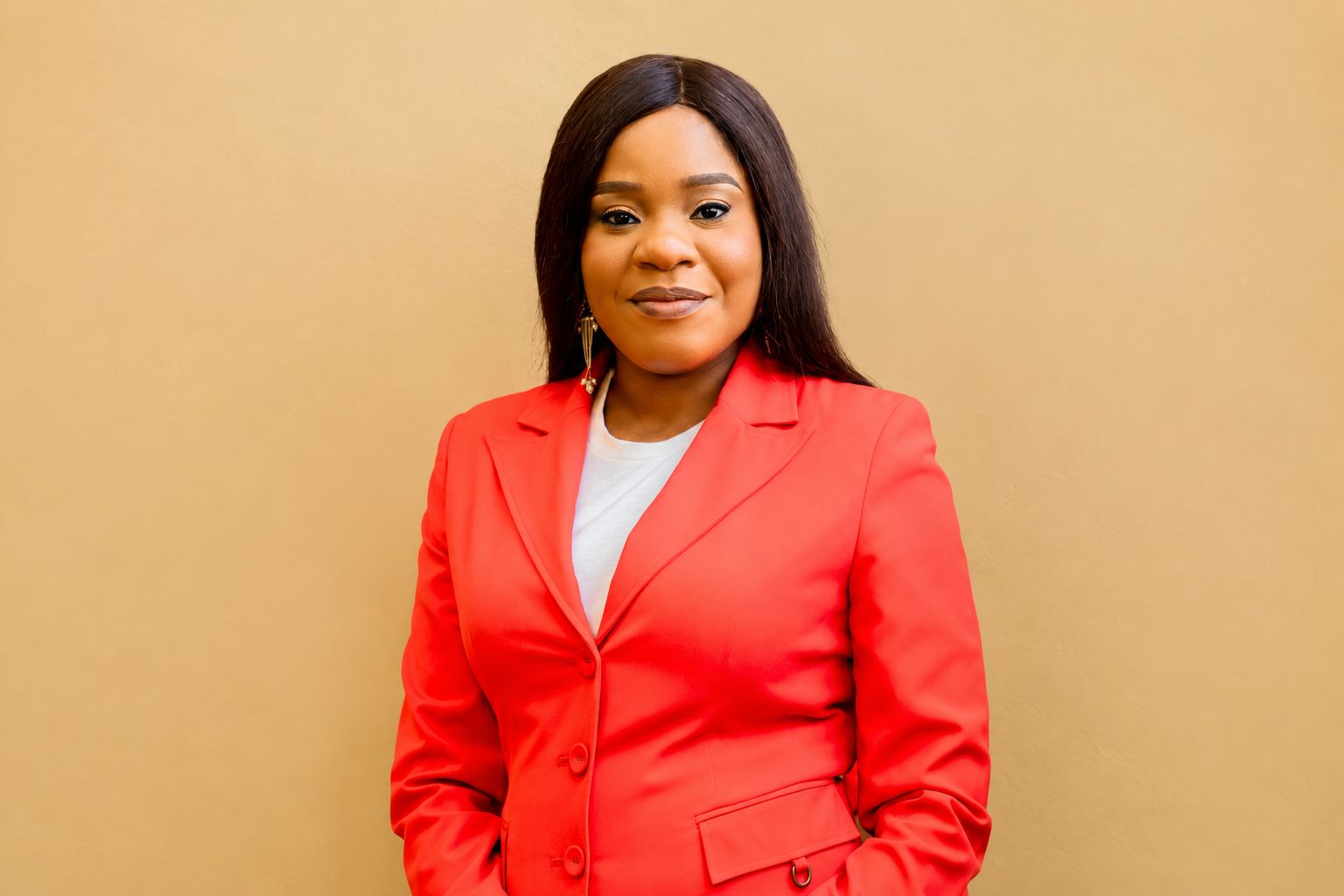
Deborah Onomeregbor is an Intentional Living Coach, pastor and personal development practitioner. Much of what she does today is built around a simple but important idea: people can make more purposeful choices about their lives, goals, relationships and growth instead of simply moving through life reacting to whatever comes their way.
That idea has grown into something much bigger than a personal philosophy for Deborah. Through the Intentional Living Initiative, she has created spaces where young people can think more deeply about who they are becoming, the choices they are making and the kind of lives they want to build. The Initiative holds an Intentional Living Summit annually on her birthday, alongside Masterclasses and other activities designed around personal development, purpose and growth.
There is something particularly interesting about the fact that this work came out of Deborah’s own life. She did not arrive at intentional living because everything had always been clear to her. There were seasons when she was busy, achieving things and moving from one responsibility to another, yet still had to confront the question of whether she was actually living deliberately. At some point, she began to recognise the difference between simply being occupied and being intentional about where her life was going.
That realisation changed the way she approached her goals, her time, her relationships and her own development. And, perhaps most importantly, she began to see the results.
It is this personal connection to the idea that gives her work with young people a different depth. She is not simply telling them to set goals or become more productive. She understands that living intentionally can sometimes begin with an uncomfortable look at the life you are already living and the courage to admit that something needs to change.
There is also a quieter story underneath Deborah’s work, one that takes us back to where much of her foundation was formed.
She grew up in a Christian home as a pastor’s child, and faith was not something that existed only within the walls of a church. It was part of the environment that shaped her understanding of people, service, responsibility and the importance of the Word of God. Her father, a pastor, was also her greatest cheerleader. Deborah was very much a daddy’s girl, and his encouragement became one of those gifts that stay with a person long after childhood.
His death would later make her think about life and time in a different way.
Losing someone who had believed so strongly in you has a way of making the passage of time feel very real. Things we assume we will do someday suddenly look different when we are reminded that life does not always wait for the plans we have made for it. For Deborah, that experience became part of the deeper understanding behind intentional living: that our time matters, the people around us matter, and the things we keep postponing are not always guaranteed another opportunity.
Her years at Rhema Nigeria have also played a significant role in shaping the woman doing this work today.
When you see Deborah at work, it is difficult to look at the breadth of her involvement at Rhema and see it simply as a job. She has spent many years there, moving across different responsibilities and ministry spaces, from working with young people and children to being involved in activities for women and the wider work around the Bible Training Centre.
Rhema’s work itself spans several generations and areas of ministry, including children and youth training, supportive leadership and women-focused programmes. Deborah’s own journey within that environment has allowed her to work in different rooms, with different groups of people, while remaining grounded in the same Christian foundation she grew up with.
And somehow, she still shows up with a smile.
That detail matters because Deborah’s story is not really about one neat career path. It is a collection of different experiences that have gradually begun to make more sense when placed beside one another. Her professional life has moved from human resources into retail operations, branding and merchandising, and now business development. Along the way, she has handled recruitment and staff development, coordinated teams and events, managed customer relationships, worked with data and reports, supported operations across multiple locations and taken on responsibilities around partnerships, revenue and market development.
She studied Petroleum and Chemical Technology at the University of Jos, yet her career eventually took her into spaces centred on people, organisations, development and leadership. That movement is part of what makes her journey fascinating. The degree tells one story. The career that followed tells another. Her ministry involvement adds another layer. And the intentional-living work brings many of those layers together.
But beneath all of it is a woman who has had her own moments of questioning.
She has had seasons when she had to sit with difficult questions about life, direction and what really matters. She has had moments when faith had to be more than something inherited from childhood. She has experienced loss, had to reconsider how she was spending her time and confronted the parts of her life that were not as deliberate as she wanted them to be.
Yet Deborah shows up, fully.
That may be one of the most compelling things about her story. Not because she has somehow arrived at a place where everything is perfectly figured out, but because the different experiences she has lived through have become part of the substance she now brings into the lives of other people.
For young people especially, that matters.
They are making decisions about education, careers, relationships, faith, identity and their futures while navigating a world that constantly tells them what they should want and who they should become. Social media adds another layer, making it easy to measure a life against someone else’s highlight reel while still trying to understand what your own life is supposed to look like.
Deborah’s work creates room to pause.
It asks young people to look beyond the pressure to simply succeed and consider whether the life they are building actually reflects the values, priorities and direction they want for themselves. Her experience across ministry, professional environments and personal development gives her a broad understanding of the different pressures people face as they grow.
And perhaps that is why the Intentional Living Initiative feels like a natural extension of her own journey.
The Summit, the Masterclasses and the conversations around intentional living are not separate from the rest of Deborah’s life. They sit at the intersection of her faith, her professional experience, her personal growth, her relationship with young people and the lessons that have come from losing someone who mattered deeply to her.
There is a thread running through all of it: the conviction that a life should not simply happen to us.
For Deborah Onomeregbor, intentional living has become more than something she teaches. It has become a body of work shaped by experience, by the things she has learned, the seasons that have stretched her, the people who have shaped her and the questions she has had to answer for herself.
And now, she is taking those lessons into rooms with young people, creating space for them to pause, ask better questions and think carefully about the lives they are building.
Because perhaps that is what Deborah has come to understand most clearly: we may not be able to control everything that happens to us, but we can become more deliberate about how we live, what we choose, who we become and what we do with the time we have.
And that is the heart of the work she is doing today, helping young people make more purposeful choices about their lives, instead of simply moving through life reacting to circumstances.