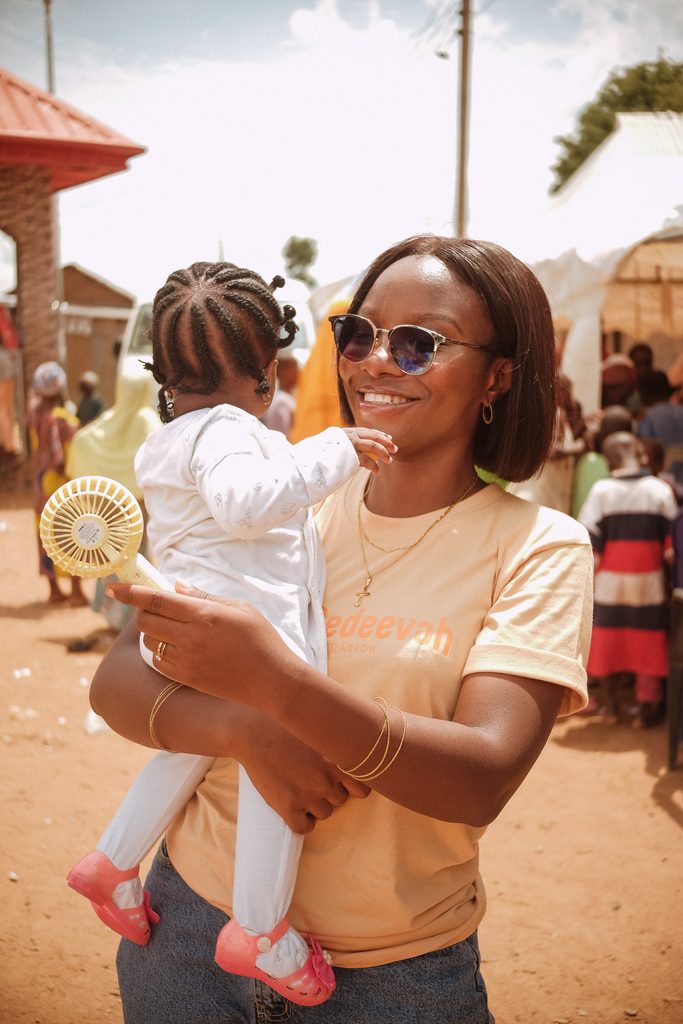
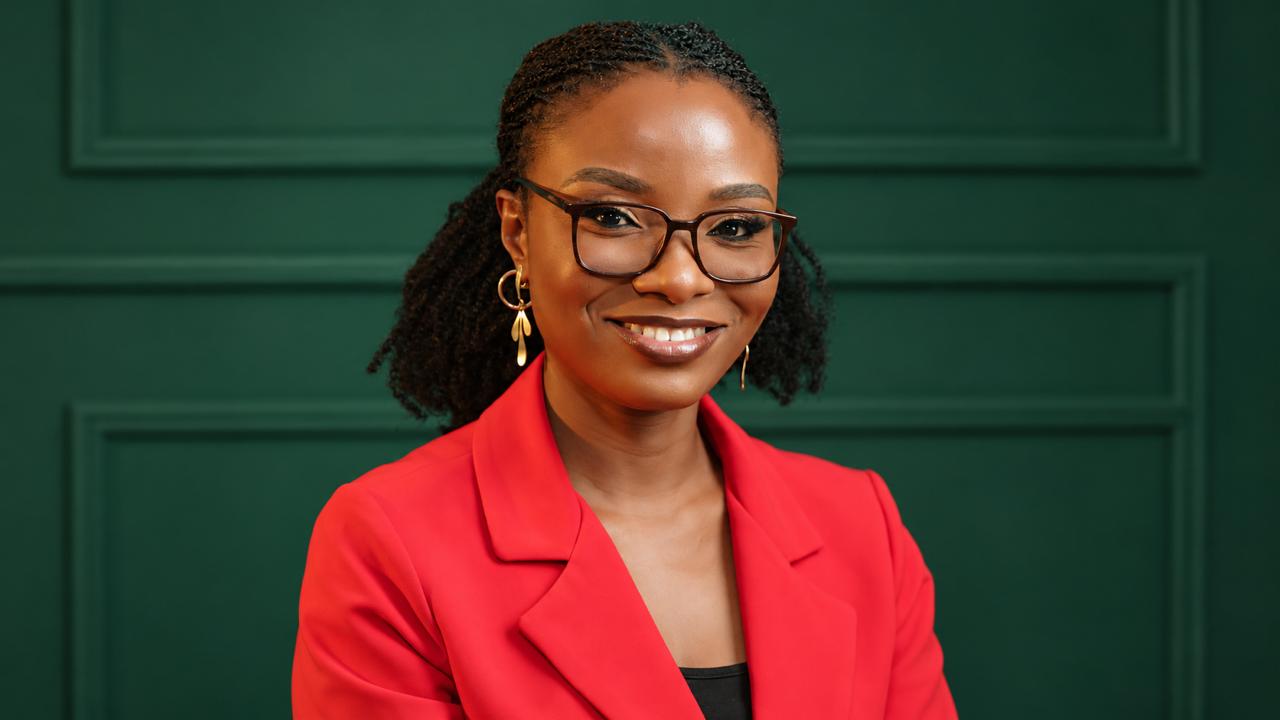
Claire Benson Idoko is a social impact leader, public health professional, and advocate for vulnerable children and girls. She is the Founder and Executive Director of Nedeevah Aid Foundation, a youth-led nonprofit established in 2020 to improve the welfare, education, and health of vulnerable children and young people. What began with 12 volunteers responding to the disruption of education during the COVID-19 pandemic has grown into an organisation working across education, healthcare, gender equality, and climate action, particularly in underserved communities and internally displaced persons (IDP) camps.
Beyond her work with the foundation, Claire convenes Impact Circle, a mentorship initiative supporting aspiring nonprofit founders, volunteers, social entrepreneurs, and emerging development professionals. She is also the author of Every Girl Is An Advocate, a book that encourages secondary-school girls and young women to understand their rights, recognise the power of their voices, and take practical steps towards creating change in their communities.
With an academic background in Biochemistry and a Master’s degree in Public Health, Claire brings together science, community development, leadership, and advocacy in her approach to social change. Her work is driven by a belief that every child deserves access to education, healthcare, protection, and opportunities to shape their future.
In this conversation with Africa Rising Stories (ARS), Claire reflects on the values that guide her work, the lessons she has learnt building Nedeevah Aid Foundation, the importance of mentoring emerging changemakers, and why empowering girls to understand their rights is essential to building a more equitable society. She also shares her thoughts on male allyship, the realities of working with limited resources, and the message she wants every young girl to carry into the future.
ARS: Beyond everything you have achieved and everything you are doing today, who is Claire Benson Idoko? What are the values that define you, and how have they shaped the woman you have become?
Claire: Beyond the work I do and the titles I carry, I am a woman who believes that people’s lives can be different when someone chooses to care enough to do something about it.
I am deeply passionate about people, particularly children and young people who are often overlooked or denied opportunities because of the circumstances into which they were born. I believe that every child deserves the opportunity to learn, be healthy, feel safe, and become whoever they are capable of becoming.
My values are rooted in compassion, service, responsibility, and the belief that everyone has something meaningful to contribute. For me, compassion goes beyond feeling sorry for someone. It means being willing to act, to listen, to learn, and sometimes to stand up for people whose voices are not being heard.
My journey has also taught me the importance of resilience. I have experienced seasons that challenged me personally, and those experiences have influenced how I understand people’s struggles. They have reminded me that we rarely know the full story behind what someone is going through. That understanding makes me more intentional about how I relate to people and the kind of impact I want to make.
I am also someone who is constantly learning. My journey from studying Biochemistry to Public Health and community development has taught me that growth sometimes requires us to step beyond what is familiar. I do not believe I have everything figured out, but I am committed to becoming better, doing better, and using what I learn to serve others more effectively.
Ultimately, I want my life to mean something beyond personal achievements. I want the people I encounter, especially children and young girls, to have better opportunities because I was here. That is the kind of legacy I am working towards.
ARS: Through Nedeevah Aid Foundation, you have worked with children and families facing some of the hardest barriers to education, healthcare, and opportunity. When you see these realities up close, what do you think we are getting wrong about how we support vulnerable communities?
Claire: One thing I believe we get wrong is that we sometimes approach vulnerable communities from the perspective of what we think they need rather than taking the time to understand what they actually need.
When we work with children and families in underserved communities, we quickly realise that their challenges are connected. A child who is out of school may not simply need school supplies. The child may be dealing with food insecurity, a parent who cannot afford school fees, displacement, or an environment where education is not easily accessible. Similarly, a family struggling to access healthcare may be facing financial barriers that make even basic treatment difficult.
If we address only one part of the problem without considering the bigger picture, our intervention may provide temporary relief without creating lasting change.
I also think we sometimes measure impact by the number of items distributed or people reached without asking what has actually changed in their lives. These numbers are important, but we must also ask whether a child has returned to school, whether a girl is safer, whether a family can access healthcare more easily, and whether the intervention has made a lasting difference.
Through Nedeevah Aid Foundation, we have worked with children in underserved communities, including internally displaced persons’ camps, where the barriers to education, healthcare, and protection can be particularly difficult. These experiences have reinforced my belief that communities should not simply be recipients of aid. They should be part of identifying the problems, designing solutions, and deciding what progress looks like.
I believe we need to move from charity that ends with the intervention to support that creates opportunities for people to move forward. Sometimes people need immediate relief, and we must never underestimate its importance. But we must also think about what happens after that relief.
For me, meaningful support is not just about what we give people. It is about whether our actions help restore dignity, expand opportunities, and make it possible for them to build better futures.
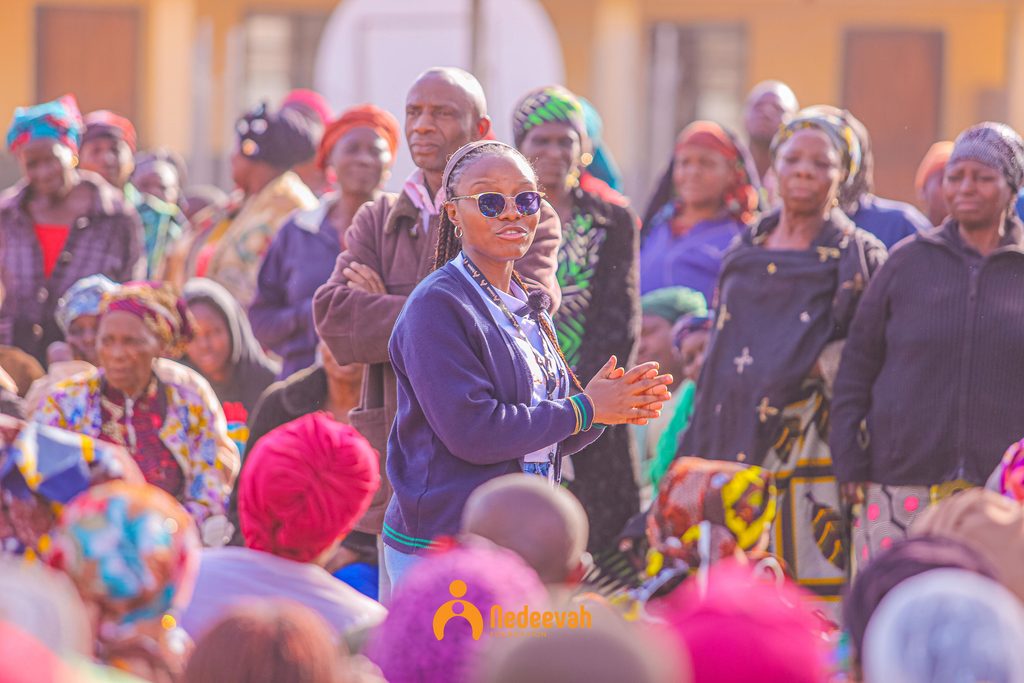
ARS: What began with 12 volunteers responding to an education crisis has grown into an organisation working across several areas of social development. What has building Nedeevah taught you about the difference between wanting to help people and building something that can create lasting change?
Claire: Nedeevah Aid Foundation began in 2020, when we saw children struggling to catch up with their education after the COVID-19 pandemic disrupted learning. Many children had been left behind because they could not participate in online learning. We started to do something about that problem.
At the time, we were responding to an immediate need. We wanted to help children learn again. But as we continued working with communities, we began to see how closely education was connected to other challenges, including healthcare, child protection, gender inequality, and poverty.
That experience shaped the organisation we have become today, working across education, healthcare, gender equality, and climate action, particularly among vulnerable children and underserved communities.
Building Nedeevah has taught me that wanting to help people is a good starting point, but intention alone is not enough to sustain meaningful impact.
You need structure. You need people who understand the mission and are willing to work towards it. You need accountability, partnerships, proper planning, and the willingness to evaluate what is working and what is not. You also need to understand that the needs of the people you serve will not always fit neatly into your plans.
There have been lessons in learning to work with limited resources, building a team, coordinating volunteers, and making difficult decisions about what we can realistically deliver. As a founder, you may have a vision for everything you want to accomplish, but you must learn how to translate that vision into practical steps.
One of the things I have come to understand is that sustainable impact cannot depend on one person’s passion alone. If an organisation can only function when its founder is personally driving every activity, then there is still important work to do in building its systems and leadership.
Nedeevah has also taught me that growth is not always about doing more projects. Sometimes it is about doing fewer things better, strengthening the systems behind your work, listening more closely to communities, and making sure that the people you serve experience real benefits.
We have reached thousands of children and supported women and families through our interventions. I am grateful for that progress, but I see it as a responsibility to keep learning and improving.
The difference, for me, is this: wanting to help asks, “What can I do for this person today?” Building something for lasting change also asks, “How can we make this support meaningful, consistent, and sustainable beyond today?”
ARS: With Every Girl Is An Advocate, you are making a case for girls to understand their rights and find the courage to speak up. What do you think happens to a girl who grows up without knowing that her voice matters, and what do you hope your book changes for her?
Claire: A girl who grows up without knowing that her voice matters may begin to believe that her opinions do not matter either. She may learn to accept decisions that affect her life without feeling that she has the right to ask questions, express discomfort, or seek help when something is wrong.
When girls are not taught about their rights, they may struggle to recognise when those rights are being violated. They may not know that they deserve protection from abuse, that their education matters, or that they should have a say in decisions affecting their future.
This is one of the reasons I wrote Every Girl Is An Advocate.
I want girls to understand that advocacy is not reserved for politicians, lawyers, activists, or people who have large platforms. Advocacy can begin with understanding an issue, asking a question, speaking up when something is wrong, supporting another girl, or sharing information that helps someone make an informed decision.
I particularly want young girls to realise that they do not have to wait until they are older, more confident, or more accomplished before they can make a difference. They can begin where they are, with what they know and what they have.
The book is also about helping girls recognise that their voices matter, while understanding that speaking up can take different forms. Not every girl will be comfortable speaking in front of a crowd. Some will write, some will ask questions, some will organise others, and some will begin by seeking help from a trusted adult. All these actions can matter.
I hope the book gives girls the language to understand their rights, the confidence to recognise their potential, and the encouragement to take action in their own environments.
I also want the book to reach beyond girls themselves. Parents, teachers, school leaders, and communities have a responsibility to create environments where girls are listened to and protected. We cannot tell girls to speak up and then punish, dismiss, or silence them when they do.
Ultimately, I want a girl who reads this book to see herself differently. I want her to understand that she does not need permission to believe that her life matters. She has a right to learn, to be safe, to ask questions, and to contribute to the world around her.
That is the change I hope Every Girl Is An Advocate inspires: girls who know their worth, understand their rights, and feel equipped to use their voices to make a difference.
ARS: Through Impact Circle, you work with aspiring nonprofit founders, volunteers, and social entrepreneurs. Many young people have the passion to make a difference, but not everyone knows how to turn that passion into something sustainable. Where do you think the gap lies, and how are you trying to close it?
Claire: I think one of the biggest gaps is between having a desire to solve a problem and understanding what it takes to build a solution that can last.
Many young people see problems in their communities and genuinely want to do something about them. They may want to start an organisation, launch a social enterprise, volunteer, or lead an advocacy campaign. But passion does not automatically provide the skills needed to identify the right problem, design an effective intervention, manage resources, build a team, measure results, or sustain the work.
Sometimes, people start with the desire to establish an organisation before clearly understanding the problem they want to solve. Others have meaningful ideas but lack the guidance, networks, or practical knowledge to move from an idea to implementation.
This is where I believe mentorship and practical learning become important.
Impact Circle grew out of my desire to support aspiring nonprofit founders, volunteers, social entrepreneurs, and young development professionals who want to create meaningful change but need guidance to navigate the social impact space.
As the convener, I see Impact Circle as a space for learning, mentorship, and growth. Through its programmes, we help participants think more intentionally about the problems they want to address, the people they want to serve, the structures they need to build, and the kind of impact they want to achieve.
Our early work helped 13 nonprofit founders begin establishing their organisations or putting structures in place. Subsequent cohorts have brought together hundreds of young people interested in leadership, community development, and social impact.
For me, the goal is not simply to encourage more people to start organisations. We need people who understand that meaningful social impact requires responsibility, accountability, collaboration, and a willingness to learn.
I also believe we need to make the social impact space more supportive of emerging changemakers. Not everyone has access to experienced mentors or established networks, and this can make the journey unnecessarily difficult.
Through Impact Circle, I want to help close that gap by making knowledge, mentorship, and connections more accessible. I want young people to realise that they do not have to figure everything out alone, but they must be willing to learn, ask questions, and build the capacity required to do the work well.
My hope is that we will see more young changemakers moving beyond good intentions to build initiatives that are accountable to the communities they serve and capable of creating lasting change.
ARS: Your journey has taken you from studying Biochemistry to Public Health and then into community development and advocacy. Was there a point when you realised that the impact you wanted to make would require you to go beyond the path you had originally trained for? What did that transition teach you about yourself?
Claire: I do not think my journey has been a complete departure from what I originally studied. Rather, it has been a gradual expansion of how I understand impact and the different ways I can contribute to people’s lives.
I studied Biochemistry for my first degree, and that gave me a scientific foundation. I later pursued a Master’s degree in Public Health because I became increasingly interested in health beyond the individual level: how people’s environments, access to services, education, and social circumstances influence their wellbeing.
Through my experiences in leadership, volunteering, and community development, I began to appreciate that many of the challenges people face cannot be solved by technical knowledge alone. They also require advocacy, community engagement, leadership, collaboration, and an understanding of the systems that shape people’s opportunities.
For instance, when a child cannot access education or a family cannot obtain basic healthcare, the challenge may extend beyond the classroom or health facility. There may be economic barriers, gaps in public services, inadequate awareness, or decisions that affect the opportunities available to that community.
I began to see that I could contribute not only by understanding health and development issues but also by working with communities, mobilising people, building initiatives, and advocating for change.
My work with Nedeevah Aid Foundation has allowed me to bring these interests together. My background in Public Health informs how I think about prevention, health education, and community wellbeing, while my work in child rights and advocacy allows me to address the social and structural issues affecting vulnerable children and young people.
This transition has taught me that our education is a foundation, not necessarily a boundary. What we study can equip us with valuable skills, but we must remain open to discovering new ways to apply those skills.
It has also taught me to be comfortable with growth. Sometimes, the work we feel drawn to requires us to learn things we were never formally trained to do. We must be willing to ask questions, seek mentorship, and develop new competencies.
Today, I see my journey as an intersection of science, public health, leadership, and social development. I do not have to abandon one part of myself to embrace another. I can bring them together in service of a bigger purpose.
ARS: You have emphasised the importance of male allyship in advancing girls’ rights. In a society where conversations about gender-based violence and inequality often place the responsibility on girls to protect or defend themselves, what needs to change in the way we raise boys and hold men accountable?
Claire: I believe one of the most important changes we need to make is to stop treating the safety of girls as a responsibility that belongs primarily to girls.
Too often, when we discuss sexual abuse, harassment, or gender-based violence, the conversation quickly turns to what girls should wear, where they should go, how they should behave, or what precautions they should take. While safety education can be important, it becomes a problem when it shifts attention away from the responsibility of those who choose to harm others.
Girls should not have to carry the burden of preventing someone else from abusing them. The responsibility for abuse lies with the person who commits it.
We need to begin much earlier in how we raise boys. Boys should be taught respect, consent, empathy, and accountability from childhood. They need to understand that girls are people with rights, boundaries, ambitions, and the freedom to make decisions about their lives. Respect is not something a boy offers only when he wants something in return; it is a basic responsibility in how he relates to other people.
We also need to challenge the harmful ideas that sometimes shape masculinity, including the belief that boys must always dominate, that controlling a girl is a sign of affection, or that showing empathy makes a boy weak. These attitudes do not appear in isolation. Families, schools, communities, religious institutions, media, and other social influences all have a role in shaping how young people understand gender and relationships.
Beyond education, accountability matters. When abuse occurs, survivors should be treated with dignity, reports should be taken seriously, and appropriate protection and justice mechanisms should be accessible. We must stop making excuses for harmful behaviour simply because the person responsible is a relative, a respected community member, or someone with influence.
Male allyship is particularly important to me because advancing girls’ rights should not be seen as a responsibility that belongs only to women. Men have influence in families, institutions, communities, and public life. They can use that influence to challenge harmful attitudes, support survivors, speak against abuse, and help create environments where girls are safe and respected.
I have had conversations with men who understand the importance of supporting girls and women, and those conversations reinforce my belief that allyship is possible and necessary. But being an ally is not just about saying the right things. It is about what a person is willing to do when it matters, especially when challenging inequality is uncomfortable or unpopular.
Ultimately, I want us to raise boys who do not simply learn how to avoid being perpetrators of violence but who also understand their responsibility to contribute to a culture of respect and equality. Girls deserve to grow up knowing that their safety is not dependent on how perfectly they protect themselves, but on a society that takes their rights seriously.
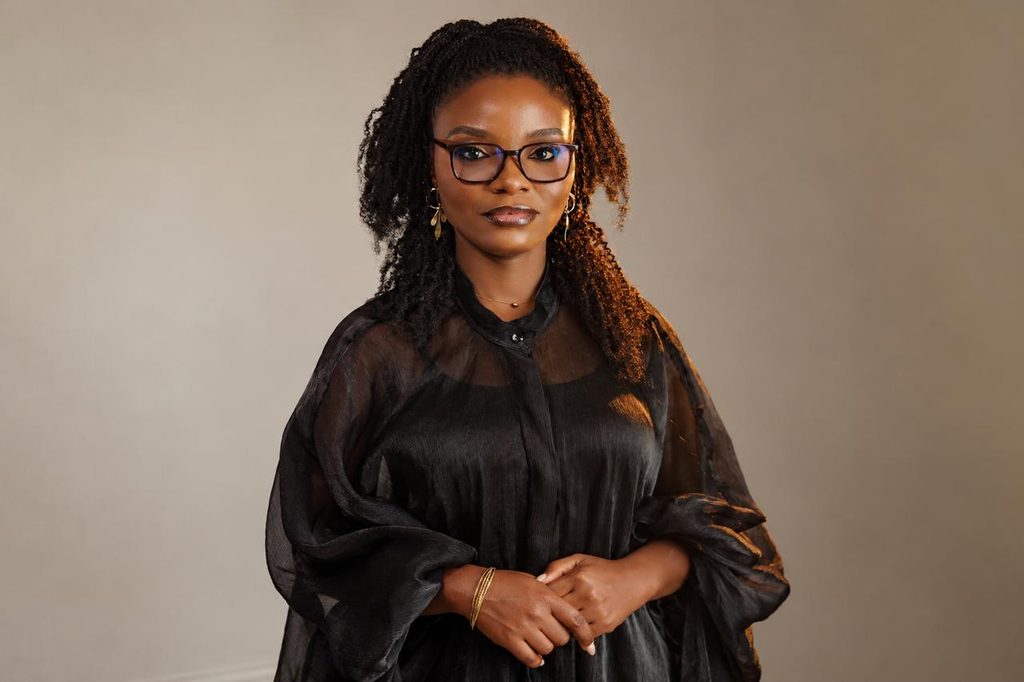
ARS: In the social impact space, the needs are often greater than the resources available, and progress can be slower than you hope. How do you navigate the tension between the urgency of people’s needs and the reality of what your organisation can deliver?
Claire: This is one of the most difficult realities of working in the social impact space. When you engage directly with vulnerable communities, you see needs that cannot always wait. You want to respond to everything, but the reality is that your resources, team, time, and capacity are limited.
Building Nedeevah Aid Foundation has taught me that good intentions must be accompanied by honest decisions about what we can realistically deliver.
I have had to learn that being committed to a cause does not mean promising everything to everyone. It means being clear about our capacity, prioritising responsibly, and ensuring that the commitments we make are ones we can fulfil.
When resources are limited, we consider the needs we are trying to address, the people who are most affected, and what we can achieve meaningfully with the resources available. We also look for opportunities to collaborate with partners, mobilise volunteers, and build relationships with people and organisations that share our goals.
Not every contribution has to be financial. The right partnership, a committed volunteer, technical expertise, or access to a community can help move an intervention forward.
I have also learned the importance of being transparent. Communities deserve honesty about what an organisation can provide and what it cannot. We should not create expectations that we are unable to meet simply because we want to be seen as helpful.
I try not to let limited resources become an excuse for inaction. Sometimes, we can begin with a modest intervention, learn from it, and build from there. The important thing is to understand what is achievable and to make the best use of the resources entrusted to us.
There are days when the gap between the needs we see and what we can do feels overwhelming. On those days, I remind myself that we may not be able to solve every problem, but that does not make the problems we can address any less important.
Navigating this tension means balancing urgency with responsibility. We must respond to immediate needs while building the systems, partnerships, and capacity that will allow us to do more over time. We must remain compassionate without losing sight of accountability, and ambitious without making promises we cannot keep.
ARS: You are building across several fronts: supporting vulnerable children, mentoring emerging changemakers, and equipping girls to advocate for themselves. When you look at the bigger picture, what kind of change are you ultimately working towards, and what would tell you that you are making real progress?
Claire: The bigger picture for me is a society where a person’s opportunities are not determined by their vulnerability, gender, or the circumstances into which they were born.
I want children to have access to education and healthcare, to grow up in safe environments, and to have the opportunity to develop their abilities. I want girls to understand their rights and feel confident enough to speak up when those rights are threatened. I also want young people who are passionate about solving social problems to have the knowledge, support, and opportunities they need to build effective solutions.
I have come to understand that I do not have to limit myself to one area of impact. What matters is recognising how these different interests connect and being intentional about what I have the capacity to pursue well.
These may appear to be different areas of work, but I see them as connected. When we support a child to access education, we expand that child’s opportunities. When we equip a girl with knowledge of her rights, we strengthen her ability to make informed decisions and seek protection. When we mentor a young changemaker, we are investing in someone who may go on to address problems affecting many other people.
Through Nedeevah Aid Foundation, Impact Circle, and Every Girl Is An Advocate, I am working towards a future in which people are not simply recipients of assistance but are increasingly equipped to understand their rights, exercise their agency, and contribute to their communities.
I also believe that sustainable change requires more than individual effort. We need stronger institutions, more responsive systems, meaningful partnerships, and communities that are involved in shaping the decisions that affect them.
How will I know we are making progress? The numbers matter. We need to know how many children we reach, how many girls receive support, how many young people gain relevant skills, and how effectively we use our resources. But I also want to know what happens after the numbers are recorded.
Is a child still in school? Has a girl become more confident in recognising and speaking about her rights? Is a young changemaker applying what they have learned to build a more effective initiative? Are communities better equipped to identify problems and participate in finding solutions?
I want to see evidence that our work is creating changes that extend beyond the immediate intervention.
I also want to build initiatives that can grow beyond my personal involvement. If the work continues to make a difference because strong teams, systems, and partnerships are in place, that would be an important sign of progress.
Ultimately, I am not working towards a world where everyone needs an organisation like ours to survive. I am working towards a world where more children have the opportunities they deserve, more girls can exercise their rights, and more communities have the resources and capacity to thrive.
That is the kind of progress I want to be able to point to.
ARS: If you were in a room full of young girls, some who already believe they can change the world and others who have been made to feel that their voices do not matter, what is the one thing your heart yearns to tell them? What would you want every girl in that room to carry with her long after she leaves?
Claire: I would tell them: Never allow the way the world treats you to determine what you believe you are worth.
Some of you may already know what you want to become. You may have big dreams, ideas you want to pursue, and causes you want to fight for. Others may still be trying to find your confidence. Perhaps someone has told you that you are not good enough, that your dreams are too big, or that certain opportunities are not meant for girls like you.
I want you to understand that you do not have to accept every limitation that someone places on you as the truth about your life.
You are allowed to ask questions. You are allowed to learn. You are allowed to have ambitions, to make mistakes, to change your mind, and to discover new things about yourself. You are allowed to say no when something is wrong, to seek help when you need it, and to expect to be treated with dignity and respect.
But I also want you to understand that finding your voice does not mean you will never feel afraid. Sometimes, you will know that something is wrong and still struggle to speak. Sometimes, you will speak and discover that not everyone is willing to listen. And sometimes, you will need the support of someone you trust.
That does not make your voice less important.
You do not have to become the loudest person in the room to make a difference. You can begin with a question, a conversation, a decision to support another girl, or the courage to ask for help. Small actions can become the beginning of something much bigger.
I want you to remember, too, that you do not have to wait until you have achieved something extraordinary before your life has value. Your worth is not determined by your grades, your background, the opportunities you have had, or how much the world knows your name.
And as you grow, remember that your voice is not only for you. There may be another girl who needs encouragement, someone who needs to know that she is not alone, or someone who needs you to speak when she cannot. When you have the opportunity, make room for other girls to rise with you.
This is one of the reasons I wrote Every Girl Is An Advocate. I want girls to know that advocacy begins with understanding that you matter and that you have a role to play in making the world around you better.
If there is one thing I want every girl in that room to carry with her, it is this: you do not need to have your entire life figured out today. You only need to recognise that your life matters, your voice has value, and your future deserves to be taken seriously.
And when the world tries to convince you otherwise, I hope you remember that you are worthy of the opportunities, protection, respect, and possibilities that every child deserves.
Your voice matters. Your life matters. And you can begin making a difference right where you are.