

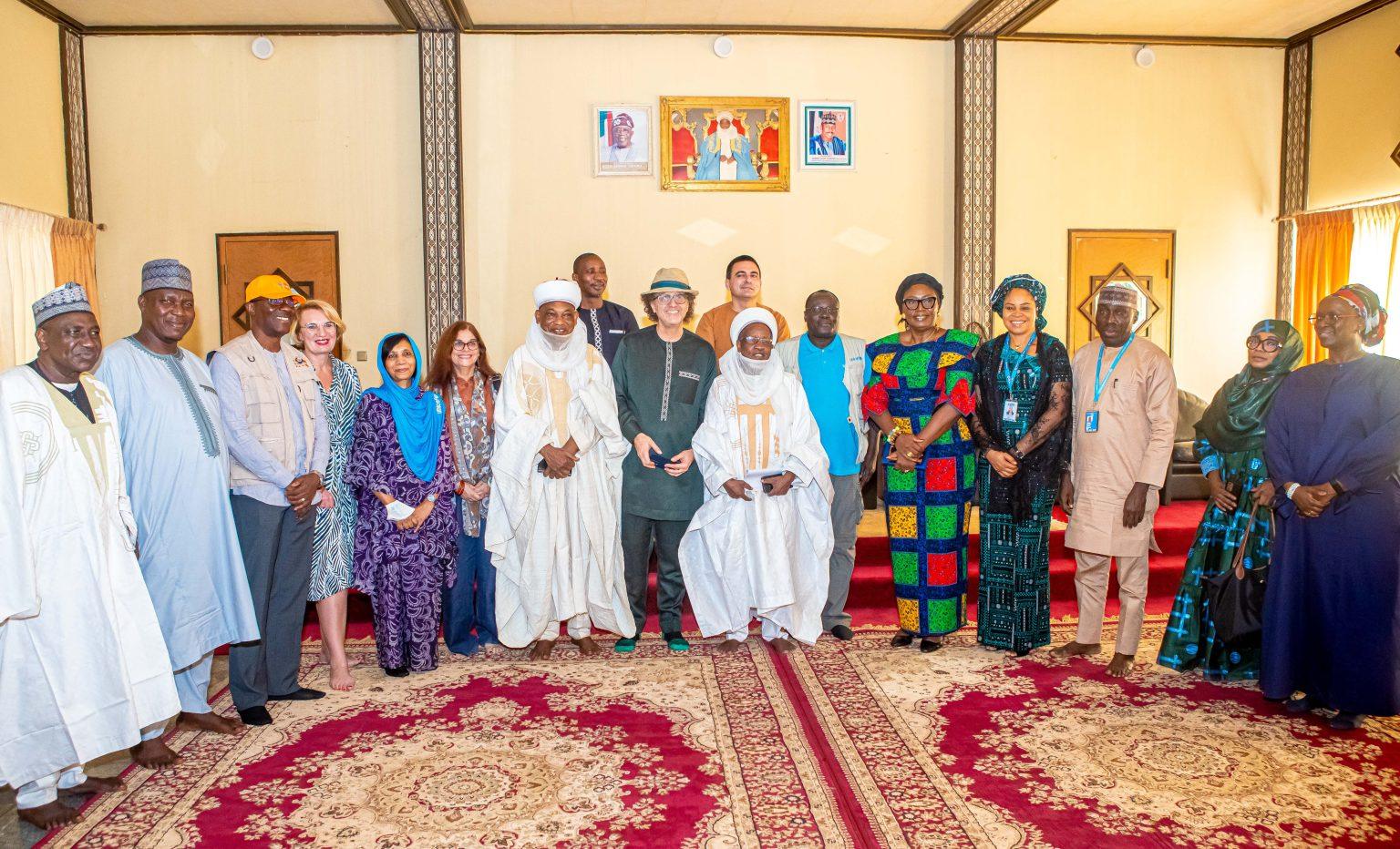
The United Nations (UN), the European Union (EU) and international development partners have reaffirmed their commitment to strengthening support systems for children, women, adolescents and vulnerable families in Nigeria, following a high-level mission to Sokoto State in the northwest of the country.
The delegation, which included representatives from the EU Delegation in Abuja, UNICEF, UNFPA, the International Labour Organisation (ILO), Plan International Nigeria, Action Against Hunger (ACF Nigeria), CARE Nigeria and the Danish Refugee Council (DRC), visited the state to assess progress on EU-supported initiatives and to deepen collaboration with state authorities to advance inclusive social protection, education, health services and community resilience.
During engagements with Governor Ahmed Aliyu of Sokoto State, discussions focused on how strengthened social protection systems can ensure that essential services reach vulnerable populations, particularly women, children and adolescents. The Governor reaffirmed his administration’s commitment to improving the well-being of families in the state and pledged continued collaboration with development partners to sustain and expand results that directly impact community development.
The delegation visited schools, healthcare facilities and communities benefiting from EU-supported programmes, where they observed efforts to improve access to safe learning environments, adolescent-friendly health services and inclusive social protection mechanisms. Partners also examined the introduction of a new tool designed to capture multidimensional poverty in Nigeria’s National Social Register under the EU-funded Supporting Sustainable Social Protection Systems in Nigeria (SUSI) programme. The tool is expected to improve data accuracy and enable better targeting of families in need, including children without birth registration or national identification numbers, out-of-school children and households facing malnutrition or limited access to healthcare.
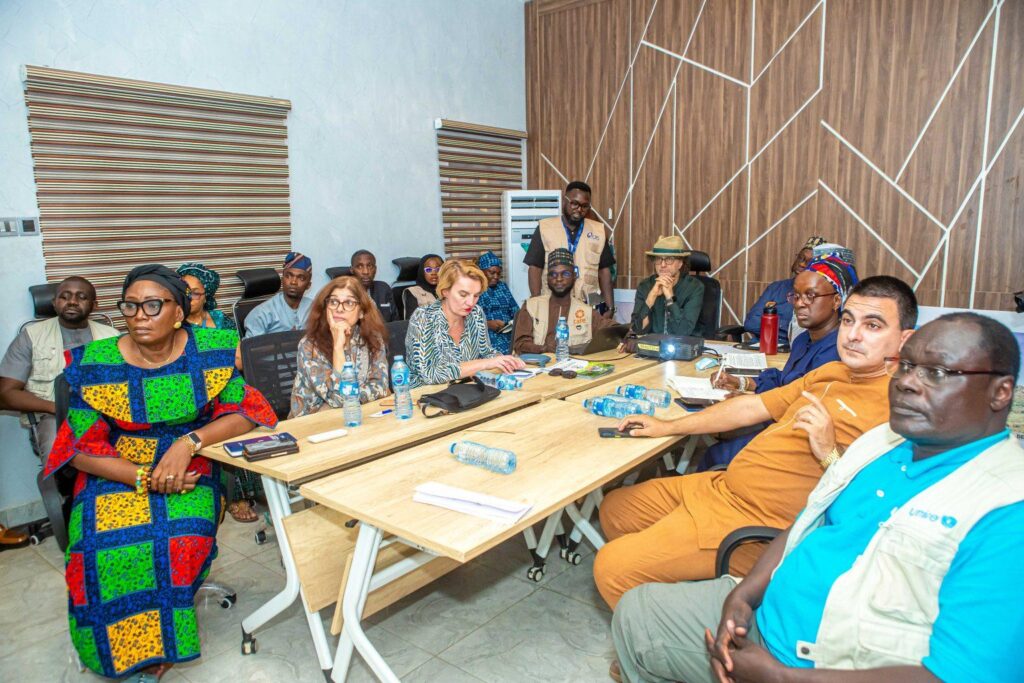
Speaking during the mission, Massimo De Luca, Head of Cooperation at the EU Delegation to Nigeria, emphasized the importance of investing in systems that protect and empower people, especially children and young people, as a foundation for inclusive and sustainable development. Representatives of UN agencies and partner organizations also underscored the need for coordinated financing, strong institutions and policy frameworks to ensure that social protection interventions deliver long-term impact.
Development partners highlighted the critical role of community engagement in sustaining progress, noting that empowering local leaders and institutions is essential to ensuring accountability and ensuring that support reaches the most vulnerable households.
The joint mission reaffirmed the shared commitment of the UN, EU and their partners to supporting Nigeria’s social and economic development agenda, with a focus on building resilient systems that reduce poverty, improve access to essential services and protect the rights and well-being of every child, woman and family.