


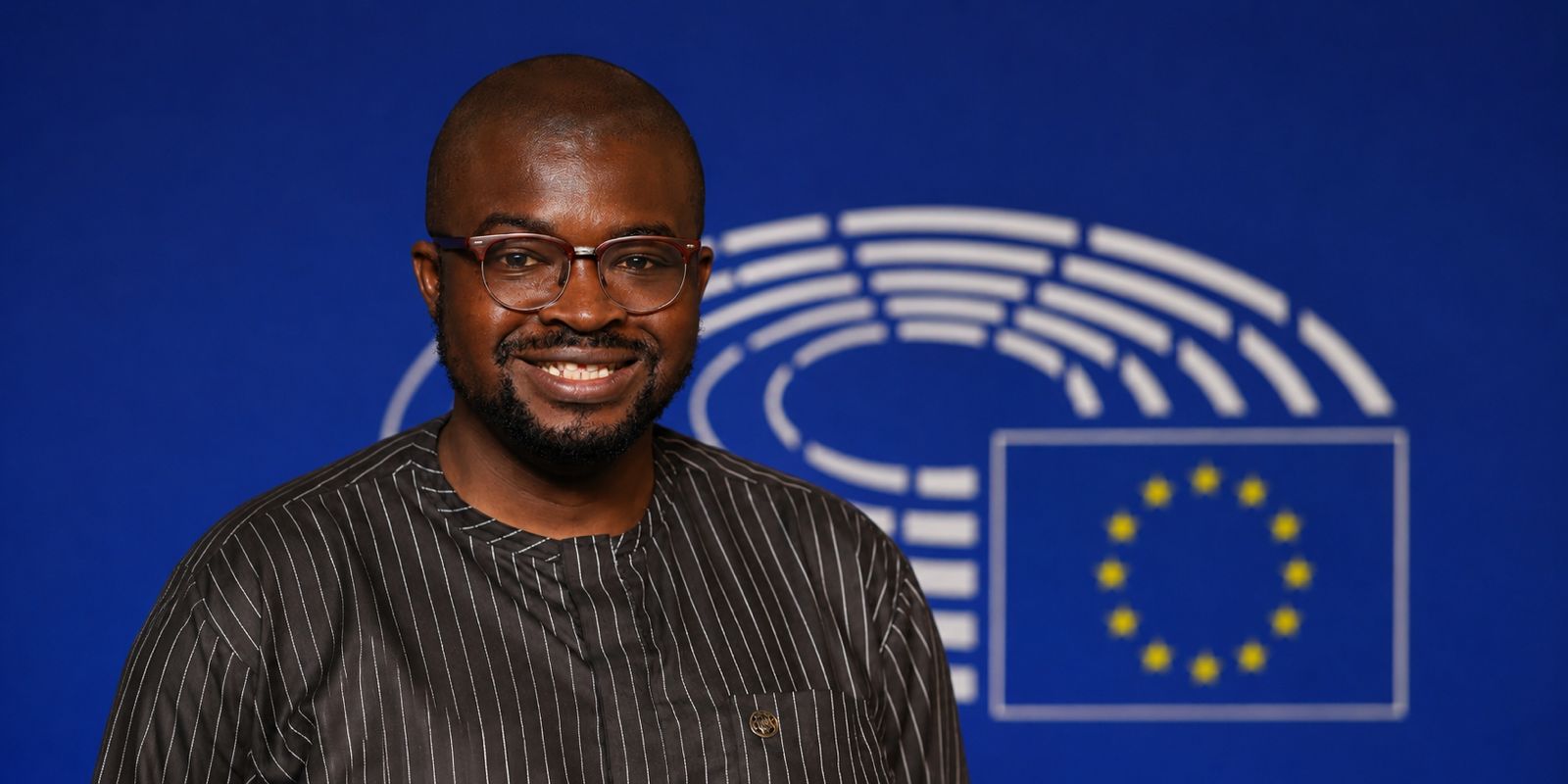
Long before Ononuju Silver Okwaraogoma found himself working across some of the biggest institutions in global development, he was simply a young man willing to volunteer. He gave his time, showed up, learned, worked with people and took whatever opportunities to serve came his way. He probably could not have known then just how much those experiences would shape the road ahead.
Today, his career spans civil societies, UNESCO, the African Union, UNICEF and UNDP. But when he talks about how he got here, one sentence stands out: “Volunteering gave me a platform.”
That may be the simplest way to understand Uju’s journey. Beneath the impressive titles and international institutions is a career built, step by step, on service, hard work, relationships and a willingness to keep showing up. And perhaps that is fitting for someone whose personality is as unassuming as his journey is impressive.
If you meet Uju, one of the things you are likely to notice is how calm he is. He is not someone who makes a big show of himself or his achievements. There is a quietness about him, and somehow, that makes his journey even more interesting.
His story in the development space began in Nigeria, as a volunteer with the West Africa Network for Peacebuilding (WANEP) Nigeria. He was working on youth peace education and youth peacebuilding, supporting research and programme development and contributing to efforts that tracked conflict, peace and security in Nigeria. It might have looked like an early career opportunity at the time. Looking back now, it feels like something more. It put him close to young people, peacebuilding and the realities behind the development work he would eventually spend much of his career doing.
But he kept volunteering. He moved through different spaces, meeting people, learning from them and finding new ways to contribute. He worked alongside people who were themselves building organisations and communities around service, and those relationships became part of his education too.
At some point, he decided to try building something himself.
In 2016/2017, Ononuju started Pro-Volunteer, an attempt to create a platform that would connect volunteers with organisations. It did not pull through. But the idea says something about how he was beginning to see volunteering. It was no longer simply about giving your time away. It could be a way for someone to gain experience, meet people, discover what they were good at and get into rooms they might otherwise never have entered.
A platform.
And looking at where his own journey would eventually take him, that idea feels particularly significant.
Before the international conferences, policy conversations and development programmes came the quieter work of learning. Uju studied at Babcock University, where he earned a Bachelor of Science in International Law and Diplomacy, and later earned a Master of Arts in Peace and Conflict Studies from the University of Ibadan. His education and his experiences in civil society were beginning to meet.
His next steps took him into international civil society and human rights work, including an exchange with CIVICUS in Geneva, where he supported civil society engagement around the Human Rights Council and the Universal Periodic Review. Then came UNESCO.
His work there brought him into youth empowerment, education, coordination, programme management, partner engagement, teacher development, peacebuilding and the prevention of violent extremism. He was working across programmes and partnerships, but the issues still connected to what had drawn him into development in the first place: young people, education, peace, and the systems that determine the opportunities people have.
By the time he moved into the African Union, the scale had changed considerably. He was now working on youth development and partnerships at a continental level, helping to connect young Africans with opportunities for learning, leadership, entrepreneurship and service. He also supported the recruitment and training of more than 200 young people through the African Union Youth Volunteer Corps.
There is something quite beautiful about that part of the journey. The young volunteer who had once been looking for opportunities to contribute was now helping create opportunities for other young people.
The platform had come full circle.
And perhaps this is one of the things that stands out about Uju’s career. The work keeps changing, but there is usually a familiar thread running through it: people, young people, opportunity, service, coordination, programme management, project management, programme implementation, stakeholder engagement and partnership.
By the time he got to UNDP, the questions had become bigger. His work moved into governance, the rule of law, and Business and Human Rights, putting him in rooms where governments, businesses, civil society organisations, and development partners had to find common ground.
The issues were more complex, but perhaps the skills were not so different from what he had been learning all along: listen, understand people, build relationships and keep the work moving.
His work in Business and Human Rights has led him to support more than 20 countries and engage with more than 30 partners and organisations. He has also led the African Business and Human Rights Forum, which has brought together hundreds of stakeholders around the business and human rights agenda in Africa.
It is the kind of work that rarely comes with dramatic moments. A lot of it is coordination. Conversations. Follow-ups. Finding the person who needs to be in the room. Getting people with different interests to work towards the same goal.
But maybe that is exactly where his temperament becomes useful.
Uju is quiet. Measured. Not particularly interested in making every achievement an announcement. And not every kind of leadership needs to be loud. Sometimes it is listening carefully before speaking. Sometimes it is knowing when to step forward and when to let the work speak. Sometimes it is simply being dependable enough that people know they can count on you.
His UNICEF chapter brought another dimension to the same journey, this time through partnerships and donor engagement. He coordinated a multi-country project across seven UNICEF country offices and supported a broader portfolio spanning 14 offices.
Again, the names and institutions changed. The work remained about bringing people, resources and ideas together to solve problems.
And perhaps that is why his career feels less like a series of jumps between organisations and more like a gradual expansion of the same idea: start with people, understand their realities, create opportunities, build systems, bring people together, and keep doing the work.
There is also something to be said about resilience. When we look at someone who has worked across major international institutions, we often see the polished version of the journey. We see the titles and the organisations. We don’t see all the learning that happened between them.
We don’t see the unfamiliar rooms, the new systems, the new expectations or the need to constantly prove yourself again. We don’t see all the times a person had to learn something new, adjust, start over or simply keep going.
A career that moves across civil society, education, youth development, continental policy, governance, human rights and international partnerships requires more than intelligence or opportunity. It requires hard work. It requires adaptability. And it requires the resilience to keep learning.
Perhaps that is why the quietness matters. There is a certain kind of person who does not need every achievement to become an announcement. They simply move on to the next assignment, the next problem, the next room, the next piece of work that needs to be done.
And looking at Uju’s journey, that seems to be part of what makes it compelling.
His career has never really been about one subject. It has been about people, young people, communities, institutions, governments, businesses, development partners, and the relationships between all of them.
From volunteering in Nigeria to working across continental and international development institutions, the thread running through the journey is not simply ambition.
It is service.
The kind of service that demands integrity when nobody is watching. The kind that demands hard work when the work is tedious. The kind that demands resilience when the path changes. And perhaps the kind that allows a quiet person to leave a very significant mark.
Because not every impact is loud. Some of it happens in meetings nobody hears about. In programmes people may never know who coordinated. In partnerships whose success depends on someone quietly keeping all the pieces together. In young people who receive an opportunity because someone helped build the system that made that opportunity possible.
That may be the most fitting way to look at Ononuju Silver Okwaraogoma. Not simply as a man who has worked for some of the biggest names in development, but as someone who has spent years doing the quieter work of making development possible.
And perhaps, in a world that often celebrates the loudest voices, there is something refreshing about a career that began with volunteering and grew through showing up, doing the work, building trust and creating opportunities for others.
Quietly. Steadily. With purpose.